

500-Year-Old ‘Vampire’ Burial in Croatia Reveals Reconstructed Face for First Time

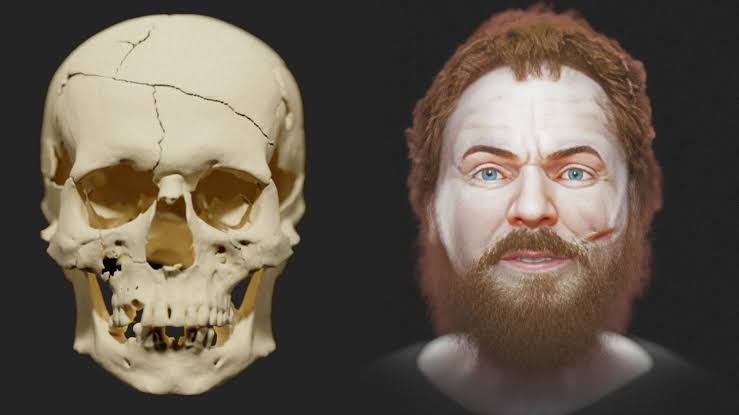
Archaeologists in eastern Croatia have unveiled a digital facial reconstruction of a man buried more than 500 years ago and believed by his contemporaries to be a “vampire,” following new forensic and digital analysis of his remains.
The discovery was made at the ruins of a former Knights Templar stronghold in Račeša, around 70 miles southeast of Zagreb, where researchers uncovered the man’s grave during excavations in 2025. The burial showed clear signs of what experts describe as an anti-vampire ritual, including the removal of the man’s head and the weighing down of his body with heavy stones to prevent a feared return from the dead.
Using advanced digital imaging, Brazilian digital artist and forensic reconstruction specialist Cicero Moraes recreated the man’s face based on CT scans of his skull. Archaeologist Nataša Šarkić, who is leading the research at the site, said the fragmented skull was first digitally scanned before being reconstructed using a technique known as “anatomical deformation.”
“Although the skull was badly damaged, it was possible to reconstruct and digitise it,” Šarkić explained.
The reconstruction suggests the man was between 40 and 50 years old at the time of his death and had lived a violent life, with evidence of multiple injuries sustained before he died. Moraes described the recreated face as “hostile” and “threatening,” noting visible scars and trauma.
“The facial scar and other injuries are strong indicators that his life was turbulent and marked by repeated violence,” Moraes said.
Researchers believe the man was initially given a normal burial in the 15th or 16th century. However, his grave was later reopened, his head torn from his body, and stones placed on his remains — actions consistent with historical anti-vampire practices in Eastern Europe.
Šarkić said such rituals were commonly performed on people who were considered violent, socially deviant, sinful, or who died under suspicious circumstances.
“Individuals who died violently or were seen as dangerous in life were often believed to be at risk of becoming vampires,” she explained. “His violent history and facial disfigurement may have led the community to see him as a supernatural threat or demonically possessed.”
During the medieval period, belief in vampires was widespread across Eastern Europe, with communities using various methods to prevent the dead from “rising.” These included staking bodies through the heart, severing heads, placing skulls between the legs, weighing corpses down with stones, and restraining limbs with iron shackles.
The Račeša burial, researchers say, provides rare physical evidence of these historical beliefs and rituals, offering a unique insight into fear, superstition, and social exclusion in medieval European communities.
