


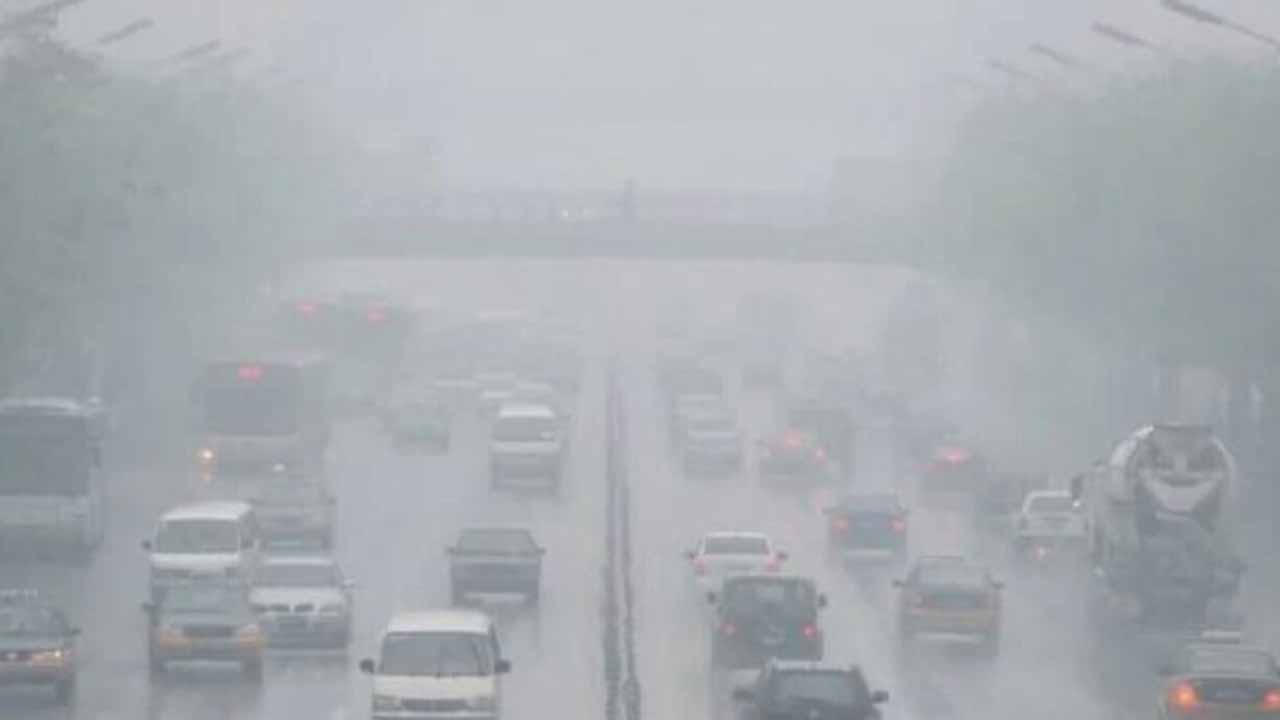
For generations, December, January and February have meant one thing across much of Nigeria: harmattan. It was the season of dry, dusty winds blowing from the Sahara, cold mornings that sent people reaching for sweaters, cracked lips, dusty cars and hazy skies. Harmattan was so predictable that it shaped farming calendars, travel plans, health advice and even cultural memory.
Yet as 2025 has ended, Nigerians are asking an unsettling question: “where is the harmattan?”
Instead of the familiar chilly mornings and dusty breeze, the country has been gripped by unusual heat. From the North to the South, the air feels heavy, hot and uncomfortable. Fans spin endlessly, air conditioners struggle, and people complain of heat rashes rather than cold-induced coughs. The expected seasonal shift simply did not arrive. And this absence should worry us.
The first question to ask is whether this is just a one-off anomaly or a symptom of a much deeper problem.
One possible explanation lies in climate change, a phenomenon many Nigerians still discuss as something distant or abstract. But climate change is no longer knocking at our door; it is already inside the house. Rising global temperatures are altering weather patterns worldwide, disrupting long-established seasonal cycles. Harmattan depends on specific atmospheric conditions: pressure systems, wind directions and temperature contrasts between the Sahara and the Gulf of Guinea. When these systems are disturbed, the harmattan winds weaken or fail to materialize altogether.
Across the globe, scientists have observed increasing irregularity in seasons: longer heatwaves, delayed rains, unexpected floods and shortened cold periods. Nigeria is not immune. If global warming continues to heat the atmosphere and oceans, traditional patterns like harmattan may become weaker, shorter or increasingly unpredictable.
Another possible factor is environmental degradation closer to home. The Sahara Desert, once the primary source of the dry, cold harmattan winds, is itself undergoing changes. Desertification, deforestation and land misuse across the Sahel have altered surface temperatures and wind dynamics. When vegetation is stripped and land becomes excessively degraded, it affects how heat is absorbed and released into the atmosphere, potentially disrupting the wind systems that drive harmattan.
Ironically, while desertification is expanding southwards, the very winds associated with the desert seem to be losing their bite.
Deforestation within Nigeria also deserves scrutiny. Forests play a critical role in regulating local and regional climates. Massive tree loss across the country, whether through logging, charcoal production or urban expansion, has reduced nature’s ability to cool the environment. Without adequate vegetation, heat builds up, humidity increases, and the cooling effects that once complemented harmattan conditions are diminished.
There is also the influence of urbanisation. Nigerian cities are expanding rapidly, replacing natural landscapes with concrete, asphalt and steel. These materials absorb and retain heat, creating what scientists call “urban heat islands.” In such environments, even when cooler winds attempt to flow in, their impact is reduced. The result is a persistent feeling of heat, even during periods that should otherwise be cool.
But beyond the science, the disappearance of harmattan has social and economic implications. Farmers rely on seasonal patterns to plan cultivation cycles. A disrupted harmattan can affect soil moisture, pest behaviour and crop yields. Public health is also affected. While harmattan often brings respiratory challenges, extreme heat introduces its own dangers: dehydration, heat stress and worsening cardiovascular conditions, especially among the elderly and children.
The absence of harmattan also raises concerns about water availability. Prolonged heat increases evaporation rates, dries up surface water faster and puts additional pressure on already strained water resources. In a country where access to clean water remains a challenge, this is no small matter.
The troubling part of this conversation is not just that harmattan appears to be fading, but that Nigeria seems largely unprepared for these shifts. Climate policy remains weak, poorly enforced or inconsistently implemented. Environmental education is limited, and long-term planning often takes a back seat to short-term political concerns.
If harmattan, one of the most predictable features of Nigeria’s climate, can disappear without warning, what else might we lose?
This moment should serve as a wake-up call. Government agencies, environmental experts and academic institutions must urgently study this anomaly, not dismiss it as coincidence. Nigerians deserve clear explanations backed by data, not silence. More importantly, the country must invest seriously in climate adaptation and mitigation: reforestation, sustainable land use, urban planning that reduces heat buildup, and public awareness campaigns about environmental responsibility.
The harmattan’s absence is not just about discomfort; it is a signal. Nature is telling us that the balance we once took for granted is shifting. Ignoring that signal may cost us far more than a cold December morning ever did.
If the harmattan can vanish quietly, then the real question is not “why is it hot?” The real question is: what kind of climate future are we walking into, and are we ready for it?
