
Uganda Shuts Internet, Suspends NGOs, Tightens Media Controls Ahead of Elections

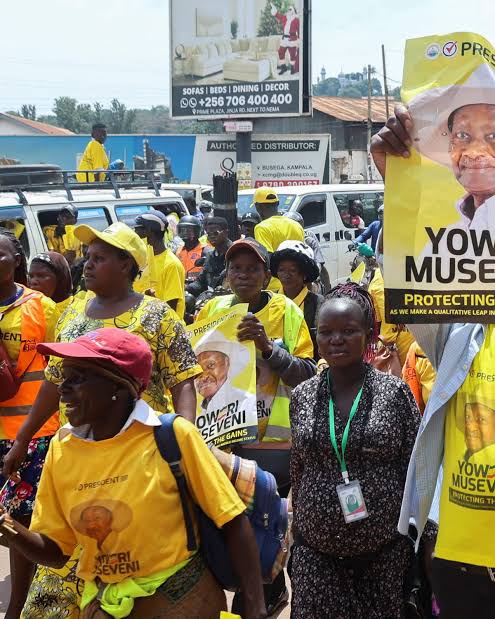
The Ugandan government has shut down public internet access, suspended several civil society organisations, and intensified restrictions on journalists as the country heads into general elections on January 15, raising fresh concerns over press freedom and civic space.
Internet monitoring groups reported that authorities suspended internet access nationwide from 6 p.m. local time on Tuesday, echoing measures taken during the disputed 2021 elections, when connectivity was cut for five days and Facebook was blocked — a restriction that remains in place.
The shutdown comes as 81-year-old President Yoweri Museveni seeks to extend his nearly four-decade rule, amid heightened security deployments and crackdowns on opposition activities.
Journalists covering opposition campaigns have reported harassment, assault, and intimidation. Ssematimba Bwegiire, a reporter with privately owned Radio Simba, said he lost consciousness after being electrocuted with a stun gun and pepper-sprayed by a security officer while covering a rally by opposition presidential candidate Robert Kyagulanyi, popularly known as Bobi Wine.
Bwegiire said he did not report the incident, citing a lack of confidence in the justice system. “People later told me they thought I had died,” he told the Committee to Protect Journalists (CPJ), adding that past complaints by journalists have rarely led to accountability.
Uganda has a long record of violence against journalists during election periods. Dozens of people were killed in protests following the 2021 elections, which Mr Wine alleged were marred by widespread fraud.
NGOs suspended, live coverage banned
Ahead of the polls, the National NGO Bureau suspended at least six non-governmental organisations, including the Human Rights Network for Journalists–Uganda (HRNJ-U) and the African Center for Media Excellence (ACME), citing unspecified security concerns.
ACME co-founder Peter Mwesige described the suspensions as “part of a broader effort to silence scrutiny of public affairs” as the elections approach, urging independent media to continue providing credible information to the public.
HRNJ-U Executive Director Robert Ssempala said the organisation would cooperate with investigations but maintained it had operated within its mandate to protect and promote press freedom.
On January 5, the information ministry also banned live broadcasts of “riots, unlawful processions, or violent incidents,” further limiting real-time reporting during the electoral period.
Journalists attacked and detained
Although CPJ has documented fewer cases of journalist attacks since November 2025 than during the last election cycle, reporters say the pattern of repression remains unchanged, with violence often escalating during opposition activities.
Incidents recorded in recent months include assaults on journalists covering National Unity Platform events, destruction of equipment, arbitrary arrests, and short-term detentions. In one case, BBS Terefayina reporter Ivan Mbadhi was seen in video footage being kicked, beaten, and having his head slammed against a vehicle by security personnel while covering Bobi Wine’s visit to Kween District.
Internet controls and accreditation hurdles
In the weeks leading up to the vote, authorities imposed restrictions on satellite internet services and signalled their ability to block decentralised communication tools. On January 13, the Uganda Communications Commission (UCC) directed service providers to suspend public internet access and halt the sale of new SIM cards, citing the need to curb misinformation, disinformation, and electoral violence.
The UCC said “essential services” such as hospitals, banks, and the tax authority would retain limited access, but with restrictions on social media, messaging platforms, and virtual private networks.
Media accreditation has also emerged as a key pressure point. Authorities have barred journalists from the Nation Media Group–Uganda from covering presidential events and denied them access to parliament, measures similar to those imposed ahead of previous elections that were later ruled illegal by courts.
UCC spokesperson Ibrahim Bbosa said the restrictions were lawful and aimed at preventing violence and the spread of misinformation. “Journalists who adhere to professional standards have nothing to fear,” he said.
CPJ and dozens of other organisations have urged President Museveni to guarantee unfettered internet access and protect press freedom during the elections. Calls to police and government spokespersons for comment were not returned at the time of filing.
