

FG to Pilot Communal Ranches in Six States, FCT to Boost Food Security

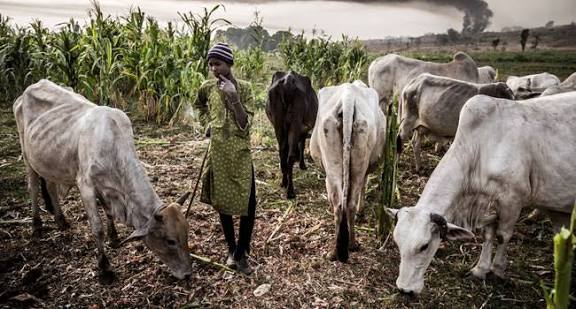
The Federal Government has announced plans to pilot national communal ranches in Adamawa, Benue, Kaduna, Kano, Plateau states and the Federal Capital Territory (FCT) as part of a new framework to modernise livestock production and strengthen food security.
The plan was disclosed in a statement issued by the Presidency on Wednesday, following a meeting between the Minister of Livestock Development, Idi Mukhtar Maiha, and the ILRI–GATES Livestock Feed and Nutrition Project Team.
According to the government, the communal ranch initiative is designed to improve livestock productivity, reduce greenhouse gas emissions and promote sustainable animal husbandry practices. The programme will prioritise climate-smart feeding systems, encouraging a shift from high-fibre feeds to protein-rich, climate-resilient alternatives.
The statement added that the Federal Government would support large-scale fodder production through solar-powered irrigation systems, micro earth dams and upgraded grazing reserves across the pilot locations.
“These interventions aim to strengthen food security, boost milk production, create jobs and ensure sustainable livestock management,” the statement said.
Under the collaboration with the International Livestock Research Institute (ILRI) and the Gates Foundation, technical support will be provided to improve livestock nutrition and guide the implementation of climate-smart strategies in the selected states.
The government said the initiative is part of a broader effort to link livestock development with climate action while expanding economic opportunities in rural communities.
The announcement comes barely two months after President Bola Tinubu reiterated plans to modernise livestock farming as a way to reduce recurring conflicts between farmers and herders.
For years, clashes linked to grazing and farmland access—particularly in Nigeria’s Middle Belt—have resulted in loss of lives, displacement and economic damage. Climate pressures such as drought and desertification in the north have also pushed pastoralists southward, intensifying competition for land and grazing resources.
Previous attempts to address the issue include the 2019 RUGA programme, which was later suspended following public opposition. In September 2024, a presidential committee recommended a hybrid approach combining ranching with regulated open grazing.
In March 2025, the Federal Government also announced plans to partner with a Brazilian firm to establish a 100,000-hectare cattle ranch in Niger State, with the state government pledging additional land to support large-scale livestock development.
