

Nigeria Records West Africa’s First Robotic Gynaecological Surgery

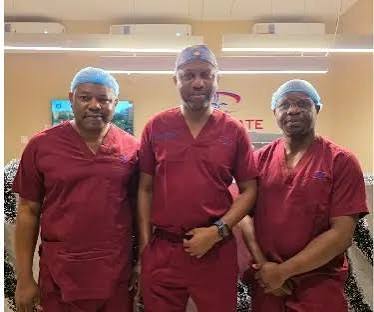
A private hospital in Nigeria has successfully carried out what it says is West Africa’s first robotic-assisted gynaecological surgery, marking a major milestone in advanced women’s healthcare and underscoring efforts to curb medical tourism.
The Prostate Clinic (TPC), a Lagos-based facility, said a 30-year-old woman underwent a robotic procedure to remove a benign ovarian tumour. The patient was discharged the same day and returned to her normal activities within 24 hours.
Consultant Robotic Surgeon and Medical Director of TPC, Kingsley Ekwueme, who led the operation, said the procedure reflects a shift toward addressing women’s health needs with cutting-edge technology.
“This is a deliberate move from male-focused innovation to tackling women’s health challenges using advanced surgical solutions,” Ekwueme said.
Nigeria has long faced challenges in accessing specialised healthcare, forcing many patients to seek treatment abroad. However, recent investments by private healthcare providers in robotic and minimally invasive technologies are beginning to change that narrative.
Ekwueme explained that robotic surgery offers significant benefits over traditional open surgery, including reduced blood loss, shorter hospital stays and faster recovery times.
“Once vital signs are stable, usually within six hours, the patient can eat and go home and return to work the next day. Open surgery, by contrast, can require weeks of recovery,” he said.
The procedure, carried out free of charge under the clinic’s corporate social responsibility initiative, involved the removal of two ovarian tumours without affecting the patient’s fertility.
A consultant gynaecologist at Lagos State University Teaching Hospital (LASUTH), Yusuf Oshodi, who was part of the surgical team, said the patient was carefully screened before being selected for the robotic-assisted procedure.
“The tumour is benign, and the precision of robotic surgery allows us to remove only the affected tissue while preserving surrounding structures and reproductive capacity,” Oshodi said, adding that the surgery would also relieve months of pain experienced by the patient.
Oshodi noted that gynaecological conditions such as fibroids, endometriosis and ovarian tumours are common among Nigerian women, but many delay seeking treatment until complications develop. He warned that untreated conditions can lead to severe outcomes, including anaemia and heart-related complications.
Another member of the team, UK-based Consultant Gynaecologist Olaolu Aladade, said robotic and minimally invasive techniques significantly reduce post-operative complications and long-term risks compared with open surgery.
“Patients recover faster, return to work sooner and experience better overall physical and psychological outcomes,” Aladade said.
TPC also announced a partnership with the Imo State government to establish a robotic surgery centre, described as Nigeria’s first public-private collaboration in the field. The centre, currently under construction, will focus on advanced care delivery, training and research.
Ekwueme said the initiative would help retain patients and healthcare professionals within the country while positioning Nigeria as a regional hub for advanced medical care.
“With the right vision and partnerships, Nigeria can lead in specialised healthcare, training and research across West Africa,” he said.
