

Court Halts Planned NLC, TUC Protest in Abuja

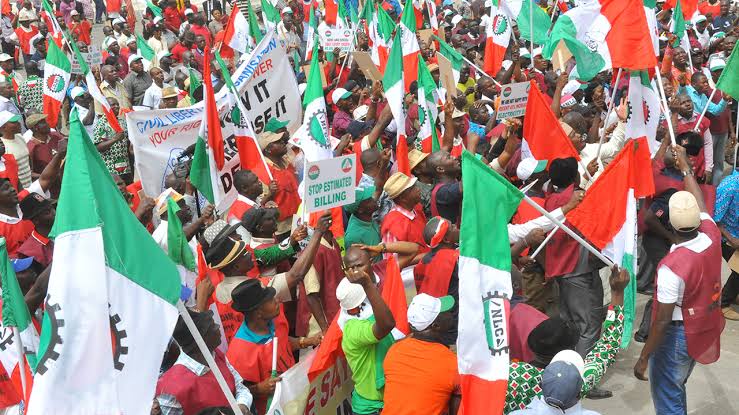
The National Industrial Court (NIC) sitting in Abuja has issued an interim injunction restraining the Nigerian Labour Congress (NLC), the Trade Union Congress (TUC), and their affiliates from embarking on any strike or protest within the Federal Capital Territory (FCT).
The order, delivered on Tuesday by Justice Emmanuel Sibilim, also barred three individuals listed as respondents in the suit — Comrades Benson Upah, General N.A. Toro, and Stephen Knabayi — from participating in the planned action.
The ruling followed an ex parte application jointly filed by the Minister of the FCT, Nyesom Wike, and the Federal Capital Territory Administration (FCTA).
The motion, marked NICN/ABJ/30/26, was argued on behalf of the applicants by a legal team led by Mr. James Onoja, SAN.
In the order, the court restrained the first to fifth respondents, their agents, or privies from embarking on any industrial action pending the hearing and determination of the motion on notice. It further directed the fifth to ninth defendants, comprising security agencies, to ensure that law and order are maintained in the FCT.
The claimants told the court that the Chairman of the NLC FCT Council had issued a mobilisation message to members and affiliated unions for a mass protest scheduled for February 3, 2026. They argued that the planned protest violated an existing court order.
According to the FCT Minister, an earlier interlocutory injunction issued by the court on January 27 restrained union bodies and workers under the Joint Unions Action Committee (JUAC) from continuing industrial action and directed them to resume work pending the determination of a substantive suit.
He alleged that despite the order, the NLC and TUC issued directives encouraging workers to sustain the strike, citing an appeal against the injunction.
The applicants contended that the directives were aimed at disrupting public order and paralysing activities in the nation’s capital.
In an affidavit supporting the motion, the FCT Minister and the FCTA stated that workers under JUAC had, from January 19, 2026, shut down offices, schools, and departments of the FCTA, bringing government activities to a standstill.
They further alleged that subsequent directives issued by labour leaders encouraged defiance of the court’s restraining order and culminated in plans for a mass protest on February 3.
The claimants expressed concern that the protest could lead to obstruction of vehicular movement, a breakdown of law and order, and infringement on the rights of FCT residents, businesses, expatriates, and visitors.
Meanwhile, the court has adjourned the substantive matter until February 10, 2026, for hearing.
