

Venezuela grants amnesty to 379 political detainees under new post-Maduro law

Venezuelan authorities have approved amnesty for 379 political prisoners following the passage of a new law by the National Assembly, offering the prospect of releases across the country’s detention facilities.
The legislation was unanimously adopted by Venezuela’s parliament and formally enacted by interim authorities after the removal of former leader Nicolás Maduro. The law is expected to pave the way for the release of hundreds of detainees held on politically linked charges.
National Assembly deputy Jorge Arreaza, who is overseeing the amnesty process, confirmed in a televised interview that the 379 prisoners “must be released and granted amnesty between tonight and tomorrow morning.” He added that the Public Prosecutor’s Office had already submitted formal requests to the courts to implement the measures.
However, the law contains significant exclusions. It does not apply to individuals accused of promoting or facilitating armed or forceful actions against Venezuela’s sovereignty with the involvement of foreign actors. Interim President Delcy Rodríguez has previously levelled such accusations against opposition leader María Corina Machado, who is currently in the United States and has expressed hopes of returning to Venezuela.
Members of the security forces convicted of terrorism-related offences are also excluded from the amnesty. Outside Rodeo 1 prison near Caracas, relatives of detainees expressed frustration that the law would not apply to many of their family members. Hiowanka Ávila, whose brother was arrested in 2018 over an alleged drone assassination attempt on Maduro, said the legislation does not cover their cases.
Arreaza noted that cases involving the armed forces would remain under the military justice system, where “benefits will be granted where appropriate.”
Human rights groups say the amnesty process will still require court procedures, which critics argue remain closely aligned with the previous government’s structures. The rights organisation Foro Penal previously estimated that around 650 people were detained nationwide, though updated figures have not yet been released.
Rodríguez defended the initiative in a national broadcast, saying her administration was working to build “a more democratic, more just and freer Venezuela.”
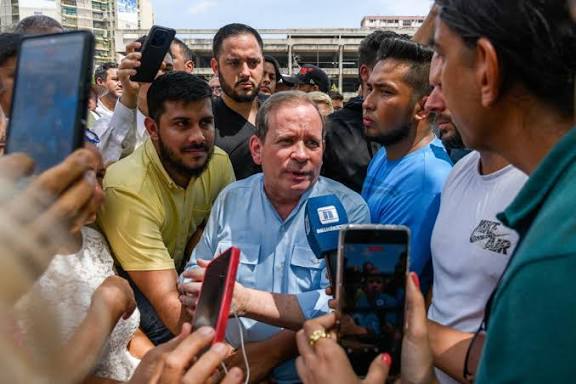
Opposition figure Juan Pablo Guanipa confirmed his release shortly after the law was passed, declaring himself “completely free” and calling for the liberation of all political prisoners and the return of exiles. He later addressed supporters in his hometown of Maracaibo.
The legislation has also drawn criticism from rights advocates, who warn it could be used to shield past abuses under Maduro and his predecessor Hugo Chávez. Exiled opposition leader Edmundo González Urrutia said there could be “no lasting reconciliation without memory or responsibility,” stressing that any amnesty must be anchored in accountability and the rule of law.
For families gathered outside prisons across Venezuela, the announcement has brought cautious hope—tempered by uncertainty over who will truly benefit from the new law and how swiftly the promised releases will take place.
