


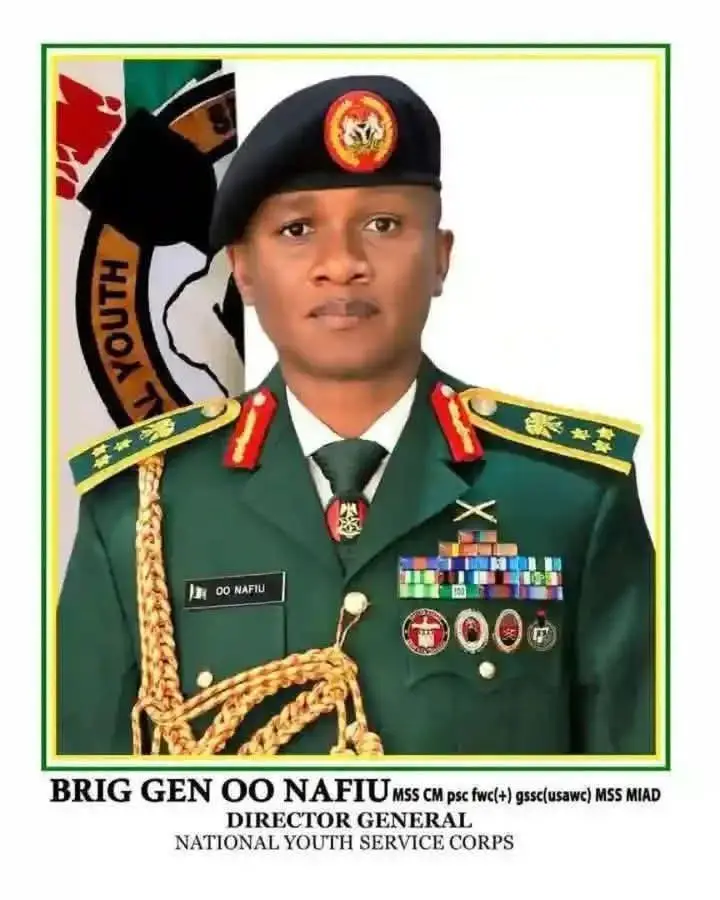
As Nigeria approaches another anniversary of one of its most enduring national institutions, the Director-General of the National Youth Service Corps (NYSC), Olakunle Nafiu, has reaffirmed the scheme’s pivotal role in fostering unity in the decades following the Nigerian Civil War.
Speaking in Abuja ahead of the scheme’s 53rd anniversary on May 22, Nafiu described the NYSC as a deliberate and strategic response to the deep divisions left by the civil war, noting that its relevance has endured despite changing national dynamics.
Established in 1973, the NYSC was conceived as part of a broader post-war recovery framework centred on reconciliation, rehabilitation and reintegration. According to Nafiu, deploying graduates to states outside their regions of origin was designed to expose young Nigerians to diverse cultures and foster a sense of shared identity.
“The idea was simple but powerful—if people understand each other, they are more likely to live together in peace,” he said.
Over the years, the programme has become a rite of passage for Nigerian graduates, with Nafiu noting that for many participants, the service year provides their first meaningful interaction with cultures beyond their immediate environment.
He added that the scheme has helped build lasting social bonds, including inter-ethnic marriages that have contributed to national cohesion.
“Many Nigerians at the national level today had their first real exposure to other cultures during their service year,” he said. “We have also seen numerous marriages formed during service, helping to build families that cut across ethnic and regional lines.”
Despite ongoing challenges around national unity, Nafiu maintained that the NYSC remains a critical tool in bridging divides across the country. While acknowledging that the scheme is not solely responsible for national integration, he argued that its absence would have had significant consequences.
“In spite of criticisms, many Nigerians recognise that the NYSC has played a vital role in keeping the country together,” he said.
From a modest beginning of about 2,364 corps members in 1973, the scheme has expanded significantly, now mobilising more than 400,000 graduates annually. Nafiu said the growth reflects both Nigeria’s expanding youth population and the programme’s continued relevance.
He also highlighted reforms introduced over the years, including improvements in administration, welfare, communication systems and the overall scope of corps members’ engagement.
According to him, the NYSC is evolving to meet contemporary realities, with increasing attention to technology and shifting demographics among Nigerian youths.
“The only constant is change, and we have continued to innovate to stay relevant,” Nafiu said.
Looking ahead, he reaffirmed the scheme’s commitment to promoting unity and preparing young Nigerians for leadership roles in national development.
“As we move forward, we will continue to sensitise our youths on the need to remain united as one nation,” he said.
More than five decades after its creation, the NYSC remains one of Nigeria’s most visible symbols of nation-building, an enduring experiment in unity still unfolding across generations.
