

Pope Leo XIV condemns resource exploitation, inequality during Equatorial Guinea visit

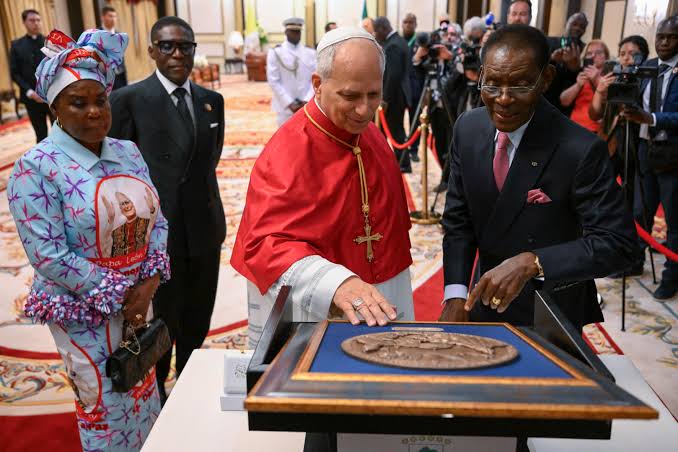
Pope Leo XIV on Tuesday criticized the exploitation of Africa’s natural resources and growing inequality as he arrived in Equatorial Guinea on the final leg of his Africa tour.
Speaking in the capital, Malabo, the pope denounced what he described as the “colonization” of oil and mineral wealth, warning that global economic systems driven by profit are worsening inequality and fueling conflict. He said such practices often disregard international law and the rights of local populations.
The visit marks the first papal trip to the country since Pope John Paul II in 1982. Crowds gathered to استقبال the pontiff, reflecting the country’s strong Catholic presence.
Equatorial Guinea, ruled by President Teodoro Obiang Nguema Mbasogo since 1979, has seen major economic gains from oil discoveries. However, much of the population continues to live in poverty, with rights groups alleging widespread corruption and concentration of wealth among the ruling elite.
During meetings with government officials, Leo echoed the teachings of the late Pope Francis, criticizing economic systems that prioritize profit over human dignity. He urged leaders to reject the “lust for power” and focus instead on justice, solidarity, and the common good.
The pope also referenced the philosophical ideas of Saint Augustine, contrasting a worldly pursuit of power with a moral vision centered on compassion and care for the poor.
While he did not directly address specific allegations against the government, Leo’s remarks highlighted the broader challenges of governance, inequality, and human rights in the country.
His visit comes amid increasing global competition for Africa’s mineral resources, including initiatives backed by the United States to secure access to critical materials.
The pope is expected to continue his visit with a trip to a prison in Bata, where he has emphasized the importance of human dignity and justice, alongside broader concerns about migration and humanitarian treatment worldwide.
