

United Arab Emirates to exit OPEC, signaling shift in global oil dynamics

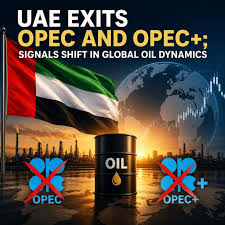
United Arab Emirates announced it will leave the Organization of the Petroleum Exporting Countries effective May 1, marking a major change for the group as it loses one of its largest producers and a key source of spare production capacity.
The move follows years of friction over production quotas, with the UAE arguing that OPEC limits prevented it from fully utilizing its expanded oil output capabilities. Analysts say the country has been positioning itself to increase production and capture a larger share of global markets.
The decision also reflects broader strains within the alliance. Relations between the UAE and Saudi Arabia — OPEC’s dominant producer — have cooled amid economic rivalry and regional political differences, even as both countries navigate tensions linked to the ongoing conflict involving Iran.
Despite the high-profile departure, immediate market impacts may be limited. Global oil supplies remain constrained due to the war involving Iran, which has disrupted flows through the Strait of Hormuz — a critical route for about one-fifth of the world’s oil. Prices have surged, with Brent crude trading well above prewar levels.
OPEC, which produces roughly 40% of global oil, has already seen its influence decline in recent years as output from the United States has increased significantly. The UAE’s exit is expected to further weaken the group’s ability to manage supply and stabilize prices.
In a statement carried by the state-run WAM news agency, the UAE said the decision aligns with its long-term economic strategy and evolving energy profile. It added that any increase in production would be gradual and responsive to market conditions. The country will also withdraw from the broader OPEC+ alliance, which includes major producers like Russia.
Energy analysts warn that OPEC will face growing challenges without the UAE’s flexible production capacity, which has been crucial in adjusting supply during market fluctuations.
The UAE, a member of OPEC since 1967 through Abu Dhabi, had been producing around 3.4 million barrels per day before the outbreak of war earlier this year, with the ability to raise output significantly.
While Emirati officials have downplayed political motives, the timing underscores shifting alliances in the Gulf. Competition with Saudi Arabia has intensified across economic sectors and regional influence, including in strategic areas like the Red Sea.
The move also highlights the UAE’s dual-track energy policy. While it hosted the COP28 climate summit and supports a transition toward cleaner energy, it continues to invest heavily in expanding oil production capacity — a strategy that has drawn criticism from climate advocates.
Overall, the UAE’s departure signals a more fragmented oil landscape, with producers increasingly pursuing independent strategies rather than coordinated output policies.
