


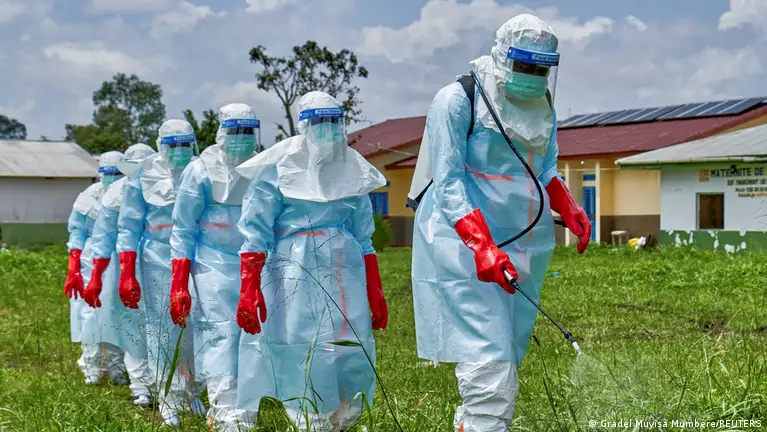
Uganda is once again confronting the deadly threat of Ebola as health officials confirmed two new cases in Kampala, raising concerns over the spread of the virus into the densely populated capital city.
The Ministry of Health announced on Monday that the latest infections involve two Ugandan health workers employed at a private medical facility in Kampala. Both patients have been isolated in a designated treatment unit where they are receiving medical care.
Health authorities say emergency response teams have intensified contact tracing efforts to identify and monitor individuals who may have interacted with the infected workers.
The new infections bring Uganda’s total confirmed Ebola cases to seven, following the announcement of three additional cases over the weekend.
The outbreak’s epicentre remains in the neighbouring Democratic Republic of Congo’s Ituri province, a region bordering Uganda that has experienced repeated Ebola flare-ups in recent years due to its fragile healthcare system and cross-border population movement.
The World Health Organisation (WHO) has classified the outbreak of the rare Bundibugyo strain of Ebola as a Public Health Emergency of International Concern, signalling the seriousness of the situation and the need for coordinated international action.
WHO Director-General, Tedros Adhanom Ghebreyesus, disclosed on Sunday that more than 900 suspected Ebola cases have been recorded so far, including 101 confirmed infections.
The re-emergence of Ebola in Uganda has revived painful memories of previous outbreaks that strained health systems and disrupted economic activity across East Africa. Public health experts warn that infections involving healthcare workers are particularly worrying because they increase the risk of transmission within medical facilities.
Authorities are urging the public to remain vigilant, report symptoms early, and comply with health advisories as efforts intensify to prevent the outbreak from escalating further.
