

Expert raises alarm over decline of donkey populations

By Elizabeth Ogunjobi
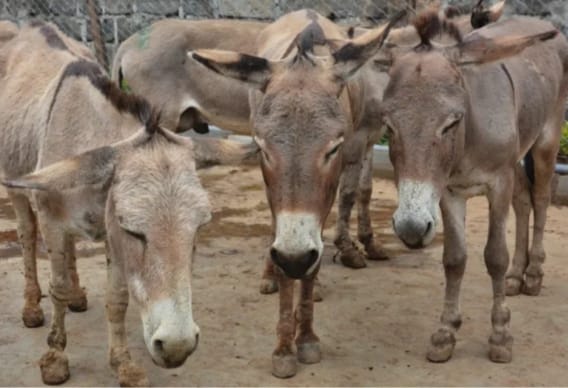
The Animal Welfare Society of Nigeria (AWSON) has raised concern over the increasing decline of donkey populations in the country.
The group advocated conservation and welfare measures to prevent the animal from extinction.
Its President, Prof. Mohammed Sanusi, said this in a telephone interview with the News Agency of Nigeria (NAN), on Wednesday in Gombe.
Sanusi is also a lecturer with the Department of Animal Production, Abubakar Tafawa Balewa University (ATBU), Bauchi.
He said that urgent measures are imperative to protect the animal from extinction, as the illegal donkey skin trade was on the rise, thus posing threat to its survival.
The expert said the decline in donkey population was driven by foreign demand for ‘ejiao,’ a traditional medicine and cosmetic gelatin made from boiled donkey hides and other parts.
According to Sanusi, the illegal activity and killing of the animal by some traders is heavily depleting the domestic donkey population.
“There are still a good number of donkeys in rural areas but due to poverty, some are selling them out in huge numbers.
“Also, improvement in technology is contributing to rural dwellers depending less on their donkeys as tricycles are being used to replace it, hence selling off donkeys becomes a welcome development.
“Donkey population is declining because of increasing demand, particularly the animals are slaughtered here and their skins exported to China.
“According to reports that we have read, they use the donkey skins to produce ejiao, which is an ancient Traditional Chinese Medicine (TCM) derived from the gelatin of boiled donkey hides.
“The demand for donkeys for ejiao production is having a devastating impact on its populations in Nigeria and other African countries,’’ he said.
Sanusi urged the government to invest in modern ways to boost reproduction of the animal to accelerate population growth.
He said the steady decline of donkey population has been linked to the emerging trend of illegal donkey slaughter and consumption, low reproduction rate, and poor welfare practices toward the animal.
The animal welfare advocate said donkeys faced a major threat in their future, and stressed the need for proactive measures to protect it from exploitation, abuse and neglect.
“Donkeys are vital to rural livelihoods and the economy,” he said.
