

EFCC Chairman Calls for Review of Religious Titles Amid Financial Crime Cases

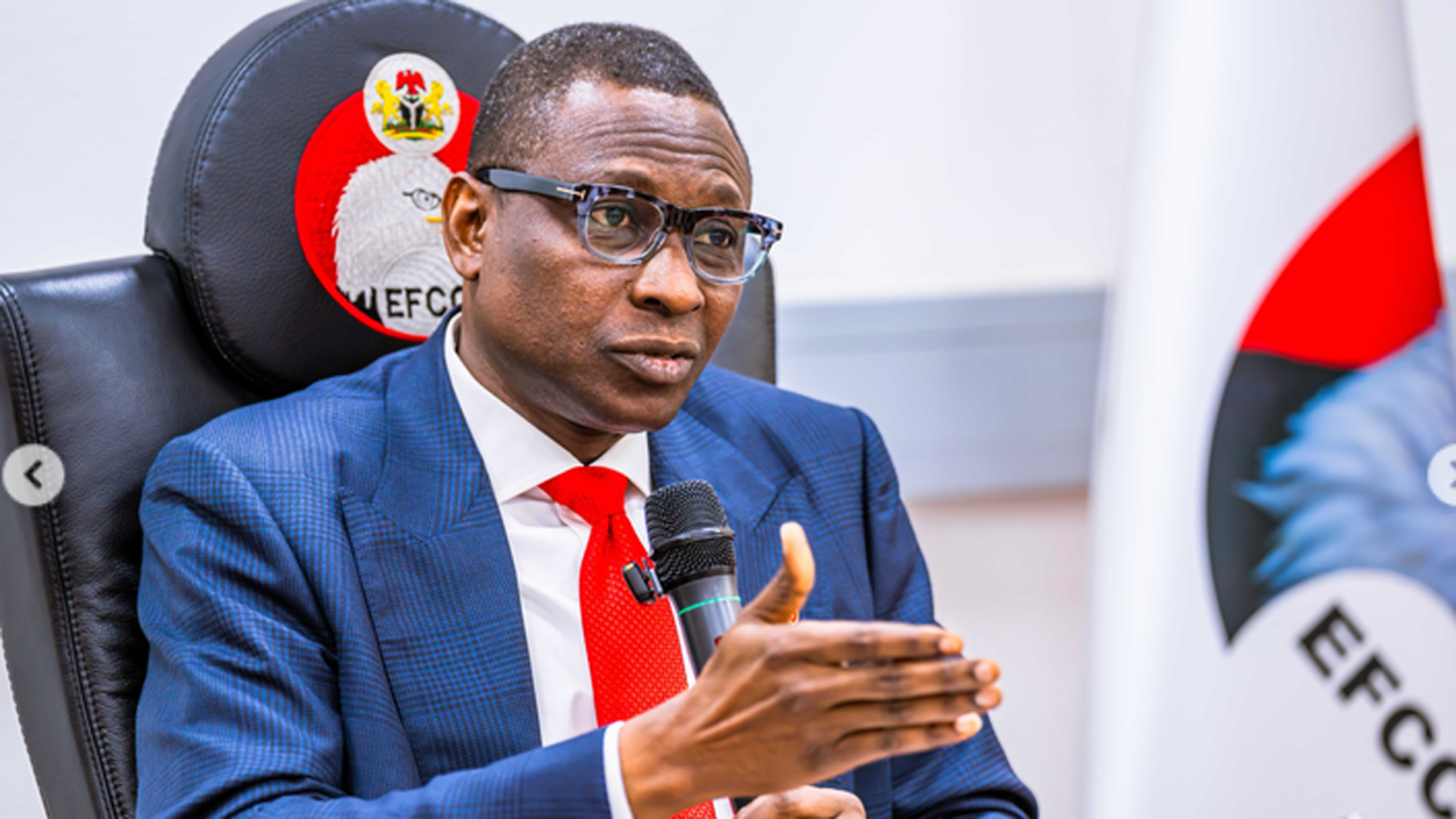
The Chairman of the Economic and Financial Crimes Commission (EFCC), Ola Olukoyede, has called for a review of the way religious titles are conferred on individuals, expressing concern over the involvement of some pastors, imams, bishops and other religious figures in financial crimes.
Olukoyede made the call on Wednesday at the 2026 Second Council Meeting of the Nigeria Inter-Religious Council (NIREC) in Abuja, themed, “Shared Sacred Flourishing in Nigeria.”
The EFCC chairman said the commission had investigated, prosecuted and secured convictions against individuals who held prominent religious titles.
According to him, several case files at the commission contain suspects identified as pastors, imams, bishops and sheikhs, with some already convicted and serving prison sentences.
“So many case files, pastor, imam indicted for financial crimes. And some of them are even badly convicted, and they are in jail,” Olukoyede said.
He expressed concern that some convicted offenders continued to be addressed by their religious titles even while serving prison sentences.
“And while in jail, they still refer to them as pastor and imam,” he added.
Olukoyede suggested that religious leaders and institutions should reconsider the conferment and continued use of such titles where they could be perceived as shielding individuals from accountability.
“I advocated for a review of the titles we give to men of God. Maybe, if it is possible for us to remove those titles, pastor and imam,” he said.
He added that the issue required broader reflection on the qualities that should define genuine religious leadership.
“So, it is something for us to really think about. Maybe, we are just to recognise them as men of God,” he said.
The EFCC chairman argued that genuine spirituality should be demonstrated through conduct and integrity rather than appearance or self-acclaimed religious status.
“Because the spirit of God is by their fruits, not their appearance. Not what we call ourselves. It is by the fruits,” he said.
Olukoyede also recounted an incident involving a suspect who was brought to the EFCC for investigation and demanded to see him while introducing himself through several religious titles.
“Somebody was brought in for investigation. And he demanded to see me… As he entered, he said, I am reverend, doctor, bishop,” he recalled.
He said he ignored the titles and focused on the allegations against the suspect, stressing that religious identity could not override the law.
Olukoyede warned that no individual would be shielded from prosecution because of religious affiliation or position.
“So, if you think you’re a Christian or you’re a pastor here, and you commit financial crime, I will be your enemy. I won’t be your friend,” he declared.
Speaking on the NIREC meeting, the EFCC chairman said he was honoured to participate because of the importance of its theme and the role of the council in promoting peaceful coexistence among Nigeria’s religious communities.
He noted that Nigeria is a deeply religious society, but questioned whether the country’s strong religious identity was sufficiently reflected in public conduct and economic life.
“We are a deeply religious people. Our churches and mosques are full,” Olukoyede said.
“Yet, we must have the courage to ask ourselves, has the depth of our religious profession been sufficiently reflected in the integrity of our public and economic life?” he asked.
The EFCC chairman stressed that financial crime had no religious or ethnic identity, noting that Christians and Muslims alike suffer when public resources are stolen or misappropriated.
He urged religious leaders to use their influence to promote integrity and discourage corruption among their followers.
Olukoyede also recalled what he described as disturbing findings from an investigation into a pilgrimage board during his time as Chief of Staff and Secretary, alleging that nearly 75 per cent of funds meant for pilgrims had been stolen.
He said religious institutions had a major role to play in preventing financial crimes by shaping character and promoting honesty within society.
“While EFCC can investigate conduct and prosecute fraud, faith communities can influence character and cultivate honesty to prevent crime,” he said.

