

Building a Digital Future for Women: Inside the NITDA–RHI Collaboration
Empowering women and narrowing the gender gap could potentially increase Nigeria’s GDP by 20 percent – Kashifu Inuwa Abdullahi CCIE

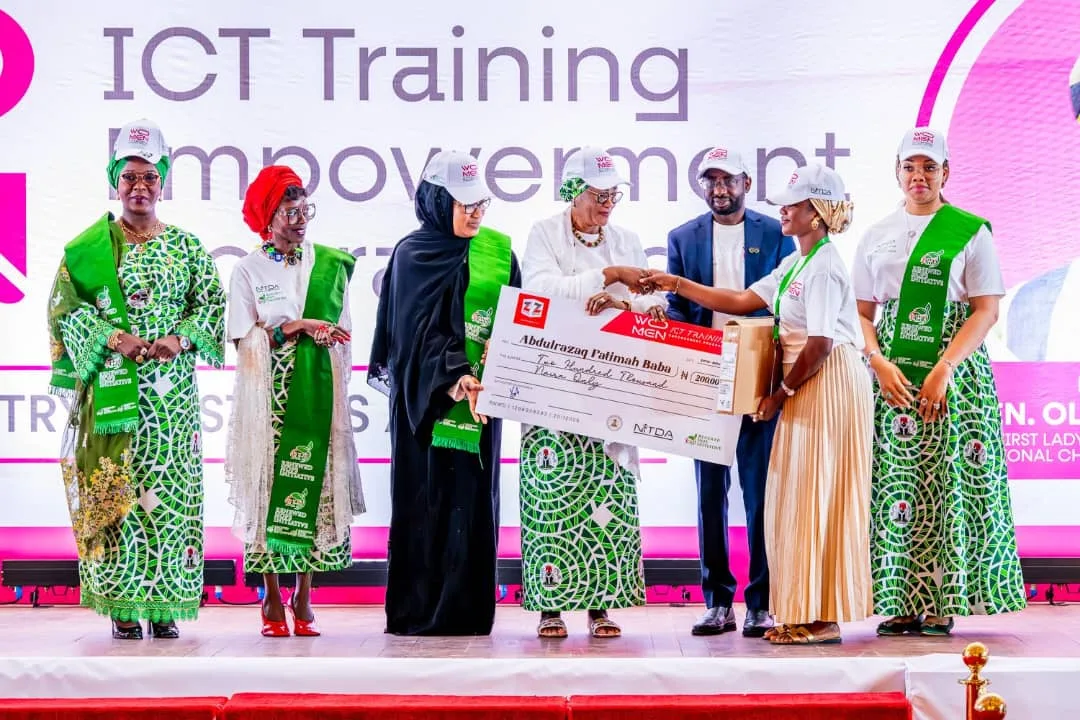
In a country racing to position itself as a leading digital economy in Africa, the question of who benefits from technological transformation has become increasingly urgent. For decades, women, especially those in underserved communities, have faced systemic barriers to participating in the technology ecosystem, from limited digital literacy to restricted access to training and resources. Against this backdrop, a growing collaboration between the National Information Technology Development Agency (NITDA) and the Renewed Hope Initiative (RHI) is emerging as a deliberate effort to close Nigeria’s digital gender gap and empower women through technology-driven opportunities.
The partnership is rooted in a shared vision between Nigeria’s technology development agency and the social intervention platform championed by the First Lady, Sen. Oluremi Tinubu, CON. Through this collaboration, digital empowerment has become a central component of the broader national development strategy aligned with the Renewed Hope Agenda of President Bola Ahmed Tinubu, GCFR. By combining policy support, digital infrastructure, and targeted training programmes, the initiative aims to equip Nigerian women with the skills, tools, and confidence required to thrive in an increasingly technology-driven economy.
At the heart of the collaboration is a national effort to expand women’s access to digital skills. The Women ICT Training and Empowerment Programme, implemented jointly by NITDA and the Renewed Hope Initiative, has become one of the flagship interventions designed to bring women into Nigeria’s digital ecosystem. The programme gathers participants from across the country’s six geopolitical zones and provides intensive training focused on practical digital skills such as content creation, digital marketing, software usage, online safety, and basic ICT troubleshooting. Participants undergo weeks of structured learning designed not only to introduce them to digital tools but also to help them translate those skills into income-generating opportunities.
The scale of the programme has grown significantly within a short period. While the initiative began modestly with only 35 women trained in 2023, it expanded rapidly, training 252 women in 2024 and 320 women in 2025. In just three years, more than 600 women have passed through the programme, representing communities from every region of the country. These participants are not merely beneficiaries of training; they are encouraged to become digital ambassadors in their communities, passing on their knowledge to other women and helping to build a grassroots culture of digital literacy.
This approach reflects NITDA’s broader strategy of scaling digital inclusion through what it describes as a “train-the-trainer” model. Beneficiaries are expected to mentor at least two or three other women after completing the programme, creating a multiplier effect that extends digital skills far beyond the initial training cohorts. The idea is simple but powerful: empowering one woman with digital knowledge can create ripple effects that influence families, businesses, and entire communities.
Beyond training programmes, the partnership between NITDA and the Renewed Hope Initiative also focuses heavily on expanding digital infrastructure across the country. Several ICT community centres and digital learning facilities have been established in multiple states to ensure that women and young people have access to computers, internet connectivity, and e-learning resources. These centres serve as hubs for digital education, entrepreneurship training, and community innovation.
The collaboration also aligns closely with NITDA’s long-term national strategy for digital literacy. Through its National Digital Literacy Framework, the agency aims to achieve 95 percent digital literacy in Nigeria by 2030, with an interim milestone of 70 percent by 2027. Women are a central focus of this strategy, particularly under the National Gender Digital Inclusion Strategy, which seeks to empower millions of Nigerian women with digital skills and technology access.
The partnership therefore represents more than a series of training sessions or infrastructure projects. It is part of a broader attempt to reshape Nigeria’s development trajectory by ensuring that women are not sidelined in the country’s digital transformation. By equipping women with technology skills, creating digital learning environments, and linking empowerment programmes with economic opportunities, the initiative seeks to redefine the role of women in Nigeria’s emerging knowledge economy.
