

ECB Flags Rising Inflation Risks as Iran War Fuels Energy Price Surge

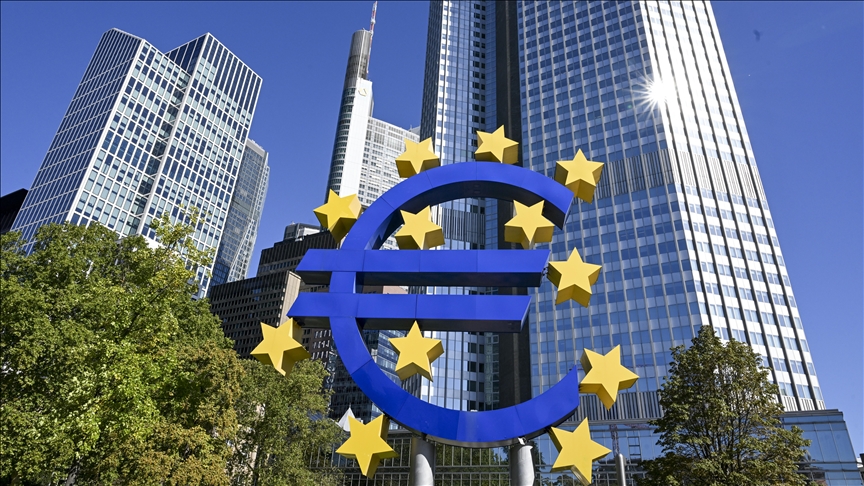
The European Central Bank (ECB) has warned that the ongoing war in Iran could drive up inflation across Europe, citing rising energy prices and growing uncertainty in the euro area economy.
Speaking at a media briefing in Frankfurt, ECB President Christine Lagarde said the conflict in the Middle East is increasing risks to both inflation and economic growth.
“The war in the Middle East has made the outlook significantly more uncertain, creating upside risks for inflation and downside risks for economic growth,” she said.
Lagarde noted that higher oil and gas prices triggered by the conflict would have a “material impact” on near-term inflation, as the ECB held its key interest rates steady in a bid to steer inflation back to its 2 per cent target over the medium term.
According to updated ECB projections, inflation in the euro area is now expected to average 2.6 per cent in 2026, before easing to 2 per cent in 2027 and slightly rising to 2.1 per cent in 2028 — all upward revisions from earlier forecasts.
She explained that energy costs remain the primary driver of the revised outlook, with price pressures also spreading beyond the energy sector. Core inflation, which excludes energy and food, is projected to average 2.3 per cent in 2026, 2.2 per cent in 2027 and 2.1 per cent in 2028.
The ECB chief warned that prolonged disruptions to global oil and gas supplies could worsen inflation and further dampen economic activity.
“The implications for medium-term inflation depend crucially on the magnitude of indirect and second-round effects of a stronger and more persistent energy shock,” Lagarde said.
Economic growth forecasts for the euro area have also been revised downward, with output now expected to expand by 0.9 per cent in 2026, 1.3 per cent in 2027 and 1.4 per cent in 2028.
Lagarde attributed the weaker outlook to declining real incomes, reduced consumer and volatility in commodity markets linked to the conflict.
She added that the broader global environment remains fragile, with shifting trade policies and geopolitical tensions compounding risks.
“The war in the Middle East is a downside risk to the euro area economy. A prolonged conflict could push energy prices higher for longer and further weaken confidence,” she said.
