

Empowering Women for a Digital Future: How NITDA is Equipping Female Leaders with Skills for the Digital Economy

In an era where technology is reshaping economies, leadership and daily life, empowering women with digital skills is increasingly seen as essential to inclusive development. Across Nigeria, efforts to bridge the digital divide are gaining momentum, with women emerging as a key focus of digital inclusion programmes.
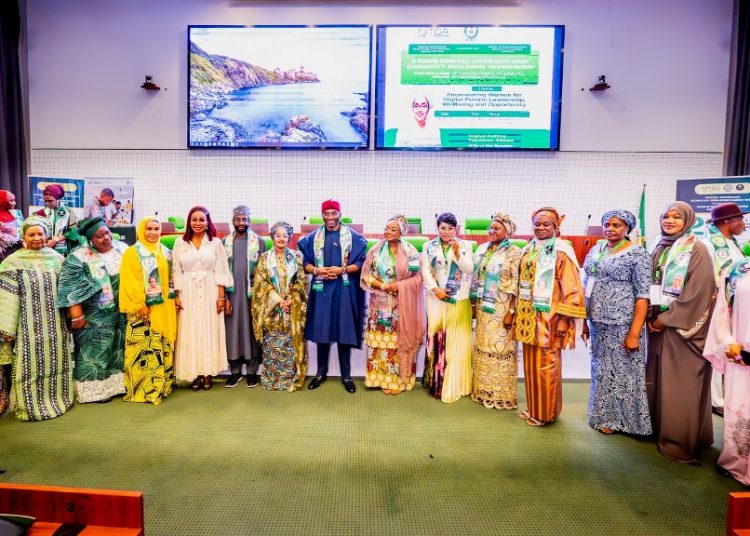
One such initiative recently unfolded in Abuja, where the National Information Technology Development Agency (NITDA) partnered with the House of Representatives Spouses Association (HORSA) to host a two-day digital literacy and capacity-building workshop designed to equip women with the tools needed to thrive in an increasingly digital world.
The workshop, themed “Empowering Women for a Digital Future: Leadership, Wellbeing, and Opportunity,” brought together spouses of members of the House of Representatives for intensive training aimed at strengthening their digital competence, entrepreneurial capacity and leadership skills.
Beyond a routine training exercise, the programme reflects a broader push by NITDA to ensure that women are not left behind as Nigeria transitions into a digital economy. For many participants, the workshop represented a rare opportunity to gain insights into how digital technology can expand economic opportunities, strengthen leadership roles and improve personal wellbeing.
Throughout the programme, participants were exposed to a wide range of sessions covering digital literacy, cybersecurity awareness, entrepreneurship, financial literacy and digital wellbeing. The training was deliberately designed to go beyond basic computer knowledge. Instead, it focused on practical applications that can empower women to leverage digital tools in their daily lives, businesses and public engagements.
Declaring the workshop open on behalf of the Speaker of the House of Representatives, the Deputy Speaker of the House, Benjamin Okezie Kalu, said the initiative recognised the critical but often overlooked role spouses play in supporting public office holders. According to him, the responsibilities of lawmakers frequently extend beyond legislative chambers and often place pressure on family life. He said empowering spouses with knowledge and leadership skills would enable them to provide stronger support and more informed perspectives in the demanding environment of public service.
For NITDA, the workshop also aligns with a larger national strategy to build an inclusive digital economy that empowers citizens across all sectors of society. In his welcome address, NITDA Director General Kashifu Inuwa Abdullahi CCIE explained that the agency is actively implementing a national digital literacy framework aimed at achieving 95 percent digital literacy across Nigeria by 2030.
According to him, the initiative forms part of the Federal Government’s broader digital transformation strategy under the Renewed Hope Agenda of President Bola Ahmed Tinubu, which places digitalisation and innovation at the centre of economic diversification and national development.
For Hajiya Fatima Tajudeen Abbas, Leader of HORSA and wife of the Speaker of the House of Representatives, the workshop represents a significant milestone in the efforts of the 10th National Assembly to support the development of women connected to the legislative community. She described the programme as the first comprehensive capacity-building initiative organised for spouses of lawmakers under the current Assembly.
As Nigeria continues its journey toward digital transformation, initiatives like the NITDA-HORSA workshop highlight the growing recognition that empowering women is not just a social objective but also an economic imperative. By equipping women with digital knowledge, leadership skills and entrepreneurial tools, programmes such as this are helping to ensure that Nigeria’s digital future is both inclusive and sustainable.
For the women who participated in the training, the workshop offered more than new technical knowledge. It provided a renewed sense of purpose and possibility – a reminder that in the digital age, empowerment often begins with access to information, skills and opportunity.
