

Global Health Funding Crunch Raises Pandemic Risks, WHO Warns

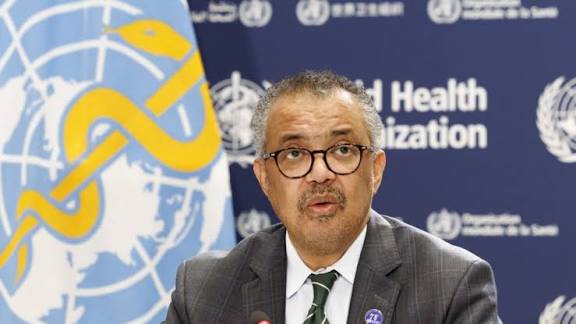
The World Health Organisation (WHO) has warned that shrinking global health funding is colliding with rising disease threats and conflict, creating dangerous gaps in global preparedness even as countries move to finalise new agreements aimed at preventing future pandemics.
Speaking on Monday at the opening of the 158th session of the WHO Executive Board, Director-General Dr. Tedros Adhanom Ghebreyesus described the period as a defining moment for global health security.
He said 2025 reflected stark contrasts for the organisation, with major policy breakthroughs achieved alongside severe financial strain. While governments adopted the landmark WHO Pandemic Agreement and enforced amended International Health Regulations, funding cuts forced the agency to downsize its workforce.
“Significant cuts to our funding left us with no choice but to reduce the size of our workforce,” Tedros said, adding that sudden reductions in bilateral aid had disrupted health systems and services in many countries.
WHO data show that deep gaps in global healthcare access persist, with billions still unable to obtain basic services and rising costs pushing families into poverty. Tedros disclosed that 4.6 billion people lack access to essential health services, while 2.1 billion face financial hardship due to health expenses. He also warned of a projected global shortage of 11 million health workers by 2030.
Despite the challenges, the WHO chief said the pandemic agreement marked a major step forward in strengthening surveillance, cooperation and equitable access to health countermeasures.
“The pandemic taught us that global threats demand a global response. Solidarity is the best immunity,” he said.
He noted that more than 110 countries have upgraded laboratory and epidemic intelligence systems through WHO-led surveillance initiatives, and that the organisation has secured access to hundreds of millions of influenza vaccine doses for future pandemics. However, he stressed that preparedness efforts cannot be sustained without predictable and reliable financing.
Tedros also highlighted conflict as a growing health threat, condemning the rising number of attacks on hospitals and health workers. He said WHO verified 1,350 attacks on healthcare facilities last year, describing such incidents as an “alarming and illegal new normal” in conflict zones.
On scientific progress, he said polio cases have fallen to historic lows, more countries have eliminated neglected tropical diseases, and advances in vaccines and treatments continue. He singled out Lenacapavir as a major breakthrough in HIV prevention, describing it as “the nearest thing we have to an HIV vaccine.”
However, Tedros cautioned that medical advances cannot replace strong and resilient health systems. He emphasised the need for WHO to reduce its dependence on a small group of donors, a vulnerability exposed by the current funding crisis.
“I mean a WHO that is no longer a contractor to the biggest donors,” he said. “I mean an impartial, science-based organisation that is free to say what the evidence says, without fear or favour.”
While member states have increased their mandatory contributions, helping to cover most of WHO’s current budget, he warned that closing the remaining funding gap would be difficult amid global economic pressures.
Tedros concluded that the challenge ahead is whether countries will match new global health agreements with sustained investment or risk facing the next pandemic with stronger rules but weaker health systems.
