

Iran Expands Conflict as Russia, China Limit Support

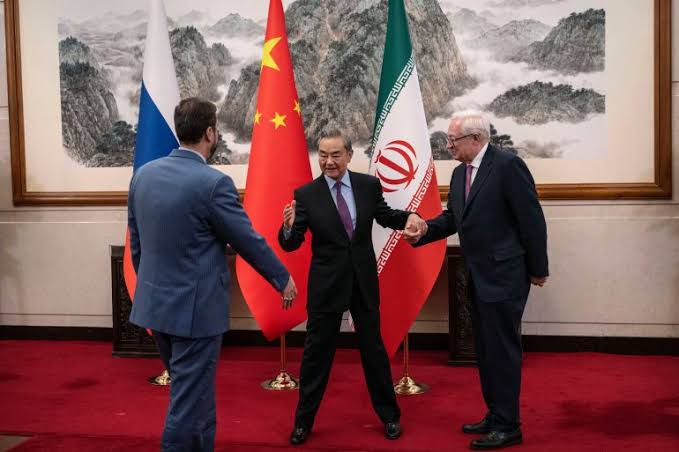
Iran has intensified its response to recent attacks by the United States and Israel, widening the conflict beyond the Middle East even as longtime partners Russia and China stop short of offering direct military support.
Following the killing of Iran’s supreme leader and sustained U.S. military pressure, Tehran has launched missiles and drones targeting locations across the region and beyond. Strikes reportedly reached Cyprus, Azerbaijan, Turkey and several Gulf states, hitting energy infrastructure, critical businesses and U.S. military bases.
The escalation has severely disrupted global energy supply chains, particularly through the strategic Strait of Hormuz, a vital shipping lane responsible for transporting roughly 20 per cent of the world’s oil. With shipping already paralysed in the waterway, oil and gas supplies have been affected, sending global energy prices soaring and rattling financial markets worldwide.
Analysts say Moscow and Beijing have responded cautiously, limiting their reactions to diplomatic condemnations while avoiding deeper involvement in the conflict.
According to Russia expert Anna Borshchevskaya of the Washington Institute for Near East Policy, Russia’s priorities remain focused on its ongoing war in Ukraine.
“Putin has other priorities, and chief among them is Ukraine. It would be foolish for Russia to go into a direct military confrontation with the United States,” she said.
Despite years of military cooperation with Iran, both Russia and China appear reluctant to escalate tensions with Washington. The two powers have previously supplied Tehran with missiles, air-defence systems and other military technologies designed to counter U.S. and Israeli pressure, but that assistance now appears limited.
Experts say Beijing’s cautious stance reflects its broader foreign policy strategy of avoiding binding security commitments outside its core interests. Unlike the United States, whose alliances are often built on mutual defence agreements, China’s partnerships are largely centred on trade, investment and arms sales.
Analyst Evan A. Feigenbaum of the Carnegie Endowment for International Peace noted that China maintains strong ties with both Iran and its Gulf rivals, balancing its interests across the region.
For Beijing, one of the world’s largest energy importers, the crisis also poses risks. About 45 per cent of China’s oil imports pass through the Strait of Hormuz. However, analysts say the country has built strategic reserves and maintains stockpiles of Iranian crude stored in tankers and storage facilities.
Observers also suggest the conflict could indirectly benefit both Moscow and Beijing. Rising oil prices bolster Russia’s war-driven economy, while prolonged U.S. military engagement in the Middle East could divert attention and resources away from Asia and the conflict in Ukraine.
Russian President Vladimir Putin and Chinese Foreign Minister Wang Yi have reportedly engaged in diplomatic outreach, speaking with Gulf, European and Iranian officials in an effort to encourage dialogue and position their countries as potential mediators.
Analysts say Moscow, in particular, is hedging its bets. While Russia does not benefit from a collapse of the Iranian government, it is also careful not to tie its long-term strategic interests solely to Tehran’s survival.
Experts point to Russia’s approach in Syria as an example. Despite years of backing former president Bashar al‑Assad, Moscow maintained its military bases and quickly built relations with the country’s new leadership after political changes in Damascus.
The evolving conflict highlights a geopolitical paradox: although Iran remains strategically important to both Russia and China, analysts say neither power appears willing to risk a direct confrontation with the United States on Tehran’s behalf.
