

National Grid Restored After Second Collapse in Five Days as LCCI Calls for Forensic Audit

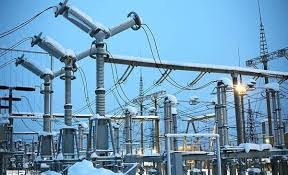
Electricity supply across affected parts of the country has been restored following a partial collapse of the national grid, the Nigerian Independent System Operator (NISO) has confirmed.
In a statement issued in Abuja on Tuesday, NISO said the grid experienced a voltage disturbance at about 10:48 a.m., originating from the Gombe Transmission Substation. The disturbance quickly spread across the network, affecting the Jebba, Kainji and Ayede transmission substations.
According to the system operator, the incident led to the tripping of some transmission lines and generating units, resulting in a partial system collapse.
“Appropriate corrective actions were immediately implemented to stabilise the system and restore normal operations. Restoration, which commenced at about 11:11 a.m., has since been completed,” NISO said.
The operator clarified that the incident did not amount to a total grid collapse, contrary to reports in some sections of the media, as only parts of the network were affected.
Meanwhile, the Lagos Chamber of Commerce and Industry (LCCI) has called on the Federal Government to order an independent forensic audit of the national grid following the second collapse within five days.
The Director-General of LCCI, Dr Chinyere Almona, made the call in Lagos on Tuesday, urging authorities to adopt a transparent and decisive approach to addressing the recurring failures.
She said the proposed audit should examine the integrity of transmission infrastructure, system protection mechanisms, operational protocols and the overall governance of grid management.
Almona noted that the repeated grid failures have plunged the country into darkness, disrupted economic activities and exposed deep structural and operational weaknesses in the power transmission system.
She warned that the instability poses a serious threat to manufacturers, micro, small and medium enterprises (MSMEs), and the broader business environment, citing losses from reduced productivity, damaged equipment, higher operating costs and increased dependence on self-generated power.
According to her, frequent grid collapses erode investor confidence, fuel inflationary pressures and undermine the credibility of ongoing economic reforms, particularly as Nigeria moves from crisis management into a consolidation phase in 2026.
Almona added that without urgent structural reforms, Nigeria could experience dozens of grid collapses in 2026 under a “business-as-usual” scenario. However, she said immediate reforms, system upgrades and strict operational discipline could eliminate such incidents entirely.
She stressed that the findings of a forensic audit should inform short-term reforms to improve grid performance, warning that failure to act would continue to hinder productivity, exports and job creation.
“Reliable power supply is fundamental to industrialisation, competitiveness and macroeconomic stability. Restoring grid stability must be treated as an economic emergency, not just a technical issue,” Almona said.
She added that the recurring collapses are unacceptable and called for coordinated and decisive action to safeguard Nigeria’s economic performance.
