

Russia, China Veto UN Resolution on Strait of Hormuz Amid Rising Gulf Tensions

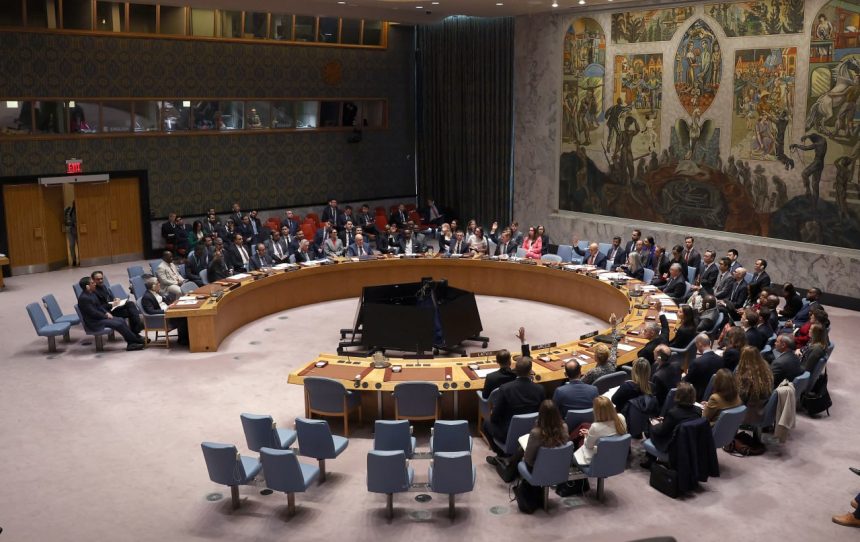
A draft resolution calling for the reopening of the Strait of Hormuz failed at the United Nations Security Council on Tuesday after vetoes from Russia and China, highlighting deep divisions among major powers over the escalating regional crisis.
The proposal, submitted by Bahrain on behalf of several Gulf nations, including Saudi Arabia, United Arab Emirates, Qatar, Kuwait and Jordan, called for safeguarding maritime navigation and preventing the use of key shipping routes as leverage in geopolitical disputes.
Despite receiving support from 11 of the Council’s 15 members, the measure was blocked by the two permanent members’ veto power. Pakistan and Colombia abstained.
Bahraini Foreign Minister Abdullatif Al-Zayani criticized the outcome, warning that the Council’s failure to act sends a signal that threats to global navigation may go unanswered.
The United States voiced strong backing for the Gulf states. Its UN representative, Michael Waltz, condemned the veto and accused Iran of escalating tensions and targeting commercial shipping and U.S. interests in the region.
European members echoed concerns, cautioning that prolonged disruption in the waterway could severely impact global energy markets and trade flows.
Russia’s UN envoy Vasily Nebenzya defended Moscow’s position, arguing the draft lacked balance and failed to address underlying causes, including recent U.S. and Israeli strikes on Iran. China’s representative Fu Cong similarly described the resolution as one-sided and urged dialogue instead of confrontation.
Meanwhile, Pakistan’s envoy Asim Iftikhar Ahmad called for de-escalation and the restoration of safe navigation, while Iran’s UN ambassador Amir Saeid Iravani dismissed the proposal as biased.
The standoff comes amid heightened tensions linked to the ongoing conflict involving the United States, Israel, and Iran, which has raised alarm over the security of one of the world’s most critical and shipping corridors.
