


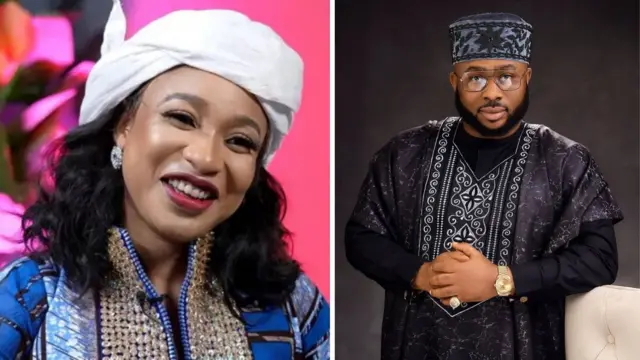
When actress Tonto Dikeh published her recent Facebook post speaking of “restoration,” “peace,” and a healed relationship with her ex-husband, Olakunle Churchill, public reaction was swift and intense. In a society where celebrity relationships are closely watched and faith-based language carries enormous weight, many Nigerians did not read the message as a simple co-parenting breakthrough. They read it as a possible signal of reconciliation between former husband and wife.
That interpretation is understandable. The tone of the post is not casual or administrative. It is spiritual, emotional, and deeply reflective. Tonto Dikeh frames the change in her relationship with Churchill as the direct work of God after “ten long years of public battles, deep wounds, broken communication, bitterness, and pain.” She speaks of peace replacing chaos, of respect returning where anger once lived, and of love finding its voice again. In a country where religious language often doubles as emotional truth, such words naturally provoke speculation.
This reaction is also shaped by history. The marriage between Tonto Dikeh and Churchill did not simply end; it imploded in full public view. Their separation was followed by years of acrimony, legal disputes, and damaging accusations traded openly. At various points, reconciliation appeared impossible. In fact, Tonto Dikeh once publicly rejected prayers for a reunion, insisting that some relationships should remain in the past. Against that backdrop, her latest declaration feels less like routine maturity and more like a dramatic reversal.
Still, emotion must not be confused with intention. Nowhere in the post does Tonto Dikeh explicitly state that she and Churchill are returning to marriage. She does not speak of remarriage, renewed vows, or resuming life as husband and wife. Her gratitude is directed toward peace, humility, and obedience to God, with a clear emphasis on the well-being of their child. Read carefully, the post can be understood as the restoration of communication and mutual respect after years of hostility—a reconciliation of hearts, not necessarily of homes.
Yet the ambiguity remains, and ambiguity is rarely innocent in public discourse. Words like “restoration” and “love” are deliberate and powerful. Public figures understand that such language invites interpretation. The silence on specifics has left room for conjecture, and conjecture is now filling the gap.
Complicating matters further is an unavoidable reality: Olakunle Churchill is married to another woman. He has a publicly acknowledged wife and children, and there has been no official confirmation of separation or divorce. Any suggestion—explicit or implied—of a romantic reunion with Tonto Dikeh inevitably raises difficult questions about the status and stability of that existing marriage. It also raises ethical concerns about fairness to all parties involved, particularly those who did not choose to live their lives in the public eye.
As things stand, there is no concrete evidence that Churchill’s current marriage is ending, nor that a remarriage to Tonto Dikeh is being contemplated. What exists is a powerful testimony of forgiveness and emotional healing after years of conflict. That alone is significant. In a culture where broken relationships often remain broken forever, the restoration of peace between two former adversaries—especially for the sake of a child—is no small achievement.
The most responsible conclusion, therefore, is this: what has been restored is peace, not marriage. The post signals maturity, spiritual growth, and a willingness to coexist without bitterness. It does not, at least for now, confirm a return to husband and wife.
Until either party speaks clearly and directly—particularly on the status of Churchill’s current marriage—claims of a romantic reunion remain speculative. Forgiveness does not always mean going back. Sometimes, it simply means choosing peace over perpetual war.
