

UNICEF Raises Alarm as Child Malnutrition in Sudan Reaches Crisis Levels

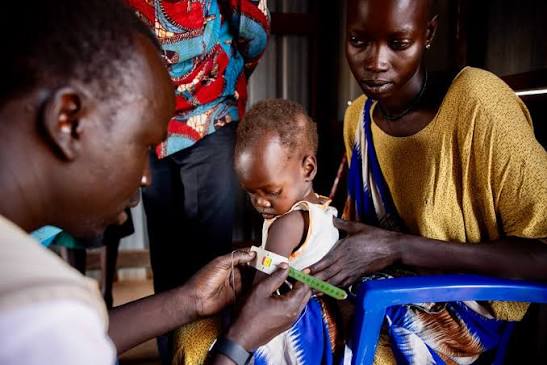
The United Nations Children’s Fund (UNICEF) has issued a stark warning over the worsening humanitarian crisis in Sudan, saying children in the conflict-ravaged country are “running out of time” as hunger and malnutrition reach catastrophic levels.
Speaking to journalists in Geneva on Tuesday, UNICEF spokesperson Ricardo Pires said children are bearing the brunt of what he described as “the world’s largest humanitarian catastrophe,” noting that conditions continue to deteriorate daily, particularly in conflict-hit areas of North Darfur.
According to Pires, more than half of all children in some parts of North Darfur are now acutely malnourished, with confirmed — not projected — figures painting a grim picture. New data from the Integrated Food Security Phase Classification (IPC) shows global acute malnutrition at 53 percent in Um Baru, one of the highest levels ever recorded. Rates stand at 34 percent in Kernoi and 20 percent in At Tina, with famine thresholds already exceeded in Um Baru and Kernoi.
“These are children between six months and five years old, and they are running out of time,” Pires warned.
He added that following the fall of El Fasher in October 2025, more than 127,000 people fled into already overstretched communities. Renewed fighting has since forced humanitarian agencies to suspend operations in some areas, severely limiting access to life-saving treatment. At the time of screening, only 23 percent of severely malnourished children in Um Baru and 14 percent in Kernoi were receiving care.
Nationwide, an estimated 33.7 million people in Sudan require humanitarian assistance, with children accounting for half of that figure. UNICEF projects that about 825,000 children will suffer severe wasting in 2026, while around 70 percent of health facilities across the country are no longer functional.
“The violence must stop. Humanitarian access must be granted, and the world must stop looking away from Sudan’s children,” Pires said.
Sudan has been gripped by conflict since April 2023, when fighting erupted between the Sudanese army and the Rapid Support Forces (RSF) paramilitary group, leading to thousands of deaths and the displacement of millions.
Meanwhile, the World Health Organization (WHO) has also raised concerns over attacks on healthcare facilities. WHO’s representative in Sudan, Shible Sahbani, said the health system has been “ravaged,” citing the destruction of facilities, shortages of medical workers, damaged equipment, and lack of funding.
According to WHO data, 205 attacks on healthcare have been verified since the war began, resulting in 1,924 deaths and 529 injuries. The toll has risen sharply each year, with 2025 alone accounting for 1,620 deaths — 82 percent of global deaths from attacks on healthcare that year. In the first 40 days of 2026, four attacks reportedly caused 66 deaths.
Sahbani warned that such violence deprives communities of essential services, fuels fear among patients and health workers, and blocks access to life-saving care. He also noted that Sudan is battling multiple disease outbreaks, including cholera, malaria, dengue, and measles, alongside widespread malnutrition.
Calling for urgent action, he stressed the need to protect healthcare workers, patients, and facilities in line with international humanitarian law, adding that no one should risk their life simply to seek or provide medical care.
