


There are moments when a nation must stop talking and simply mourn.
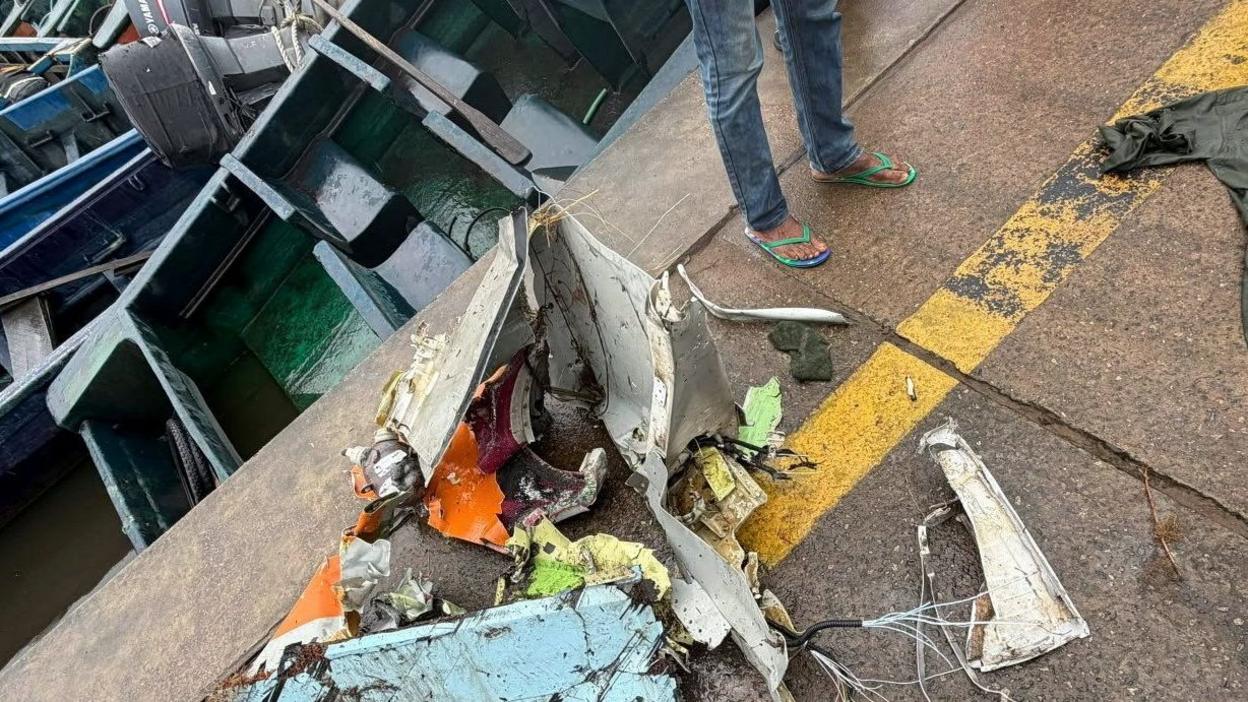
The crash of Nigerian Air Force (NAF) aircraft NAF 931 in Igbokoda, Ondo State, is one of those moments.
Twenty-five people—five crew members and 20 passengers—were on board the ATR 42 aircraft when it crashed during a routine mission from Benin to Lagos. The Nigerian Air Force has confirmed that no one survived.
They were not statistics.
They had names, families, colleagues, friends, responsibilities and futures. Some wore the uniform of the Nigerian Air Force. Others were passengers entrusted to the aircraft and its crew. Their sudden deaths have left families confronting the kind of phone call no parent, spouse, child or sibling ever wants to receive.
President Bola Ahmed Tinubu has declared three days of national mourning and ordered the national flag flown at half-mast. He has also directed the Nigerian Air Force to conduct a thorough investigation into the circumstances of the crash.
Those are appropriate first responses.
But mourning must not become a substitute for accountability. And an investigation must not become a ritual whose report eventually disappears into an official archive.
The country owes the dead answers.
Not because assigning blame will bring them back. It will not.
Rather, because the best tribute Nigeria can pay to the 25 lives lost is to ensure that the circumstances that caused their deaths are understood and, where possible, prevented from claiming more lives.
That is the central question now.
Why did NAF 931 crash?
At this stage, nobody outside the investigation can responsibly provide the answer. There has been speculation about the aircraft, its condition, the flight and circumstances surrounding the accident, but speculation is precisely what the Nigerian Air Force has warned the public against.
The facts must come from evidence.
The aircraft reportedly disappeared from radar after about 9:13 a.m. on October 5 and was later located near a naval base in Igbokoda. Local witnesses described hearing a loud sound before the aircraft went down near a river. Search-and-rescue efforts were immediately activated.
Everything else must now be subjected to forensic examination.
Was there a mechanical failure?
Was there a problem with the engines, avionics, flight controls or other critical systems?
Was the aircraft airworthy and properly maintained?
Were maintenance records complete and compliant?
Were there weather, visibility or operational factors?
Were the crew operating within established procedures?
Did any warning signs emerge before take-off?
Were there communication or navigation problems?
Did the aircraft’s mission profile place unusual demands on the crew or platform?
These are not questions for social media commentators. They are questions for aviation investigators, engineers, safety experts and military professionals with access to the evidence.
And there is another question that should not be avoided: were lessons from previous military aviation accidents fully implemented?
That question is important because the Ondo tragedy did not occur in a vacuum.
Nigeria has experienced a succession of military aviation accidents in recent years. A review published by The Guardian reported that, before the Ondo crash, recorded military aviation fatalities over the decade included 38 confirmed deaths, rising to 40 when two pilots who disappeared in 2021 are included as presumed deaths.
BusinessDay similarly reported that Nigeria had recorded nine military aircraft crashes and major aviation incidents between 2021 and 2026, resulting in 63 deaths, although the methodology and classification of incidents should be carefully examined when comparing such figures.
The numbers should concern a country whose Armed Forces depend heavily on aviation for surveillance, troop movement, logistics, reconnaissance and combat operations.
Military aviation is inherently dangerous. Nigerian pilots and aircrew routinely operate in difficult environments and, in the fight against terrorism and other security threats, often fly missions that carry enormous risks.
But the fact that military flying is dangerous cannot become an excuse for avoidable danger.
There is a profound difference between operational risk and preventable risk.
The first is inherent in military service.
The second is a failure of systems.
Nigeria must establish which one contributed to the death of these 25 people.
The aircraft itself deserves scrutiny
There is already information in the public domain that makes a rigorous technical investigation particularly important.
The ATR 42-500MP aircraft involved, NAF 931, was one of two ATR 42 aircraft acquired by the Nigerian Air Force under a 2007 agreement and delivered around 2009 and 2010. The aircraft were configured primarily for maritime patrol and intelligence, surveillance and reconnaissance missions.
Investigative reporting has also indicated that NAF 931 underwent major maintenance in Germany, with aviation records showing that it spent an extended period at a specialist facility before returning to Nigeria in late 2024.
That fact, by itself, proves absolutely nothing about the cause of the crash.
An aircraft’s age does not automatically make it unsafe. Properly maintained aircraft can operate safely for many years.
But maintenance history, component replacement, airworthiness certification and the technical condition of an aircraft are precisely the matters a serious accident investigation must examine.
The public deserves to know whether NAF 931 was fully airworthy when it departed Benin.
If it was, investigators should explain why the aircraft nevertheless went down.
If it was not, somebody must explain why it was allowed to fly.
The investigation must be different
Nigeria has had investigations into military aircraft accidents before.
Following the 2021 crash of a NAF King Air 350 aircraft near Kaduna that killed 11 people, the Nigerian Air Force and the then Accident Investigation Bureau conducted a joint investigation. The interim report contained 27 initial findings and eight immediate safety recommendations. The NAF said at the time that the purpose of such investigation was fundamentally to improve safety rather than merely punish individuals.
That principle should guide the Ondo investigation.
Accident investigation should not begin with the question: Who do we punish?
It should begin with: What happened, why did it happen, what systems failed, and what must change so that it does not happen again?
That distinction matters.
Blaming a pilot before the evidence is available can conceal deeper institutional failures. Conversely, protecting institutions or individuals from uncomfortable findings can allow dangerous practices to continue.
The Nigerian Safety Investigation Bureau (NSIB) has already said the incident involves a military aircraft and therefore falls outside its statutory mandate unless formally invited by the military.
This presents an opportunity for the military authorities to demonstrate that transparency and national safety are more important than institutional defensiveness.
If independent technical expertise can strengthen the investigation, it should be welcomed.
Indeed, Nigeria already has a precedent for collaboration. In the 2021 King Air 350 investigation, the NAF and Accident Investigation Bureau worked jointly, with the NAF itself describing the collaboration as a means of making accident investigations more transparent and open.
There is no reason that lesson cannot be applied again.
Aviation safety cannot be treated as a budget line
There is also a broader policy question.
Nigeria has invested heavily in strengthening its military capabilities because the country’s security challenges demand it. Aircraft are essential to intelligence gathering, surveillance, logistics, search and rescue, troop support and counterterrorism operations.
But acquiring platforms is only one part of military aviation.
The real cost of aviation capability includes maintenance, spare parts, technical training, simulator hours, flight safety systems, engineering expertise, inspection, airworthiness management and the continuous professional development of crews.
An aircraft sitting on a military inventory is not necessarily an operational capability.
An aircraft that can safely perform its assigned mission is.
That distinction should shape defence spending.
If the country is serious about protecting the lives of its military personnel, aviation safety must be treated as a strategic capability, not an administrative afterthought.
The men and women flying Nigeria’s aircraft should not have to choose between defending the country and trusting whether the machine beneath them has received everything required to keep them alive.
There is another uncomfortable issue: information
The early confusion surrounding the number of people aboard NAF 931 is itself a reminder of the importance of accurate crisis communication.
The Ministry of Aviation initially reported that the aircraft had 25 passengers and seven crew members. The presidency’s initial statement similarly referred to 32 people. The Nigerian Air Force subsequently confirmed 25 people—five crew members and 20 passengers—and released their names.
Such discrepancies may occur in the chaotic early hours of an emergency.
But in an age of instant information, uncertainty quickly becomes misinformation.
The military and government must therefore establish a clear protocol for communicating casualties during national emergencies. Families deserve accurate information before the rumour mill begins. The public deserves facts. And the media deserves authoritative information that can be independently verified.
The NAF’s decision to urge the public to avoid speculation and unverified information is commendable.
But the best antidote to speculation is not simply to warn against it.
It is to provide credible information quickly, consistently and transparently.
Remembering the people behind the numbers
Perhaps the most important thing in the aftermath of this tragedy is to resist the tendency to reduce the dead to a headline.
The Nigerian Air Force has released the names of the 25 people who perished.
The crew included Squadron Leader MI Aburime, Squadron Leader AP Man-Ugwueje, Flight Lieutenant IS Bako, Warrant Officer Abubakar A and Corporal Uguru HC. Among the passengers were other military personnel as well as civilians.
Their families will now live with the consequences of October 5.
For them, the crash will not end when the news cycle moves on.
There will be funerals. There will be empty chairs. There will be birthdays without loved ones. There will be children asking questions. There will be spouses confronting futures that changed in a matter of minutes.
This is why President Tinubu was right to remind the country that behind every uniform is a family.
But national mourning should not end with flags at half-mast.
The ultimate respect for the dead is institutional learning.
Let this tragedy change something
Nigeria must not allow the Ondo crash to become another moment of grief followed by silence.
The investigation should be technically rigorous, independent-minded and transparent enough to command public confidence.
Its findings should be made public to the fullest extent compatible with national security.
Its safety recommendations should be assigned to specific institutions with clear timelines.
Implementation should be monitored.
Parliamentary oversight should follow where necessary.
The military’s aviation safety systems should be subjected to periodic independent technical review.
Maintenance and airworthiness records should be rigorously audited.
And where systemic weaknesses are identified, they must be fixed—not merely acknowledged.
President Tinubu’s declaration of three days of national mourning is an important gesture. But the greater national tribute will be measured by what happens after the mourning period ends.
When the flags return to full mast, the questions must remain.
When the coffins are lowered, the investigation must continue.
When the headlines disappear, the safety recommendations must still be implemented.
And when another NAF aircraft prepares for take-off, the lessons of Igbokoda must be inside the cockpit, inside the maintenance hangar and inside every decision that determines whether an aircraft is fit to fly.
Twenty-five Nigerians died on October 5.
They must not become merely another number in Nigeria’s long record of military aviation tragedies.
Let the country mourn them. Let the military honour them. But, above all, let Nigeria learn from them.
Because the most meaningful way to ensure that their sacrifice was not in vain is to make certain that the next crew that takes to the skies comes home.
