

EU–Australia Trade Deal Promises Growth, Sparks Farmers’ Backlash

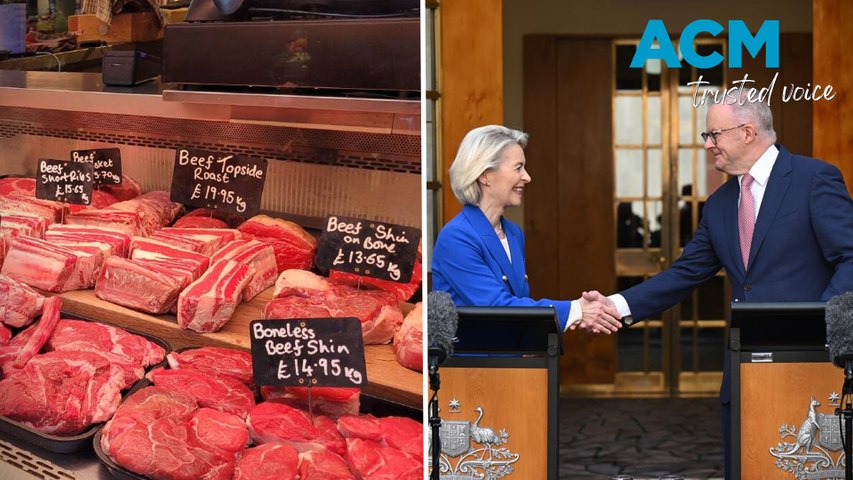
A landmark trade agreement between the European Union and Australia is set to boost economic ties, cut tariffs, and expand market access, though it has drawn sharp criticism from Australian farmers.
Under the deal, electric vehicle imports will benefit from relaxed tax rules, with Australia raising the “luxury” threshold for EVs from $63,733 to $83,688. The agreement is expected to significantly lower costs for consumers while improving trade flows between both sides.
Speaking in Canberra, European Commission President Ursula von der Leyen and Australian Prime Minister Anthony Albanese described the deal as mutually beneficial.
Von der Leyen said the agreement would add about $8 billion to Australia’s GDP, save EU exporters $1.2 billion in tariffs, and increase EU exports to Australia by more than a third to over $20 billion annually by 2036. She added that the pact sends a strong message about global cooperation during uncertain times.
“These agreements build trust-based structures that support peace, security, and prosperity through rules-based trade,” she said, noting a shared commitment to a cleaner and more digital future.
Albanese described the deal as strategically and economically significant, highlighting that 98% of Australia’s exports to the EU would become duty-free. He said it would unlock major opportunities for exporters in the EU’s vast $21 trillion economy while reducing prices for consumers.
The removal of tariffs on most EU imports is expected to lower costs of goods such as wine, spirits, chocolate, biscuits, and pasta in Australia. Businesses are also set to benefit from cheaper machinery and vehicles.
However, the agreement has faced strong opposition from farming groups. The National Farmers’ Federation labelled it the “worst ever free trade agreement,” warning it could disadvantage exporters for decades.
Farmers expressed concern over limited quotas for beef and lamb, which fell short of industry expectations and were seen as less favourable than terms granted to other countries in EU trade deals.
Federation president Hamish McIntyre said the deal offered “sub-par access” to EU markets and may require significant subsidies for European producers.
The agreement will require ratification by the European Parliament and the European Council before it can take effect.
