

Nigeria Accelerates Peace Reform Drive as Stakeholders Push for Adoption of National Peace Policy

By Michael Mike
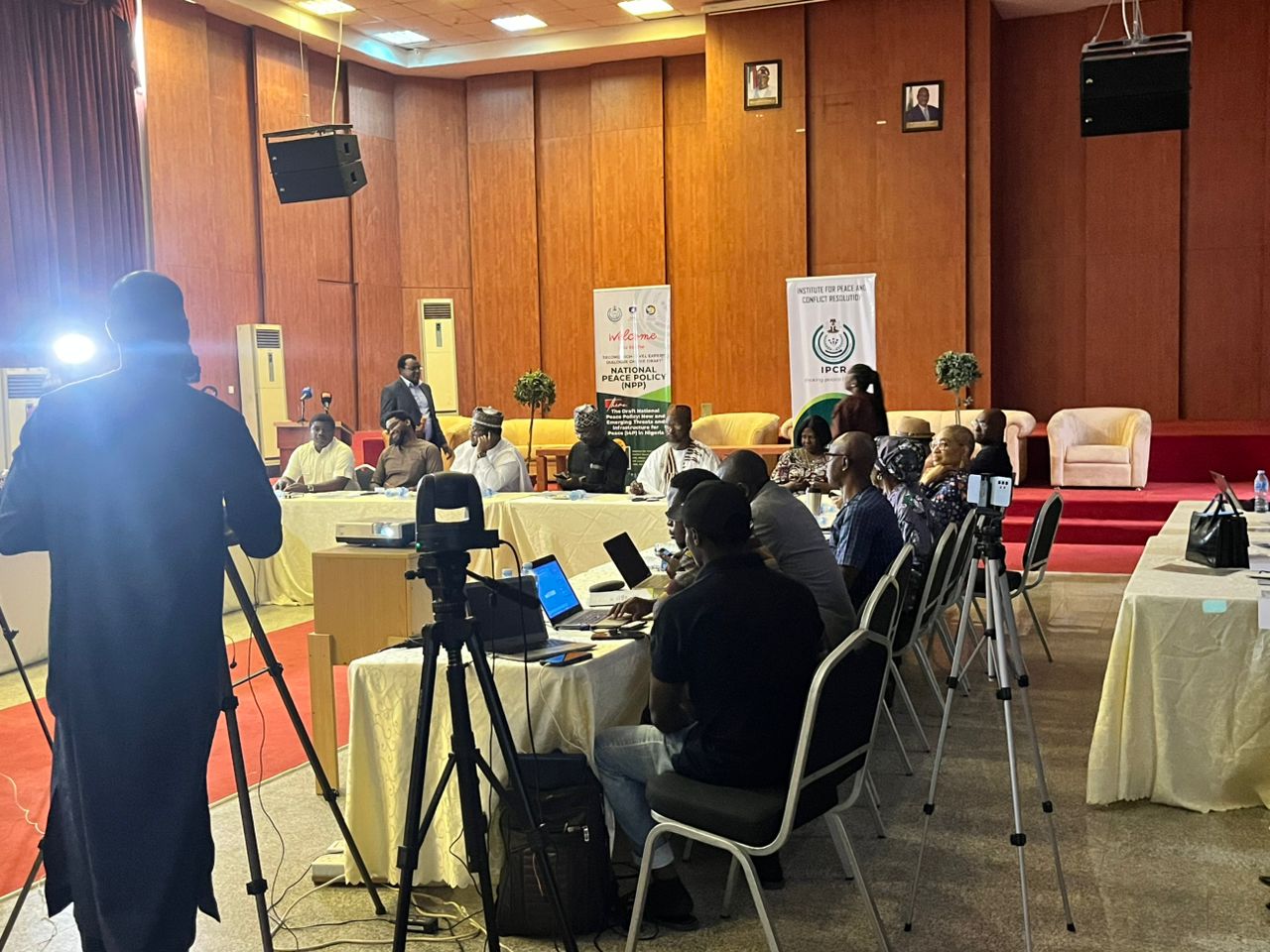
Nigeria has intensified efforts to establish a unified national framework for peacebuilding as top security and governance stakeholders convened in Abuja for the Second High-Level Expert Dialogue on the Draft National Peace Policy (NPP), aimed at overhauling the country’s fragmented conflict management system.
The dialogue, convened by the Institute for Peace and Conflict Resolution (IPCR) in partnership with the Office of Strategic Preparedness and Resilience (OSPRE) and Triple Peace Africa, brought together policymakers, security experts, academics, civil society leaders, and development partners to refine and advance the proposed national framework.
Opening discussions, the Director-General of IPCR, Dr. Joseph Ochogwu, said Nigeria’s worsening and interconnected security challenges make the adoption of a coherent peace policy both urgent and unavoidable.
He pointed to the persistence of insurgency in the Northeast, farmer-herder conflicts in the Northcentral, separatist tensions in the Southeast, and widespread banditry and kidnapping in the Northwest, warning that the cumulative impact of these crises continues to strain national cohesion.
According to him, the spread of small arms, coupled with weakening trust between communities and institutions, has further deepened insecurity and undermined local resilience mechanisms.
Ochogwu stressed that Nigeria can no longer depend on scattered and uncoordinated interventions, insisting that only a unified, evidence-driven framework can deliver sustainable peace outcomes.
“What we require now is a nationally owned system that coordinates all peacebuilding actors, eliminates duplication, and ensures that interventions are measurable, accountable, and impactful at community level,” he said.
He explained that the Draft National Peace Policy is the outcome of extensive nationwide consultations spanning all six geopolitical zones, incorporating input from traditional rulers, civil society organisations, academic experts, government institutions, and community stakeholders.
Describing the document as a strategic shift in approach, he said the policy is designed to reposition peacebuilding from reactive crisis response to a preventive and development-oriented system anchored on data, early warning, and institutional coordination.
A major gap the policy seeks to address, he noted, is the absence of a central coordinating structure for peace initiatives across the country, a situation he said has resulted in duplication of efforts, institutional competition, and inefficient use of resources.
The proposed framework, he added, will integrate peacebuilding into core sectors including security, justice, education, health, agriculture, and governance, ensuring a whole-of-government approach to conflict prevention and stability.
Ochogwu further highlighted that the policy aligns with global and regional frameworks such as the United Nations Sustaining Peace Agenda, the Sustainable Development Goals particularly SDG 16 on peace, justice and strong institutions the African Union’s Agenda 2063, and the ECOWAS Conflict Prevention Framework.
He said this alignment reinforces Nigeria’s commitment to international best practices while positioning the country as a potential leader in structured peacebuilding across Africa.
Participants at the dialogue emphasised that the success of the policy will depend on strong political will, clear institutional roles, sustainable financing mechanisms, and effective coordination across all levels of government.
They warned that without decisive implementation structures, the policy risks becoming another well-crafted but inactive document.
Ochogwu urged stakeholders to take collective responsibility for the process, describing them as critical actors in shaping Nigeria’s peace architecture and cautioning against institutional silos that weaken national response systems.
He reaffirmed IPCR’s readiness to work with federal and state governments, peacebuilding agencies, civil society organisations, the private sector, and international partners to ensure the policy is finalised, adopted, and implemented without delay.
He maintained that Nigeria’s stability depends on deliberate and coordinated action, stressing that the time for policy adoption and implementation is now.
Analysts say the push for a National Peace Policy could mark a turning point in Nigeria’s conflict management strategy, shifting the country from reactive security responses to a more structured, preventive, and sustainable peace framework.
