

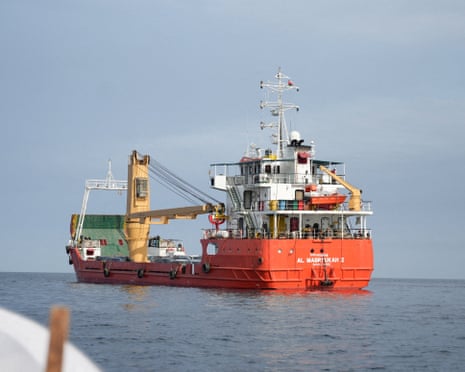
The United Nations has welcomed Iran’s announcement that the Strait of Hormuz is now open to commercial shipping, describing the move as a positive signal in efforts to ease tensions across the Middle East.
In a statement issued Friday, UN Secretary-General António Guterres said the reopening of the strategic waterway during the ongoing ceasefire represents an important step toward stability in the region.
Speaking through his spokesperson, Stéphane Dujarric, Guterres reiterated the UN’s longstanding position on the issue.
“The United Nations’ position remains clear: we need full restoration of navigational rights and freedoms in the Strait of Hormuz,” the statement read.
Guterres also reaffirmed his support for ongoing diplomatic efforts aimed at resolving the broader Middle East crisis, expressing hope that the reopening of the strait, alongside the ceasefire, would help build trust among the parties involved and strengthen dialogue facilitated by Pakistan.
Confirmation of the reopening also came from both Washington and Tehran. U.S. President Donald Trump said in a social media post that Iran had declared the strait “fully open and ready for full passage.”
Similarly, Iran’s Foreign Minister, Abbas Araghchi, announced on X that the vital shipping lane had been “completely open,” in line with the ceasefire arrangement, which also extends to Lebanon. He added that the passage would remain accessible throughout the ceasefire period.
Despite these assurances, uncertainty persists. President Trump maintained that a blockade would remain in place until the United States concludes what he described as a pending “transaction” with Iran.
The developments follow weeks of heightened tensions, after Trump announced “major combat operations” against Iran on February 28, involving joint U.S.-Israeli strikes on key facilities.
Pakistan later brokered a temporary ceasefire after negotiations in Islamabad aimed at de-escalating the conflict. However, talks between the United States and Iran have yet to yield a comprehensive peace agreement, with Tehran’s nuclear programme continuing to pose a major obstacle.
Trump has also warned that the U.S. could impose a renewed blockade on the Strait of Hormuz from April 13, underscoring the fragile nature of the current truce.
The Strait of Hormuz, a critical artery for global oil shipments, remains central to international economic stability, making its status a key concern for governments and markets worldwide.
