

Russian Scientists Develop Tool to Predict Dam Failures, Glacial Floods

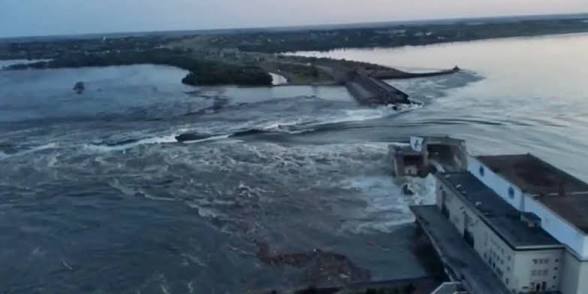
Researchers at Saint Petersburg State University have developed a new programme capable of calculating the characteristics of outburst floods, offering a significant step toward improving early warning systems.
According to the research team, the tool can predict potential failures in earthen dams of reservoirs and lakes, as well as sudden outbursts from mountain glacial lakes formed by moraine deposits—composed of rock debris, clay and pebbles left behind by glacier movement.
The development is designed to anticipate sudden water releases and help mitigate their destructive impact. Scientists explained that unstable glacial lakes can rapidly drain due to factors such as rising temperatures or extreme rainfall, while reservoirs also face risks from heavy precipitation that can erode embankments and trigger flooding.
The programme estimates key parameters of a potential dam breach, including the timing of failure, peak discharge, total flood volume and breach size. These predictions are based on variables such as dam dimensions, elevation, soil composition and other environmental inputs.
Project lead Galina Pryakhina, Associate Professor at SPbU, said the system stands out for its ability to account for the varying physical properties of soil within earthen dams. She noted that the model considers two primary failure mechanisms: overtopping and internal erosion through filtration channels.
The tool is particularly aimed at assessing risks in remote mountainous regions where hydrological monitoring infrastructure is limited. Previously, such analyses relied heavily on field expeditions or satellite data.
To validate its effectiveness, researchers tested the programme on three lakes with known flood events: Bashkara in the Caucasus, Maashey in the Altai region, and Nurgan in Mongolia.
Looking ahead, the team plans to enhance the system by integrating a module that calculates water inflow, incorporating factors such as precipitation and glacier melt. This upgrade is expected to further improve predictions of lake system behaviour.
