

Nigeria Boosts Solar Manufacturing Capacity to 300MW, Targets 3.7GW Regional Energy Hub

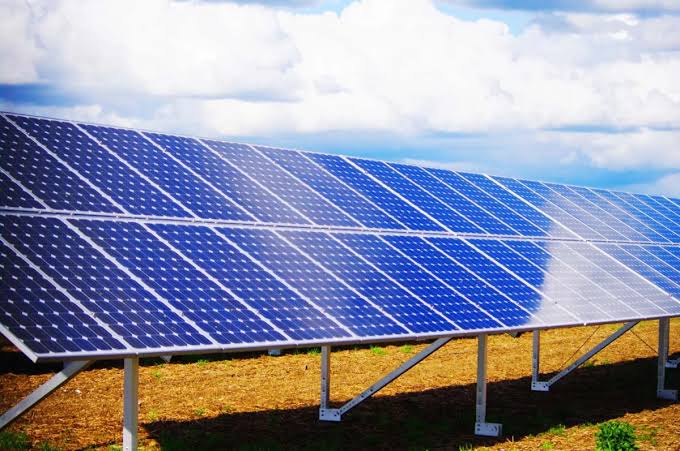
Nigeria says it has significantly expanded its solar panel manufacturing capacity, increasing output from 120 megawatts (MW) two years ago to about 300MW currently, with an additional 3.7 gigawatts (GW) of capacity in development as part of efforts to strengthen its renewable energy sector.
The development was disclosed by the Managing Director of the Rural Electrification Agency (REA), Dr Abba Aliyu, during a webinar organised by the African Association of Energy Journalists and Publishers (AJERAP).
He said the growth reflects the impact of government policies aimed at boosting local production under the Bola Ahmed Tinubu administration’s “Nigeria First” agenda, which prioritises domestic manufacturing and local content development.
According to him, 2025 marked a turning point for the sector, with imports of solar cells and components for local assembly reaching 837MW—surpassing the combined total of previous years and exceeding finished product imports. He described this as evidence of a structural shift toward local manufacturing.
Aliyu also revealed that about $425 million in investments has been committed to establish eight renewable energy manufacturing facilities across the country, alongside additional funding secured at the Nigeria Renewable Energy Innovation Forum (NREIF 2025).
He said these investments are helping to build a broader ecosystem covering manufacturing, deployment and financing, which is critical for long-term sustainability in the sector.
The REA boss noted that government electrification programmes, including the Energizing Education Programme (EEP) and Distributed Access through Renewable Energy Scale-Up (DARES), are creating stable demand for locally produced solar systems.
He also highlighted regulatory reforms by the Nigerian Electricity Regulatory Commission (NERC), which now allow expanded deployment of Distributed Energy Resources and mini-grid systems of up to 10MW, opening further opportunities for private sector participation.
Beyond domestic growth, Aliyu said Nigeria is already beginning to export solar panels to neighbouring countries, including Ghana, signalling its emergence as a regional supplier rather than just a consumer.
He added that Nigeria is exploring cross-border electricity trade through solar deployment in border communities, with several African countries—including Mozambique, Benin Republic, Burkina Faso, Niger, Chad, Mauritania and Mauritius—engaging the REA to replicate aspects of its model.
Looking ahead, he said the next phase of the Nigeria Renewable Energy Innovation Forum (NREIF 2.0) will focus on regional integration, positioning Nigeria as a central hub for renewable energy manufacturing, innovation and trade across Africa.
Aliyu said the country’s progress reflects a shift from isolated energy projects to a coordinated renewable energy ecosystem driven by local production, scalable deployment and regional collaboration.
