


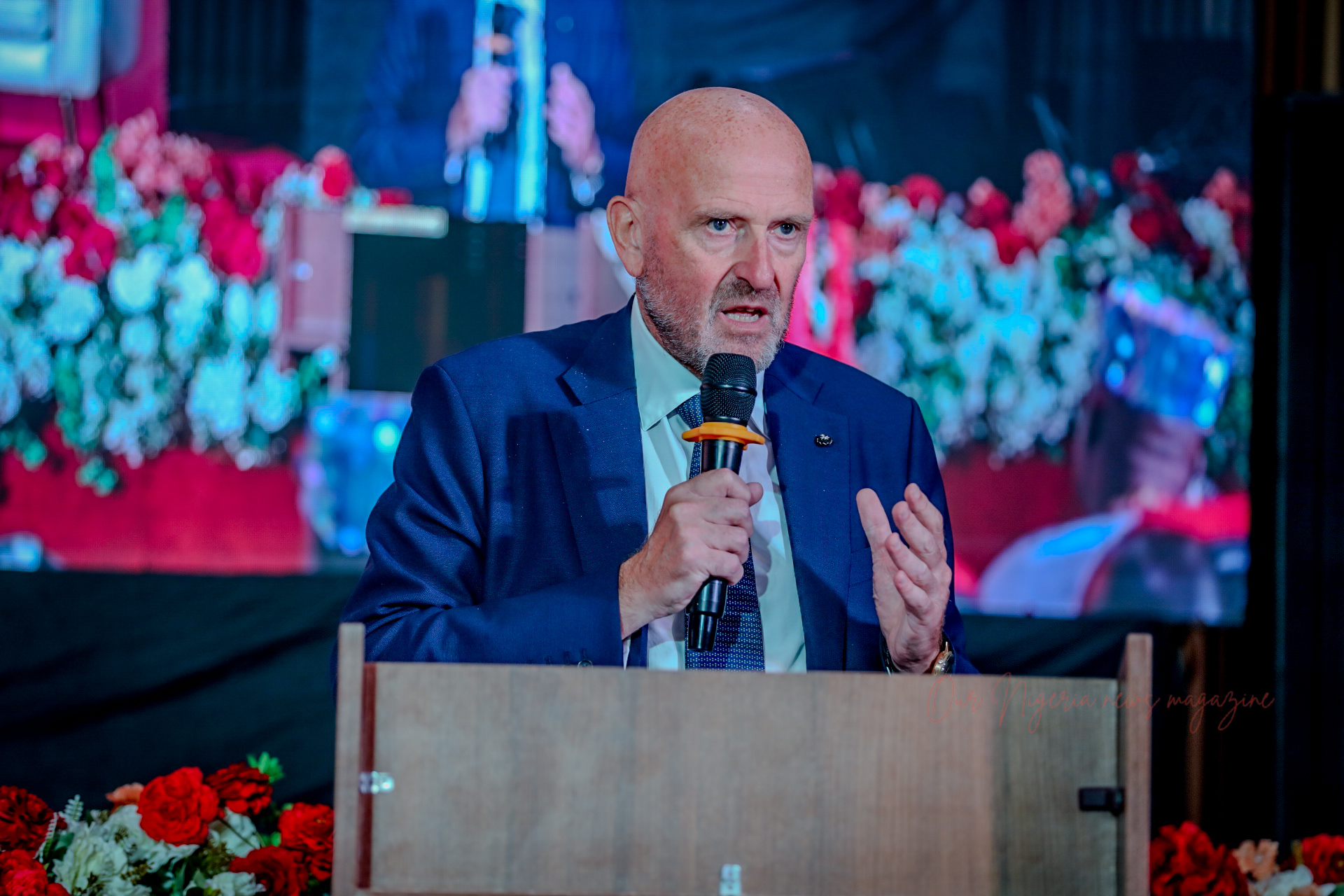
Former Corps Commander of the Gendarmerie Corps of Vatican City, Lt-Gen. Domenico Giani (rtd), has called for a military transformation model that places civilian protection, institutional accountability and service to humanity at the centre of security operations.
Giani made the call in Abuja while delivering the keynote address at the public presentation of Military Transformation Leadership in Action: The Buratai Era, authored by Dr. M.S. Abubakar.
Speaking on the transformation of the Nigerian Army during the tenure of former Chief of Army Staff, Lt-Gen. Tukur Buratai, Giani said military leadership must be assessed not only by battlefield victories but also by the institutions strengthened, civilians protected and public trust earned.
He said the Nigerian Army under Buratai operated in an exceptionally complex security environment between 2015 and 2021, confronting terrorism, insurgency, banditry and mass abductions.
“A book on military leadership is never only the past. It audits what an institution learned under fire,” he said, stressing that accountability should not be regarded as an obstacle to military command.
According to him, the Boko Haram insurgency demonstrated that military force alone could not permanently resolve violent extremism, noting that the roots of the crisis were also connected to poverty, distrust, weak institutions and lack of opportunities.
He said the evolution of Boko Haram into different factions, including JAS and ISWAP, underscored the need for governments to adapt faster than terrorist organisations.
“Intelligence and regional cooperation are essential, but so are schools, justice and opportunity. If the state arrives with weapons but not services, the vacuum returns,” Giani said.
He noted that Buratai assumed command in July 2015 amid a conflict that was fundamentally different from conventional warfare, requiring operations among civilian populations and across borders against an enemy without conventional uniforms.
Giani said the transition from Operation Zaman Lafiya to Operation Lafiya Dole and the recovery of territories represented important developments, but warned that subsequent attacks by ISWAP demonstrated that territorial control alone could not end an insurgency.
He identified force restructuring, counter-insurgency training, logistics, research and civil-military relations among the areas in which reforms were pursued during the period.
The former Vatican security commander said the civilian population must remain the “centre of gravity” in counter-insurgency operations because every civilian protected strengthens the legitimacy of the state, while abuses could provide extremist groups with propaganda.
He argued that sustainable peace required security operations to be complemented by effective administration, education, healthcare, employment and justice.
“Modern security is a network, not a fortress,” Giani said, calling for stronger international cooperation against terrorism, organised crime, trafficking, cyber threats and radicalisation.
He highlighted the importance of professional networks that allow military, diplomatic, security and humanitarian experts to share experience across borders, citing the World Network of Security and Defence Professionals for Preventing and Combating Terrorism as an example.
Giani also stressed the strategic dangers posed by corruption, describing it as a vulnerability that could divert resources, distort procurement processes and undermine public confidence in security institutions.
He advocated greater transparency, oversight and a culture of integrity in the security sector.
On religion and conflict, Giani said interreligious dialogue should be regarded as a security necessity rather than an optional activity, observing that Boko Haram’s violence had affected both Christian and Muslim communities.
He further called for greater recognition of women and young people in national security, saying women could contribute as officers, analysts and mediators, while young people should be regarded as national capital rather than merely a security risk.
According to him, the military commander of the future must combine strategic intelligence and technological knowledge with moral credibility, legal compliance and the ability to build partnerships beyond the traditional security environment.
He said emerging commanders would need to understand multi-domain operations, cyber threats and information warfare while retaining a commitment to protecting vulnerable populations.
“Peace requires strength; strength earns legitimacy only through service,” he said, adding that the ultimate measure of security should be the lives protected and the conditions created for people to live with dignity.
Giani urged Nigeria to preserve the lessons of its military transformation, correct areas that remained incomplete and prepare for emerging threats.
He also called for stronger cooperation between Nigeria and Italy in peacekeeping, deterrence, humanitarian action and international security.
“Leadership transforms when power becomes service. Service becomes a legacy when it builds peace,” he said.
