

Niger Delta Pollution Crisis: Bassey Urges Immediate Action After Okrika Deaths

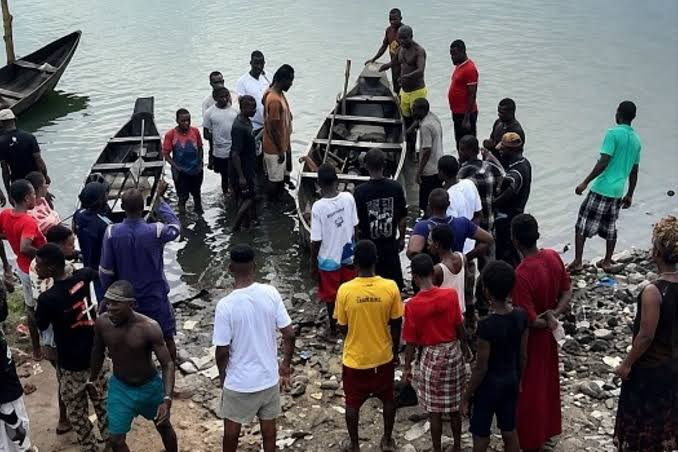
Environmental activist and President of the Health of Mother Earth Foundation (HOMEF), Nnimmo Bassey, has called for urgent action to address the worsening environmental and public health crisis in the Niger Delta following the reported deaths of at least 37 people in Okrika, Rivers State.
Bassey said the incident should serve as a wake-up call to the Federal Government, oil companies and regulatory agencies over decades of hydrocarbon pollution, gas emissions and ageing oil infrastructure across the region.
At least 37 people were reportedly killed at Okari Jetty in Okrika in the early hours of Thursday after allegedly inhaling toxic fumes while attempting to siphon petroleum products from an illegally tapped pipeline. Several others were also reportedly missing.
The Rivers State Police Command confirmed the incident but said it had not established an official death toll, adding that investigations were ongoing. Other reports have suggested that the number of fatalities could be higher.
According to Bassey, the victims were reportedly attempting to collect a petroleum product locally known as “Indorama fuel” from a pipeline operated by Indorama Eleme Petrochemical Company.
He stressed the need for an independent investigation to establish the exact cause of the deaths, noting that the victims may have died from inhaling toxic gases released under pressure, asphyxiation or drowning after losing consciousness and falling into the river.
The Youths and Environmental Advocacy Centre (YEAC-Nigeria), which also reported the incident, said more than 100 people had reportedly arrived at the location in boats to collect petroleum products from an illegally tapped pipeline.
Some of those at the scene reportedly collapsed after being overcome by fumes, while others fell into the river.
Bassey warned that the Okrika tragedy should not become another statistic in the Niger Delta’s long history of environmental disasters.
“Then silence. And the dead will become dead statistics,” he warned, arguing that the lack of sustained action over environmental degradation was itself contributing to the problem.
The environmentalist also drew attention to the ongoing gas emergency in Bille, another Rivers State community, where methane and other gases have reportedly been bubbling from rivers, swamps and wells.
Residents of Bille reportedly began noticing bubbling water accompanied by a sulphurous odour in October 2025, with the phenomenon later spreading to other parts of the community.
A subsequent assessment by the National Oil Spill Detection and Response Agency (NOSDRA) reportedly detected methane, volatile organic compounds and hydrogen sulphide in the ambient air around affected areas. Methane concentrations were also reportedly recorded at levels capable of creating serious fire and explosion risks.
Bassey criticised what he described as an inadequate government response to the Bille emergency, arguing that relief materials, fire extinguishers and the provision of a fire truck were insufficient given the potential danger.
He said residents, particularly children and elderly people, had experienced health problems which, in his view, suggested that the impact of the gas emissions extended beyond the immediate risk of fire.
“Truth is that Bille community is being gassed while the government and the oil companies are wringing their hands and watching from the sidelines,” he said.
Bassey further highlighted continuing oil fires and pollution in other parts of the Niger Delta, including the Ofiomina-Ama/Alakiri area of Okrika, where an oil-well fire has reportedly persisted for years.
He also cited the Ororo-1 oil well off Awoye in Ondo State, where a fire that began in 2020 has reportedly continued for more than six years.
Residents and environmental groups have raised concerns about prolonged exposure to smoke, soot and other hazardous substances, as well as the impact of the fire on fishing and other livelihoods.
According to Bassey, the persistence of such incidents points to what he described as a systemic failure to properly decommission ageing infrastructure, prevent oil spills and protect communities located around oil and gas facilities.
He also referred to a recent oil spill at Nembe Creek on OML 29, which he said was reportedly linked to an operational failure.
The environmentalist argued that the crisis could not be addressed solely by condemning oil theft while overlooking the broader conditions that have allowed illegal oil activities and environmental degradation to persist.
While acknowledging that those who tampered with the pipeline could be regarded as criminals, Bassey argued that oil theft involved a broader network of actors and should not be reduced to the actions of individuals operating at the bottom of the chain.
“Oil thievery is an industrial activity with a long value chain, and players, so to speak,” he said.
Bassey warned that oil spills, gas flaring and burning oil wells could release hazardous substances, including benzene, hydrogen sulphide and other volatile hydrocarbons, posing risks beyond visible environmental pollution.
He called for urgent efforts to clean up polluted areas of the Niger Delta, extinguish long-running oil-well fires, remove or replace obsolete infrastructure and strengthen pipeline security.
He also urged the government to implement recommendations contained in the Bayelsa State Oil and Environment Commission Report and pursue what he described as a “just decommissioning” strategy as part of a fair transition away from harmful oil infrastructure.
Bassey said the Okrika incident should be viewed not simply as another case of illegal oil theft but as a warning about the wider environmental and human costs associated with decades of petroleum activities in the Niger Delta.
“How many more tragedies before we know it is time to clean up the Niger Delta, quench the roaring flames, dismantle and remove decrepit facilities and secure all pipelines by replacing and burying them in the ground?” he asked.
He added: “Our lives are worth more than crude oil.”
