

West Africa’s Silent Siege: Liberia Pushes for United Front Against Cross-Border Drug Trafficking

Across West Africa’s vast network of land borders, seaports and airports, a quieter battle is unfolding—one that diplomats and security experts fear could determine the future of an entire generation.
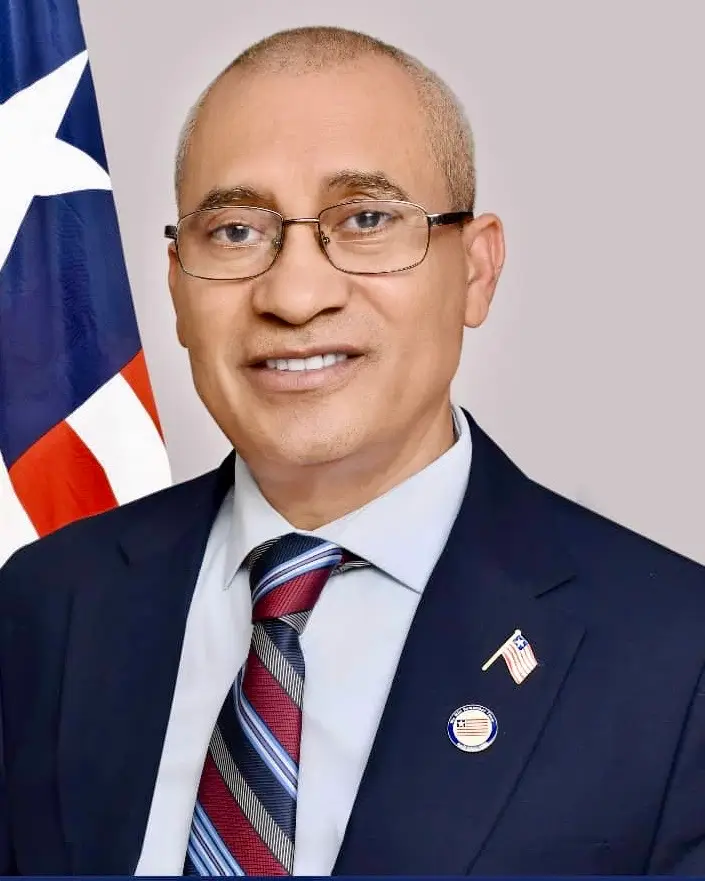
For Liberia’s Ambassador to Nigeria and Permanent Representative to ECOWAS, John Ballout, the growing menace of illicit drug trafficking has become too large for any single nation to confront alone. His message is straightforward: West Africa must unite or risk losing its youth to the devastating effects of the drug trade.
Speaking in Abuja, the envoy called for the creation of a regional task force dedicated to combating cross-border drug trafficking, arguing that collective action offers the best hope of dismantling the criminal networks operating across the sub-region.
According to Ballout, drug trafficking has evolved into a sophisticated transnational enterprise that thrives on porous borders and weak coordination among neighbouring states.
“None of us has the capacity to deal with this cross-border drug trafficking unless we go together,” he said, noting that even countries with stronger institutions and greater resources continue to struggle against the problem.
His remarks reflect a growing concern across the Economic Community of West African States (ECOWAS), where criminal organisations exploit regional trade routes to move illicit substances by land, sea and air.
For Liberia, the challenge carries a particularly painful history. Ballout linked the country’s current drug crisis to the lingering effects of its post-war recovery, warning that many young people are becoming victims of addiction and organised crime.
He described the situation as a threat to the region’s future, saying that West Africa risks sacrificing its next generation if urgent measures are not taken.
At the heart of his proposal is the establishment of a West African Drug Enforcement Agency—a specialised regional body that would coordinate efforts to secure borders and curb the movement of illicit drugs across member states.
Unlike a military force, the proposed agency would function as a joint security task force, with each country contributing personnel to strategic border locations. Its mandate would focus on disrupting international trafficking routes, while national authorities continue to handle domestic law enforcement within their own territories.
The ambassador believes such an institutional framework would allow member states to pool resources, share intelligence and adopt common strategies against criminal syndicates that often operate beyond the reach of individual governments.
The proposal also underscores a broader reality: modern security challenges increasingly ignore national boundaries. Drug trafficking fuels organised crime, undermines public health, threatens social stability and weakens economic development across the region.
As West African nations deepen economic integration and promote the free movement of people and goods, experts argue that security cooperation must evolve at the same pace.
For Ballout, the stakes could not be higher.
A coordinated regional response, he insists, could help stem the flow of illicit drugs and protect millions of young people from a cycle of addiction and criminal exploitation.
“If we don’t do that,” he warned, “we stand to lose the next generation.”
