


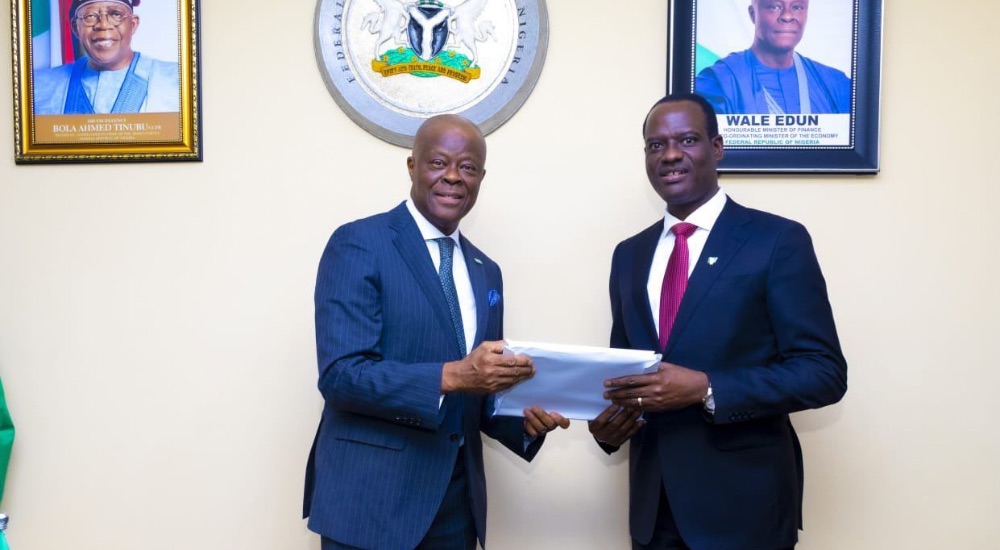
Economic experts have delivered a balanced verdict on the tenure of former Minister of Finance and Coordinating Minister of the Economy, Wale Edun, while outlining key priorities for his successor, Taiwo Oyedele.
The experts, who spoke with the News Agency of Nigeria (NAN) in Abuja on Monday, acknowledged that while Edun made notable strides in stabilising Nigeria’s macroeconomic environment, significant challenges remain—particularly in easing the burden on ordinary citizens.
Oyedele, who was recently elevated to the role following a cabinet reshuffle, officially assumed office on April 24, taking over from Edun at a critical time for the nation’s economy.
Dr Gloria Phillips, a development economist, said Edun’s tenure reflected a commitment to fiscal discipline and improved revenue generation, though inflationary pressures persisted.
“Stabilisation policies were evident, but transmission to household welfare was weak,” he said.
Phillips commended the government’s coordination of fiscal and monetary policies during Edun’s time in office but urged the new minister to focus on stabilising the exchange rate and restoring investor confidence.
Also weighing in, economist Mr Simon Audu noted that reforms introduced under Edun had laid a foundation for long-term growth. However, he stressed that consistency and policy clarity would be crucial going forward.
He added that while there had been moderate improvement in the business environment, stronger support for small and medium enterprises would be necessary to drive job creation and inclusive growth.
On her part, public finance expert Miss Lydia Emerson observed that debt management strategies were strengthened during Edun’s tenure. She, however, called on Oyedele to prioritise reducing debt servicing costs while expanding non-oil revenue streams.
Emerson also emphasised the urgency of comprehensive tax reforms, urging the new minister to simplify tax administration and improve compliance to widen the country’s revenue base.
Across the board, the experts agreed that the immediate priorities for the new finance minister should include tackling inflation, accelerating economic diversification, and strengthening social protection programmes.
They further underscored the importance of transparency, policy continuity, and inclusive growth as essential pillars for consolidating recent economic gains and steering the country toward sustainable development.
