

From Data to Decisions: UNICEF Rallies Stakeholders to Redraw the Future for Children in Northern Nigeria

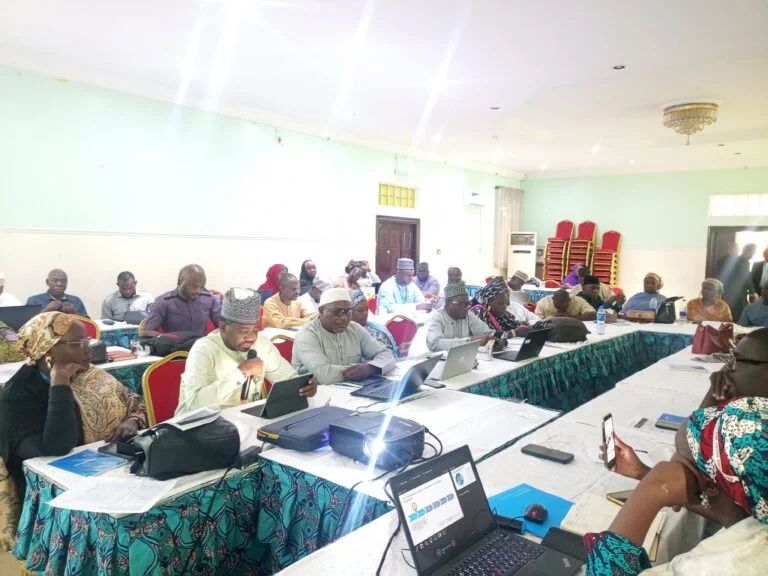
The United Nations Children’s Fund (UNICEF) has commenced a two-day, evidence-based state-level consultation aimed at shaping its 2028–2032 country programme, in a renewed effort to strengthen child-focused interventions across Nigeria.
The high-level engagement brings together government officials, development partners, civil society actors, and sector experts to validate evidence and identify priority child development challenges affecting Kaduna, Niger, Nasarawa, and Kwara states.
Tagged “From Evidence To Priority”, the consultation is designed to move beyond assumptions by grounding future programming in verified data, lived experiences, and field realities impacting children across the four states.
Speaking at the opening session on Wednesday in Kaduna, UNICEF Chief of Field Office, Kaduna, Dr Gerida Birukila, described the exercise as the first step towards developing UNICEF’s next country programme for Nigeria.
Birukila said the programme would be built on evidence and contributions from stakeholders to ensure interventions address realities confronting children across the participating states.
She noted that the Kaduna Field Office covers Kaduna, Niger, Nasarawa and Kwara states, with more than seven million children aged between zero and 17 years.
According to her, children constitute more than 30 per cent of the combined population of about 23 million across the four states.
She emphasized that participants were not merely attending the consultation but actively shaping the direction of future interventions.
She said participants were not merely attending the consultation but helping determine priorities that would guide UNICEF’s work between 2028 and 2032.
Birukila explained that the consultation process is structured to first validate existing evidence and then prioritize key issues before developing implementation strategies for the next country programme.
She said participants’ experiences, local knowledge and field data would strengthen national evidence and guide future investments for children.
Among the critical challenges highlighted were child nutrition crises, newborn mortality, and the growing burden of zero-dose children requiring urgent immunization coverage.
She identified child nutrition crisis, newborn mortality and zero-dose children as key priorities requiring urgent interventions.
Other concerns include rising numbers of out-of-school children, limited birth registration coverage, multidimensional poverty, and increasing vulnerability to climate and disaster shocks.
She also listed out-of-school children, limited birth registration, multidimensional poverty, and climate and disaster vulnerability among critical development concerns.
According to her, insecurity, climate change and environmental disasters continue disrupting education systems and exposing children to heightened risks across affected communities.
She urged stakeholders to explore innovative approaches, including technology and community-based solutions, to ensure learning continues even during emergencies.
Birukila stressed that prolonged school closures significantly reduce the likelihood of children returning to classrooms, particularly among displaced and vulnerable learners.
She said evidence gathered during the consultation would influence programme priorities, funding decisions, staffing requirements and future interventions.
On his part, Mukhtar Ahmed, Commissioner of the Kaduna State Planning and Budget Commission, described the consultation as timely, noting that it provides an opportunity to review progress and refine future development priorities.
Ahmed appreciated UNICEF for its longstanding partnership in supporting health, nutrition, education, child protection, water, sanitation, and social policy interventions in the state.
He reaffirmed the Kaduna State Government’s commitment to evidence-based planning, collaborative partnerships, and sustainable development outcomes for children.
He urged participants to contribute practical ideas and technical expertise to ensure that identified priorities reflect community realities and the actual needs of children.
The News Agency of Nigeria (NAN) reports that the consultation is being held simultaneously across UNICEF field offices in Nigeria.
In Kaduna, participants were drawn from education, health, information, women affairs, civil society organisations, and other MDAs within the UNICEF Kaduna Field Office catchment area.
