

India, China face uncertainty over 2026 World Cup broadcast rights

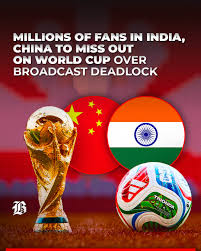
Millions of football fans in India and China could miss live coverage of the 2026 FIFA World Cup as broadcasters in both countries are yet to finalise television rights agreements with FIFA.
The delay is unusual for a tournament of such global scale, with broadcasting deals for previous World Cups typically concluded months or even years before kick-off.
Local media reports in both countries said negotiations remain stalled over the cost of securing rights to air the matches.
FIFA confirmed discussions are still ongoing but declined to comment on the financial details.
“Talks in China and India are ongoing and must remain confidential at this stage,” FIFA told the BBC.
The football governing body added that television rights agreements have already been completed in 180 territories worldwide, but a small number — including India and China — remain unresolved.
Together, the two countries account for nearly one-third of the world’s population, making them among the most significant unresolved broadcast markets for the tournament.
According to reports from state-controlled newspaper Beijing Daily, FIFA initially offered broadcasting rights to China Central Television (CCTV) for as much as $300 million.
The report said FIFA later reduced the asking price to between $120 million and $150 million, but the figure still reportedly exceeds CCTV’s budget for the competition by more than double.
Chinese media also suggested that public interest in the tournament may be lower because China failed to qualify for the World Cup.
Another challenge is the time difference between China and North America, where many matches will be played during the early hours of the morning for Asian audiences.
Broadcast agreements for previous tournaments were reached far earlier. FIFA announced in 2017 that CCTV had secured exclusive rights to air both the 2018 and 2022 World Cups.
In India, local media reports indicate that negotiations are progressing and a deal could be announced soon, although no official agreement has yet been confirmed.
