


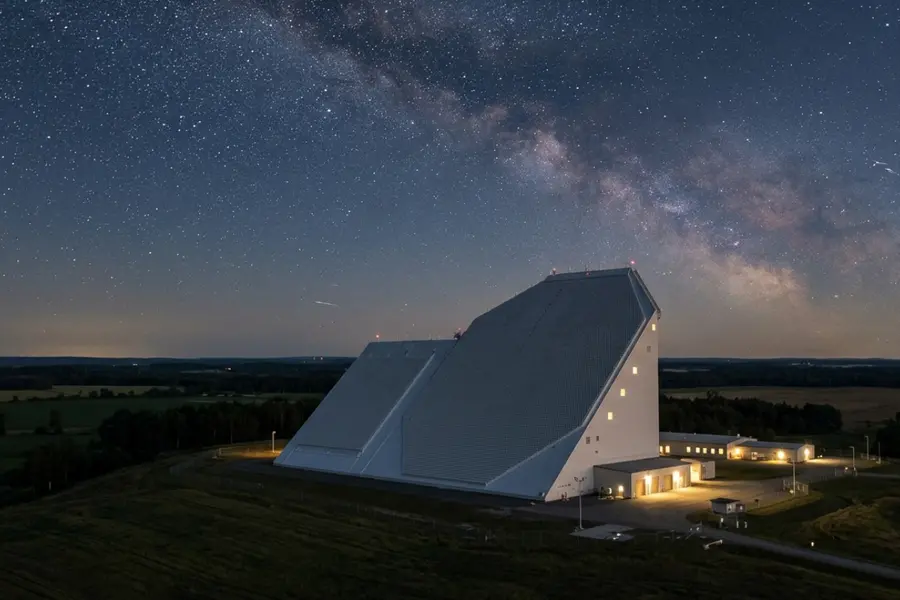
India is expanding its capacity to monitor activities beyond Earth with the construction of an advanced radar research complex for the Indian Space Research Organisation (ISRO) in Assam, a development that is expected to strengthen the country’s growing space-surveillance infrastructure.
The foundation stone for the facility was recently laid in the north-eastern Indian state, marking the beginning of a project designed to give India more sophisticated capabilities for observing and tracking objects in space.
According to a report by TV BRICS, a News Agency of Nigeria (NAN) partner, the proposed research centre will be equipped with advanced radar systems and optical telescopes capable of tracking space objects.
The facility is expected to play an important role in improving India’s ability to observe objects orbiting the Earth, providing scientists and space agencies with additional data for monitoring activities in the increasingly crowded space environment.
Space surveillance has become an increasingly important component of national space programmes as the number of satellites, spacecraft and other objects operating around the Earth continues to grow. The ability to identify and track such objects is crucial to protecting space-based infrastructure and supporting scientific research.
For India, the Assam project also represents an expansion of the geographical footprint of its space research ecosystem. By establishing an advanced observation facility in the north-east, the country is bringing Assam more directly into its national space research and technology network.
Beyond its technological function, the centre could create opportunities for scientific collaboration, research and technical capacity development in the region. Its integration into India’s wider space infrastructure is expected to strengthen the role of Assam in the country’s long-term space ambitions.
The project therefore goes beyond the construction of another research facility. It reflects India’s broader effort to develop the infrastructure and technological capabilities needed to observe, understand and operate more effectively in an increasingly complex space environment.
As commercial and government activities in orbit expand, advanced radar and optical observation systems are becoming essential tools for space-faring nations. India’s investment in the Assam facility underscores the growing importance it attaches to space situational awareness and the protection of its expanding space assets.
When completed and operational, the research complex is expected to enhance India’s space-object monitoring capabilities while giving Assam a new role in the country’s continuing journey towards greater technological and scientific prominence in space.
