

‘Military Force Alone Cannot Defeat an Ideology’ — Buratai Calls for Youth-Driven Security Reforms

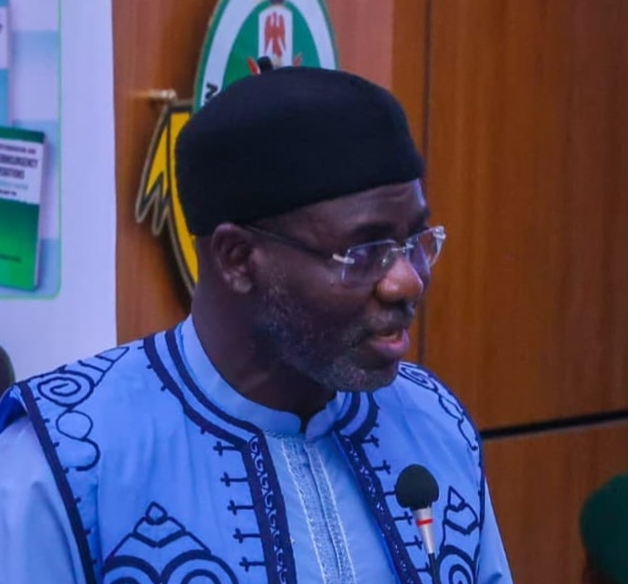
Former Chief of Army Staff, Tukur Yusuf Buratai, has called for a radical overhaul of Nigeria’s security architecture, warning that the country’s growing insecurity cannot be defeated through military force alone without tackling unemployment, youth exclusion, and ideological extremism.
Buratai made the call while delivering a lecture titled “The Armed Forces of Nigeria and National Security: The Youth and National Security Aspirations” at the University of Ilorin, where he urged Nigerian youths to see national security as a collective responsibility rather than the sole duty of the military.
In a lecture that combined historical reflection, security analysis, and policy recommendations, the retired army general argued that Nigeria’s future stability would largely depend on how effectively government institutions engage and empower young people.
According to him, Nigeria’s youthful population represents either the nation’s greatest asset or its greatest vulnerability, depending on whether their aspirations are addressed.
“The constitutional mandate alone cannot defend the nation,” Buratai declared, insisting that security must become “a national project demanding every citizen’s participation, especially the youth.”
Tracing the evolution of the Armed Forces of Nigeria (AFN), Buratai said the military had transformed from a colonial constabulary force established in the 19th century into one of Africa’s most active security institutions, participating in both domestic counter-insurgency operations and international peacekeeping missions.
He highlighted Nigeria’s interventions in Congo, Liberia, Sierra Leone, Darfur, Mali, Guinea-Bissau, The Gambia, and the Republic of Benin, describing Nigerian troops as the “backbone” of many ECOWAS and African Union peace missions.
Domestically, he pointed to ongoing military operations against insurgency, banditry, piracy, separatist violence, and kidnapping across different regions of the country.
Buratai noted that Boko Haram, which once controlled 17 local government areas in the North-East in 2015, had been significantly degraded by 2019, while incidents of maritime piracy had also reduced considerably.
Despite these gains, he warned that Nigeria’s security landscape remains deeply fragile due to interconnected threats ranging from terrorism and separatist agitations to transnational crime, cyber insecurity, oil theft, and farmer-herder conflicts intensified by climate pressures.
He also expressed concern about worsening instability in the Sahel region, particularly the activities of extremist groups linked to Al-Qaeda operating in Mali, Burkina Faso, and Niger.
According to him, the withdrawal of those countries from ECOWAS has complicated regional security cooperation and increased pressure on Nigeria’s borders.
Drawing lessons from Colombia and Sri Lanka, Buratai argued that Nigeria must adopt a hybrid security strategy that combines military operations with socio-economic interventions.
He said Colombia successfully weakened the Revolutionary Armed Forces of Colombia (FARC) through a combination of military pressure, intelligence-sharing, and social reforms, while Sri Lanka defeated the Tamil Tigers through coordinated military action backed by unified political will.
Nigeria, he argued, must blend both models by combining force with development, justice, intelligence coordination, and community engagement.
“A multi-dimensional, whole-of-society security framework is essential,” he said, adding that military operations alone cannot resolve deeply rooted ideological and socio-economic conflicts.
A major focus of the lecture was the role of youths in national security.
Buratai identified five major aspirations shared by Nigerian youths: security, employment, national belonging, justice, and civic relevance.
He warned that when these aspirations are ignored, young people become vulnerable to recruitment by criminal gangs, insurgent groups, and extremist organisations.
“When cultivated, they become Nigeria’s first line of defence,” he stated.
The retired army chief urged youths to participate actively in intelligence gathering, community-based security systems, cyber defence, and military service.
He also encouraged young Nigerians to consider careers in the Armed Forces, describing the military as a platform for discipline, leadership development, skills acquisition, and national integration.
In one of the most striking proposals contained in the lecture, Buratai recommended a “Massive Youth Recruitment Drive” involving the enlistment of 50,000 young Nigerians annually into the Armed Forces over a five-year period.
He also proposed a “National Youth Service for Security,” which would introduce 12 months of mandatory civic security training for tertiary institution graduates as an alternative to aspects of the existing NYSC scheme.
Other recommendations included the establishment of state-level intelligence fusion centres combining military, police, DSS, and youth vigilante groups, as well as a national counter-radicalisation curriculum to be taught in secondary and tertiary institutions.
Buratai further advocated the creation of a Defence Industrial Corps that would engage Nigerian youths in the local production of drones, small arms, and armoured vehicles under the DICON Act of 2023.
He also proposed a Security Trust Fund financed through five per cent allocation from the federation account to support military equipment procurement, personnel welfare, and youth-focused security employment initiatives.
The former army chief stressed that Nigeria’s security laws and strategies would remain ineffective without implementation, noting that documents such as the Terrorism Prevention Act, National Security Strategy, and Border Management Strategy require political commitment and institutional coordination to produce results.
Reflecting on the lessons of the Nigerian Civil War, Buratai said military victory alone could not guarantee national peace.
“The Nigerian Civil War teaches that military force can defeat secession, but only justice, development, and inclusion can build lasting peace,” he said.
He ended the lecture with a direct appeal to students and Nigerian youths to view national security as a patriotic responsibility.
“Your country needs your brains, your brawn, and your bravery,” he declared. “Enlist, engage, and secure your future.”
