

UN Chief Pushes for Global Treaty to Curb ‘Killer Robots’

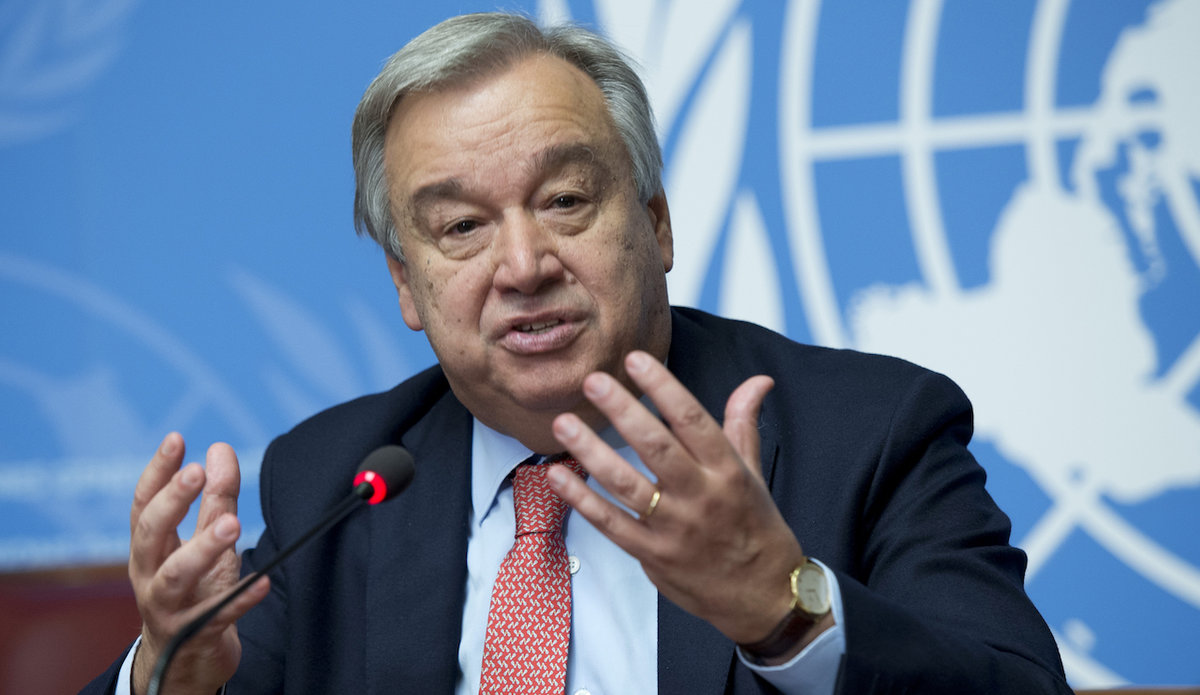
United Nations Secretary-General, Antonio Guterres, has called on member states to begin negotiations on a legally binding international instrument to regulate lethal autonomous weapons systems, popularly known as “killer robots”.
Guterres made the appeal on Monday in Geneva while addressing delegates from more than 120 member states at the 7th Review Conference of the Convention on Certain Conventional Weapons, urging countries to establish regulations that include “clear prohibitions and restrictions” on the development and use of the weapons.
The UN chief warned that the changing nature of warfare and the emergence of sophisticated military technologies posed significant humanitarian, legal, ethical and security challenges that required urgent international attention.
“New technologies, including autonomous weapons systems, present new humanitarian, legal, ethical and security challenges.
“I urge you to seize this moment. Take action to prevent the use and spread of these merciless weapons,” he said.
In his video message to the conference, Guterres stressed that the international community must remain committed to protecting civilians from the devastating consequences of armed conflicts.
“we must never stop shielding civilians from the carnage and devastation of armed conflict and preventing unnecessary suffering”.
The Secretary-General’s appeal follows a similar call by the UN High Commissioner for Human Rights, Volker Türk, who urged governments to urgently agree on an international treaty to regulate autonomous weapons amid concerns over the rapid advancement of military technology.
Türk warned that the growing accessibility of such weapons could create a situation in which machines independently determine whether human beings live or die.
“A machine must never have the power to decide whether a human being survives or dies,” he said.
He advocated prohibiting autonomous weapons designed to target human beings, either deliberately or in practice, as well as weapons whose functions and effects cannot be fully understood, predicted, explained and controlled by human operators.
The High Commissioner maintained that human judgement and accountability must remain central to decisions involving the use of force, arguing that machines cannot appreciate the value of human life, understand complex situations or make the moral and legal judgements required under international law.
However, efforts to establish international controls have encountered differing positions among countries.
Although the UN General Assembly adopted Resolution 78/241 in December 2023, affirming the need for lethal autonomous weapons systems to comply with international humanitarian law, countries remain divided over the scope and nature of the proposed regulations. The resolution received the support of 152 countries, while four voted against it and 11 abstained.
The ongoing conference is expected to provide an opportunity for member states to examine possible approaches to regulating the weapons, although there is currently no consensus on whether a new instrument should be legally binding or on the timeframe for reaching an agreement.
The discussions will also examine the humanitarian consequences of landmines and emerging methods of warfare that are not adequately covered by existing international agreements.
Organised by the UN Office for Disarmament Affairs (UNODA), the conference is taking place under the framework of the Convention on Certain Conventional Weapons, an international agreement established to address weapons considered excessively injurious or indiscriminate in their effects.
For more than four decades, the convention has provided a platform for international cooperation to reduce human suffering caused by landmines, improvised explosive devices, incendiary weapons and explosive remnants of war.
The convention remains one of the major pillars of international disarmament efforts and currently has 128 High Contracting Parties, the official designation for countries that have formally joined the agreement and accepted its legal obligations.

