


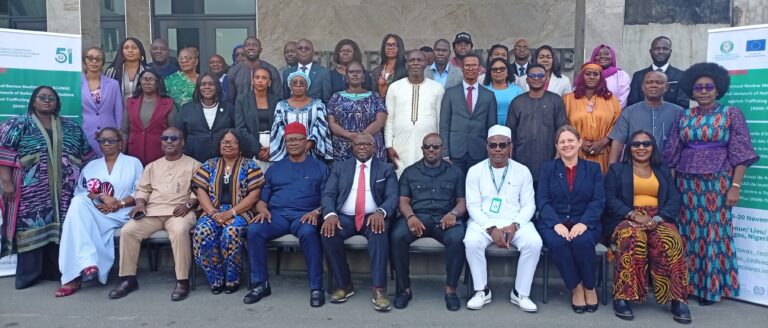
The Economic Community of West African States (ECOWAS) Commission has called on member states to strengthen regional cooperation and coordination in the fight against human trafficking, while ensuring respect for the rule of law.
Dr Mody Ndiaye, President of the Senegal Committee Against Trafficking in Persons, made the call in Lagos on Monday at the 18th Annual Review Meeting of the ECOWAS Regional Network of National Focal Institutions Against Trafficking in Persons.
The News Agency of Nigeria (NAN) reports that Ndiaye represented Senegal, which chairs the ECOWAS committee.
He said that despite significant progress recorded over the years, human trafficking remained a major challenge that required stronger collective action by countries across the subregion.
According to him, traffickers are increasingly exploiting technology to recruit and exploit victims, making it imperative for governments to strengthen their technological capacity to tackle emerging threats.
Ndiaye urged member states to match the speed and operational capabilities of criminal networks while protecting vulnerable persons and upholding the rule of law.
He emphasised that no single country or a few countries could successfully combat human trafficking without sustained regional cooperation, intelligence sharing and coordinated interventions.
Similarly, the Director-General of the National Agency for the Prohibition of Trafficking in Persons (NAPTIP), Mrs Binta Bello, called for stronger regional collaboration to address the menace.
Bello, represented by the agency’s Director of Intelligence, Mr Josiah Emerole, advocated improved information sharing and coordinated responses among countries in the region.
She noted that human trafficking was closely linked to sexual and gender-based violence, violence against children, child labour, forced labour and irregular migration.
According to her, the interconnected nature of these challenges makes integrated and victim-centred interventions essential to achieving meaningful results.
Bello also stressed the need for reliable data collection, improved victim protection and rehabilitation services, as well as stronger investigative and prosecutorial capacities.
She welcomed the Regional Referral Mechanism (RRM) West Africa Project, implemented by ECOWAS and the International Centre for Migration Policy Development (ICMPD), describing it as an important initiative for strengthening anti-trafficking referrals across the subregion and facilitating faster inter-agency interventions.
Also speaking, the International Labour Organisation (ILO) Country Director for Nigeria, Ghana, Liberia and Sierra Leone, Dr Vanessa Phala-Moyo, called for stronger institutions and increased investment in protection systems to combat human trafficking, forced labour and child labour.
Phala-Moyo, represented by the ILO National Project Coordinator, Dr Agatha Kolawole, said women, children, migrants and informal economy workers were disproportionately exposed to exploitation.
She stressed that addressing the situation required coordinated, multisectoral responses capable of protecting vulnerable groups and tackling the root causes of exploitation.
The ILO country director reaffirmed the organisation’s partnership with ECOWAS in strengthening labour migration governance and protecting migrant workers.
She also pledged the ILO’s continued collaboration with the regional body to advance fundamental principles and rights at work.

