


For centuries, Ethiopia has carried a distinction deeply woven into the history of one of the world’s most consumed beverages: it is widely regarded as the birthplace of Arabica coffee. Now, the East African nation is seeking to turn that historical advantage into global production leadership.
The government of Prime Minister Abiy Ahmed is pursuing an ambitious plan to position Ethiopia as the world’s largest producer of Arabica coffee, combining increased production with modern technology, irrigation, mechanised farming and improved processing.
According to TV BRICS, a NAN partner, Abiy has argued that Ethiopia’s status as the birthplace of Arabica gives the country a compelling reason to become its leading producer.
The strategy comes as coffee assumes an increasingly important role in Ethiopia’s economy, particularly through export earnings and its contribution to the livelihoods of millions of people involved in cultivation, processing and trade.
From tradition to modern production
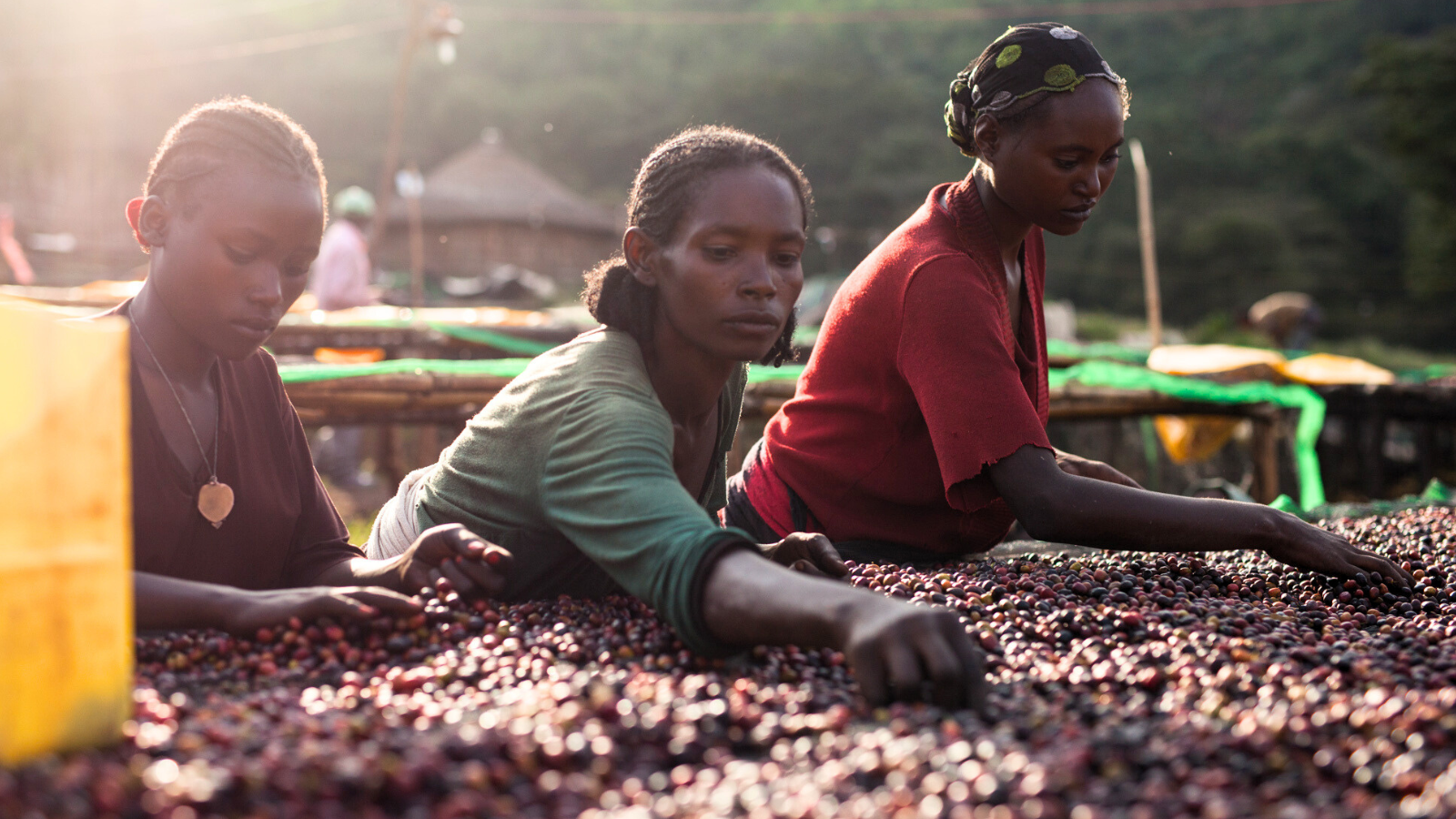
Ethiopian coffee production has historically relied heavily on smallholder farmers and traditional cultivation methods. While these methods have helped preserve the distinctive characteristics of Ethiopian coffee, the government is increasingly looking towards technology and investment to overcome productivity constraints.
A major component of the strategy is attracting investment into modern irrigation and coffee-processing infrastructure.
The expansion of irrigation is expected to reduce farmers’ dependence on rainfall and improve production consistency, while modern processing facilities could help reduce post-harvest losses and improve the quality and marketability of Ethiopian beans.
Mechanised harvesting is also beginning to change the nature of coffee production in some areas, making farm work less labour-intensive while contributing to more efficient production.
The government’s objective is not simply to produce more coffee, but to build an industry capable of consistently meeting the increasingly sophisticated demands of the international market.
Quality meets productivity
For Ethiopia, the challenge is to balance two priorities: increasing the volume of coffee produced while preserving the quality for which its beans are known.
Coffee producers and exporters have identified productivity and quality as critical factors in strengthening Ethiopia’s position in the global market.
This is particularly important as international consumers increasingly seek speciality coffees with distinctive flavours, origins and production characteristics.
Ethiopia’s diverse highlands provide conditions for producing coffees with different flavour profiles, helping the country establish a strong reputation in the speciality coffee segment.
The growing demand for premium Ethiopian coffee has demonstrated that quality can translate into significant economic value.
When a kilogramme becomes worth $2,376
Perhaps nowhere is this transformation more striking than in the record price achieved by coffee from Ethiopia’s Guji highlands in the south.
At an online auction, one kilogramme of coffee from the region reportedly sold for $2,376.
The extraordinary price illustrates the premium that exceptional Ethiopian coffee can command when quality, origin and scarcity converge.
It also provides an indication of the economic possibilities available to Ethiopian producers if the country can consistently improve quality while expanding production.
For farmers, however, the ultimate test will be whether growing global demand and higher-value markets translate into better incomes and more sustainable livelihoods.
Building an export powerhouse
Coffee already plays a significant role in Ethiopia’s foreign exchange earnings, making the sector strategically important to the country’s economic development.
By investing in irrigation, processing facilities and mechanisation, Ethiopia is seeking to move beyond being simply a major producer of coffee beans to becoming a more sophisticated participant in the global coffee value chain.
That transformation could involve greater investment in processing, quality control, branding and export infrastructure, allowing more value to be retained within the country.
The strategy also reflects a broader shift in agricultural policy across Africa, where governments are increasingly seeking to modernise traditional commodities and capture greater value from agricultural exports.
For Ethiopia, coffee offers a particularly powerful opportunity because the country possesses both a globally recognised origin story and a large agricultural base.
The race for Arabica leadership
Ethiopia’s ambition to become the world’s largest Arabica producer will ultimately depend on its ability to increase yields without compromising the characteristics that distinguish its coffee.
Higher productivity, reliable irrigation, modern processing and mechanisation could provide the foundation for expansion. But maintaining quality will remain equally important as Ethiopia competes for consumers in increasingly demanding international markets.
The country’s coffee story is therefore evolving from one built largely around heritage and tradition to one increasingly defined by technology, investment and global competitiveness.
Ethiopia may have given the world Arabica coffee, but its latest ambition is considerably bigger: to transform that historic inheritance into a modern agricultural powerhouse and make the country’s coffee industry a dominant force in the global market.
The journey from the coffee forests of Ethiopia’s highlands to the world’s coffee cups has already lasted centuries. The next chapter is about whether the birthplace of Arabica can also become its undisputed production capital.
