


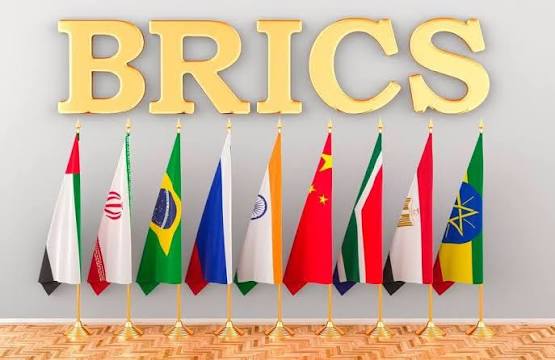
As Africa searches for stronger economic partnerships beyond traditional markets, the BRICS bloc is increasingly being viewed as a potential catalyst for deeper trade, investment and infrastructure cooperation across the continent.
For Dawit Mesfin, Deputy CEO of Fana Media Corporation, the opportunity lies not only in expanding trade between BRICS members and African economies, but also in changing the way that trade is conducted.
Speaking to TV BRICS, a partner of the News Agency of Nigeria (NAN), Mesfin argued that greater use of national currencies in cross-border transactions could strengthen economic relationships between BRICS countries and other willing partners.
“We have to utilise our currencies; we have to expand our intra-trade relations among the BRICS countries and the other countries who are ready to participate,” he said.
The proposition comes against the backdrop of a broader push among BRICS economies to deepen economic cooperation and reduce some of the barriers associated with international trade. For African economies, greater use of local currencies could potentially provide additional avenues for conducting trade and strengthening financial links with major emerging economies.
But currency arrangements alone cannot transform Africa’s economic fortunes. One of the continent’s most persistent obstacles remains infrastructure.
Mesfin identified infrastructure development as another major area in which BRICS could make a meaningful contribution to Africa’s economic integration. He pointed particularly to the potential role of the New Development Bank in supporting transport infrastructure across the continent.
Africa’s fragmented transport networks have long complicated intra-African trade. Poorly connected roads, limited rail links and inadequate port infrastructure can increase the cost and time involved in moving goods between neighbouring countries.
Investment in ports, transport corridors, railways and highways, therefore, could have implications far beyond individual infrastructure projects. Better connectivity could help link producers to markets, facilitate movement of goods and potentially strengthen commercial relationships among African economies.
For Mesfin, Ethiopia provides an example of how sector-specific partnerships could complement this broader infrastructure agenda.
He identified agriculture and digital platforms as promising areas for stronger cooperation between Ethiopia and BRICS countries, pointing to the country’s considerable agricultural potential.
“We want partnerships from the BRICS countries on agriculture and digital platforms,” he said.
Mesfin noted that Ethiopia has significant capacity to produce different types of crops, creating opportunities to expand agricultural exports to BRICS markets.
Such partnerships could potentially connect agricultural production with wider infrastructure and digital investments. Improved transport networks could make it easier to move agricultural products to domestic and international markets, while digital platforms could support areas such as market access, business connectivity and trade.
The larger proposition is that Africa’s relationship with BRICS should not be viewed simply through the lens of financial assistance or export markets. It could instead evolve into a broader economic partnership built around trade, infrastructure, agriculture, technology and financial cooperation.
For countries such as Ethiopia, the attraction is clear: access to large markets and investment opportunities could complement domestic efforts to expand productive capacity.
For BRICS economies, deeper engagement with Africa could equally open new commercial opportunities in a continent with substantial agricultural, natural and consumer-market potential.
Yet the success of such cooperation would ultimately depend on how effectively partnerships translate into actual infrastructure, trade and productive investment.
The challenge for Africa is therefore not merely attracting new partners, but ensuring that these partnerships contribute to stronger regional connectivity, expanded production and sustainable economic opportunities.
Mesfin’s vision points to three interconnected pillars—local-currency trade, infrastructure connectivity and sectoral partnerships—as possible building blocks of a deeper BRICS-Africa economic relationship.
If effectively developed, such cooperation could help move the relationship beyond diplomatic declarations towards practical economic integration, creating new channels for trade and investment while strengthening connections between African economies and the rapidly expanding BRICS bloc.
