


When President Bola Ahmed Tinubu declared his ambition to grow Nigeria into a $1 trillion economy, the statement was more than an economic aspiration; it was a strategic challenge to every sector of the nation. Achieving that scale requires Nigeria to move beyond its historical dependence on oil and unlock new engines of productivity, innovation, and wealth creation.
At the centre of that transformation is the digital economy. Around the world, nations that have experienced rapid economic expansion in the last two decades have done so by investing heavily in technology, digital infrastructure, innovation ecosystems, and human capital. From India’s digital public infrastructure revolution to Estonia’s e-governance model and the rise of Southeast Asia’s startup economies, technology has become the defining force behind modern economic growth.
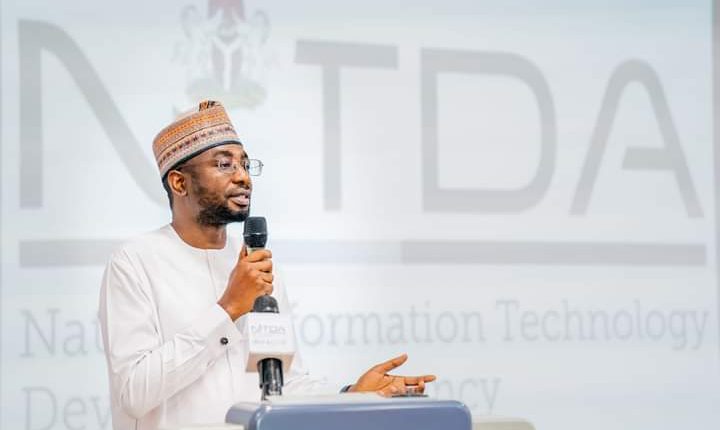
For Nigeria, the institution tasked with turning digital potential into measurable national prosperity is the National Information Technology Development Agency (NITDA). While discussions about a trillion-dollar economy often focus on fiscal reforms, infrastructure projects, or industrial policy, a quieter but equally consequential transformation is underway: one driven by code, capital, and digital capability. NITDA sits at the intersection of these three forces.
From IT Regulator to Economic Transformation Agency
For many years, NITDA was largely viewed as a technology regulator and policy agency. Today, its mission has expanded significantly. Under the leadership of Kashifu Inuwa Abdullahi CCIE, the agency has positioned itself as a catalyst for economic diversification and digital inclusion. Its Strategic Roadmap and Action Plan (SRAP 2.0) for 2024–2027 aligns directly with President Tinubu’s Renewed Hope Agenda and the national objective of accelerating economic growth through digitisation and innovation.
Rather than focusing solely on technology adoption, NITDA’s strategy aims to build the foundational ecosystem required for sustained digital growth. This includes talent development, digital infrastructure, innovation support, cybersecurity, regulatory modernisation, research, and investment attraction. The agency’s work reflects a broader shift in national thinking: from consuming technology to producing it.
One of NITDA’s biggest contributions is digital skills development. Through its digital literacy initiatives and partnerships across government and the private sector, the agency is working toward achieving 70% digital literacy by 2027 and 95% by 2030. By equipping students, artisans, traders, and young professionals with digital skills, NITDA is expanding Nigeria’s productive workforce and preparing millions of citizens for the digital economy.
The agency is also strengthening Nigeria’s innovation ecosystem. Through innovation hubs, startup support programmes, and the Office for Nigerian Digital Innovation (ONDI), NITDA is helping entrepreneurs turn ideas into scalable businesses. The iHatch programme alone has supported thousands of startup applications, created jobs, and connected innovators to opportunities and markets across the country.
Beyond talent and startups, NITDA is attracting investment into the technology sector. Its recent partnership with the Japan International Cooperation Agency (JICA) to establish a $11.2 million innovation hub in Abuja demonstrates how strategic collaborations can unlock capital, infrastructure, and opportunities for Nigerian innovators.
NITDA is equally positioning Nigeria for the future through investments in emerging technologies such as Artificial Intelligence, blockchain, robotics, and the Internet of Things. By developing regulatory frameworks and encouraging innovation in these sectors, the agency is helping Nigeria compete in the industries that will define global economic growth over the next decade.
The story of Nigeria’s $1 trillion economy is ultimately a story of three interconnected forces: code, capital, and country. Code represents the digital talent powering innovation. Capital represents the investment that transforms ideas into enterprises. Country represents the policies and institutions that create an enabling environment for growth. NITDA is already advancing all three.
From digital literacy and startup development to innovation hubs, investment attraction, and emerging technology governance, the agency is laying the foundations of a modern digital economy. As Nigeria pursues its one trillion-dollar economy ambition, NITDA’s work demonstrates that the journey has already begun – not in theory, but in measurable actions that are creating jobs, empowering innovators, and expanding the nation’s digital capacity.
