

What Led to Equatorial Guinea Government’s Mass Resignation?

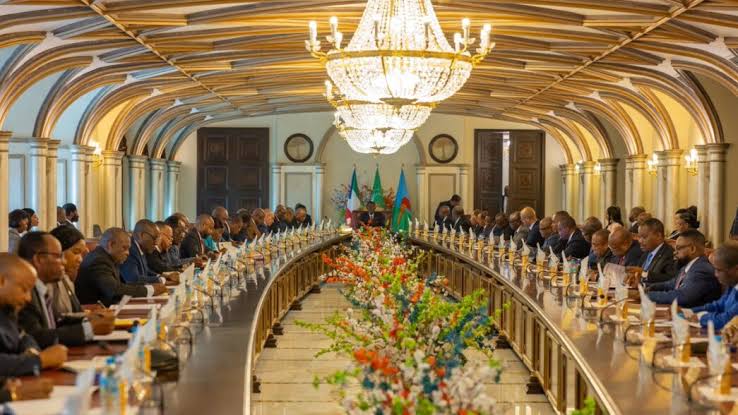
The government of Equatorial Guinea has resigned following poor performance against key targets set by President Teodoro Mbasogo Obiang.
According to reports, Vice President Teodoro Obiang announced that Prime Minister Manuel Nsua submitted the resignation of the entire cabinet after the administration reportedly delivered less than 10 per cent of its planned objectives.
While specific benchmarks were not disclosed, government officials cited failures in economic diversification, agricultural development, project implementation and governance reforms as major factors behind the decision.
The vice president said the action reflected the administration’s position that public office holders must be accountable for measurable results.
The outgoing cabinet was appointed in 2024 as part of efforts to strengthen governance and drive economic reforms.
In a statement shared on X, the vice president said government programmes had fallen significantly below expectations.
“The degree of execution achieved is clearly insufficient in relation to the expectations and commitments undertaken,” he stated.
The ruling Democratic Party of Equatorial Guinea (PDGE) also said President Obiang expressed dissatisfaction with the administration’s performance, pointing to concerns over corruption, alleged misuse of public resources and delays in executing development projects.
The party further highlighted the government’s inability to reduce dependence on oil revenues through increased investment in agriculture and other sectors.
Authorities believe stronger agricultural output could help cut imports and support long-term economic growth.
A new cabinet is expected to be announced in the coming days.
Equatorial Guinea’s economy remains largely dependent on oil and gas exports, despite years of efforts to diversify revenue sources. Declining oil production and softer global demand have continued to pressure economic growth.
Although the country possesses significant natural resources, poverty remains widespread across much of its estimated 1.8 million population.
President Obiang, 84, has led the country since August 1979 after taking power in a military coup that removed his uncle, Francisco Nguema. He remains the world’s longest-serving serving head of state.
His son, Vice President Obiang Mangue, is considered one of the country’s most influential political figures and is widely viewed as a possible successor.
