

NSCDC Strengthens Measures Against Conflict-Related Sexual Violence, Expands Survivor Support

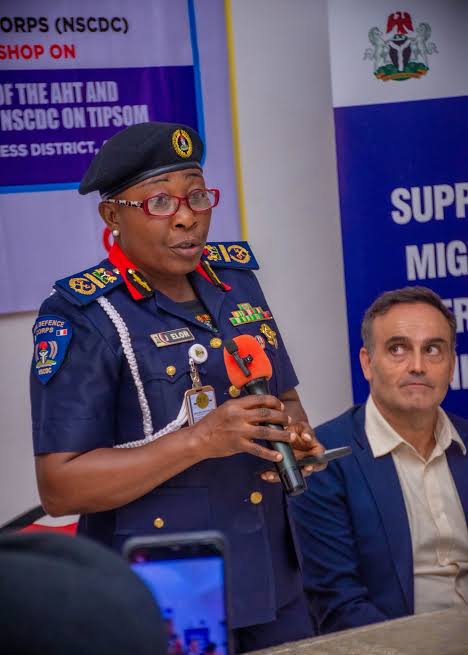
The Nigeria Security and Civil Defence Corps (NSCDC) has reaffirmed its commitment to combating conflict-related sexual violence, pledging to deepen institutional reforms and strengthen protection mechanisms for women, girls, and other vulnerable groups affected by insecurity across Nigeria.
In a statement issued to mark the International Day for the Elimination of Sexual Violence in Conflict, Commandant General of the NSCDC, Prof. Ahmed Audi, said the Corps remains committed to global standards on prevention, accountability, and survivor-centred responses to sexual violence in conflict settings.
Audi said the agency is expanding its operational capacity to prevent abuse, support survivors, and ensure offenders are held accountable, describing conflict-related sexual violence as a major threat to peace, security, and human dignity.
“Preventing sexual violence in conflict and protecting women, girls, and children is a shared security responsibility. It requires early intervention, strict accountability for offenders, and the full protection of survivors’ dignity,” he said.
According to the NSCDC, its revised Gender Policy, launched on February 3, 2026, is already influencing operations across commands nationwide by promoting gender-responsive security measures, strengthening early warning systems, and improving trauma-informed support services for survivors.
Speaking at the National Headquarters, the Head of the Gender Unit, Deputy Commandant of Corps (DCC) Kemi Ajet, said the framework is intended to embed gender considerations into security planning and field operations, especially in vulnerable and conflict-affected communities.
She identified rising community tensions, harassment and intimidation, forced displacement, trafficking risks, and increasing vulnerability among internally displaced persons and persons with disabilities as key warning signs that require urgent attention and reporting.
Ajet also called for stronger collaboration among security agencies, traditional institutions, civil society organisations, and the media to improve reporting channels, reduce stigma, and discourage victim-blaming in cases of sexual violence.
The Corps urged members of the public to report suspicious activities through official communication channels, stressing that timely information-sharing remains essential to preventing abuse and protecting lives.
