


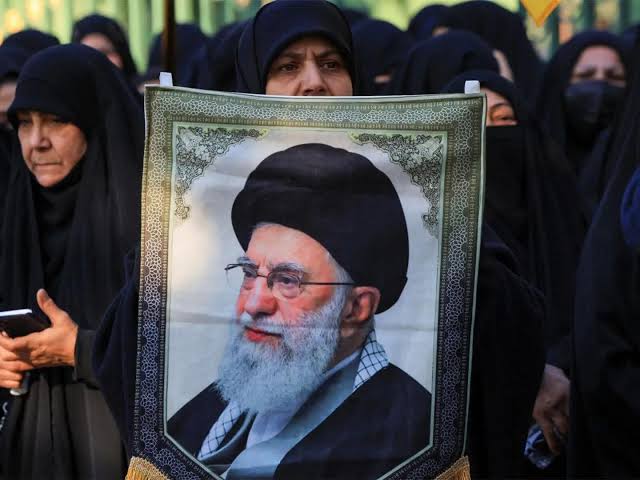
Iran is preparing for one of the most consequential weeks in its modern history as millions are expected to gather for the funeral of the late Supreme Leader, Ayatollah Ali Khamenei, whose death in U.S. and Israeli strikes has plunged the Islamic Republic into an uncertain new era.
The elaborate funeral rites, stretching across several cities in Iran and into neighboring Iraq, are designed to honour the country’s most powerful leader while projecting an image of unity and resilience after a conflict Tehran describes as an existential battle.
Beginning in Tehran this weekend, the ceremonies will continue through the religious centres of Qom and Mashhad before concluding with a burial near the revered shrine of Imam Reza. Memorial events are also planned in the Iraqi holy cities of Najaf and Karbala, reflecting Iran’s deep religious and political ties across the region.
For Iran’s leadership, the funeral is more than a farewell. It is being presented as a national reaffirmation of loyalty to the Islamic Republic.
Friday prayer leader in Qom, Mohammad Saidi, described the expected turnout as “another referendum for the Islamic Republic,” expressing confidence that millions of mourners would fill the streets in a demonstration of support for the country’s theocratic system.
Authorities have mobilised extensive logistical support, including discounted hotel accommodation, expanded transportation services and temporary shelters in schools, mosques and sports halls to accommodate mourners arriving from across the country.
Yet beneath the carefully orchestrated displays of unity lies a nation grappling with profound divisions.
Analysts say years of international sanctions, economic hardship and political repression have steadily eroded public confidence in the government, particularly among Iran’s youthful population, many of whom have little personal memory of the 1979 Islamic Revolution.
Recent nationwide protests over soaring inflation exposed those frustrations, with demonstrators openly calling for Khamenei’s removal before security forces forcefully suppressed the unrest.
Some residents of Tehran reportedly reacted to news of the Supreme Leader’s death with quiet celebrations behind closed doors, underscoring the complex and often contradictory emotions surrounding one of the country’s most influential figures.
Now, the capital presents a different picture. Streets are subdued, security has been heightened and members of the Basij militia are highly visible as authorities prepare for the week-long ceremonies.
“It is like life has stopped and there are Basijis everywhere,” said Samira, a 35-year-old Tehran resident whose family plans to leave the city rather than participate in the funeral activities.
The funeral also marks the beginning of a new chapter in Iran’s leadership.
Khamenei’s son, Mojtaba Khamenei, has assumed the position of Supreme Leader after reportedly surviving the strike that killed his father, although he has not appeared publicly since the conflict began.
The transition represents one of the most significant political moments in the Islamic Republic’s 47-year history, raising questions about how the new leadership will navigate mounting domestic pressures and persistent tensions with the West.
The symbolism surrounding Khamenei’s death carries particular weight within Shi’ite Islam, where martyrdom occupies a central place in religious tradition. Black mourning banners now drape public spaces across Iran, while ceremonies evoke the memory of Imam Hossein, whose martyrdom remains one of Shi’ism’s defining events.
For loyal supporters such as 24-year-old Basij member Mohsen, the loss is deeply personal.
“These are the hardest days of my life,” he said, recalling stories from his father about the nationwide grief that followed the death of Ayatollah Ruhollah Khomeini in 1989.
The comparison is unavoidable. Khomeini’s funeral drew millions of mourners in scenes of overwhelming emotion and chaos, as crowds surged toward the coffin in an outpouring of revolutionary devotion.
Whether Khamenei’s farewell will inspire the same spontaneous national sentiment remains uncertain.
As foreign dignitaries from countries including Russia and China arrive to pay their respects and security forces tighten measures against any renewed military threats, Iran enters a defining moment—one that blends grief, political transition and a renewed effort by its leaders to demonstrate strength.
The funeral may honour the legacy of a man who shaped Iran for more than three decades, but it will also reveal how firmly the Islamic Republic still commands the hearts of its people in an era of unprecedented challenges.
