


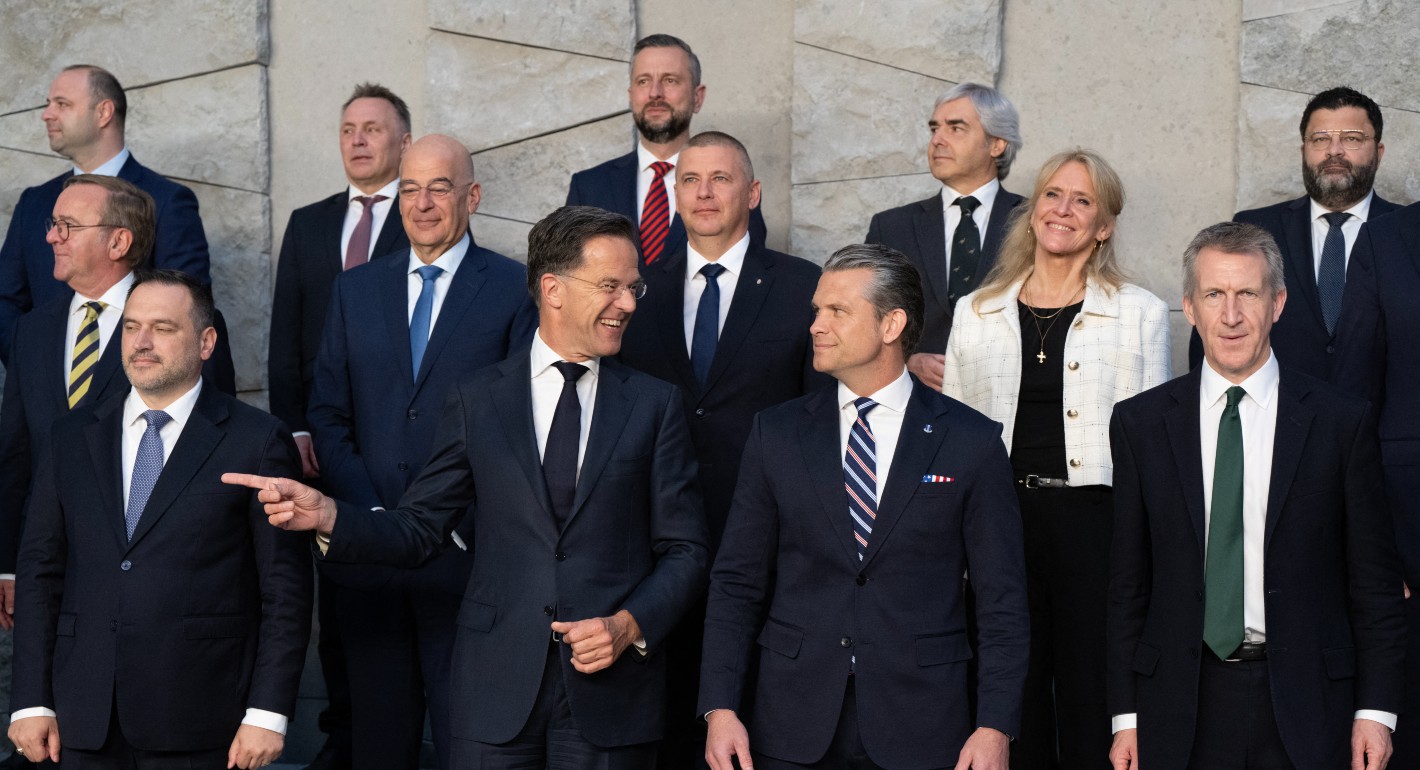
As NATO leaders prepare to converge on Ankara next week, the alliance faces one of its most delicate balancing acts in years—projecting unity while navigating deepening transatlantic tensions over security, defence spending, and geopolitical priorities.
The two-day summit, beginning on Tuesday, comes at a time when European allies are eager to put aside recent disagreements with U.S. President Donald Trump over issues ranging from Iran to Greenland. Instead, they hope to demonstrate that Europe is assuming greater responsibility for its own defence as Washington steadily scales back its traditional security commitments.
NATO Secretary General Mark Rutte has described the gathering as a defining moment for the alliance, saying it will showcase Europe’s determination to honour ambitious defence spending commitments designed to deter any future Russian aggression. The summit is also expected to witness the signing of arms agreements worth tens of billions of dollars, underscoring the alliance’s drive to strengthen its military capabilities.
Beyond defence procurement, leaders are expected to reaffirm their commitment to supporting Ukraine in its ongoing war against Russia by sustaining military assistance and weapons supplies. Ukrainian President Volodymyr Zelenskiy is scheduled to attend a dinner hosted by Turkish President Recep Tayyip Erdoğan, who will also hold separate bilateral talks with President Trump on the sidelines of the summit.
Despite efforts to foster a cooperative atmosphere, uncertainty hangs over the meeting. European officials are counting on the cordial relationships Trump enjoys with both Erdoğan and Rutte to help keep discussions on track. However, lingering bitterness over the Iran conflict and Trump’s repeated criticism of NATO continue to cast a shadow over alliance unity.
The U.S. president renewed his criticism this week, writing on Truth Social that the United States continues to spend money protecting NATO allies “without getting any benefit from so doing.” The remarks echoed his long-standing argument that European nations have relied too heavily on American military power.
Alliance leaders have pushed back against that narrative, insisting NATO remains indispensable to U.S. security while emphasizing that Europe is responding to Trump’s demands by significantly increasing defence investments.
Speaking in Berlin ahead of the summit, Rutte said the focus would be on translating increased military spending into “combat-ready capabilities” while rapidly expanding Europe’s defence industrial base.
“NATO is, and will always be, a transatlantic alliance, but we need to rebalance it for the better,” he said, stressing that European allies and Canada are assuming greater responsibility for conventional defence while continuing to work closely with the United States.
According to Rutte, NATO’s European members and Canada increased defence spending by an additional $90 billion in 2025, bringing their combined military expenditure to more than $570 billion.
The alliance’s renewed investment follows a landmark agreement reached at last year’s NATO summit in The Hague, where member states committed to raising core defence spending to 3.5 per cent of gross domestic product by 2035, up from the previous target of 2 per cent. Leaders also pledged to devote an additional 1.5 per cent of GDP to broader security priorities, including cybersecurity, military infrastructure and other defence-related investments.
As leaders gather in Ankara, the summit is expected to test whether increased spending and renewed commitments can bridge widening political divisions and reinforce NATO’s credibility at a time when Europe faces mounting security challenges and an increasingly uncertain global order.
