


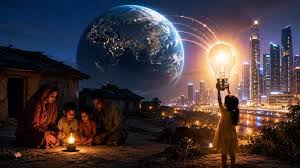
Despite remarkable advances in renewable energy and growing global attention to sustainable development, hundreds of millions of people around the world remain without access to one of life’s most basic necessities: electricity.
A new report released by the World Health Organization (WHO) and its partners paints a sobering picture of global energy access, revealing that 655 million people are still living without electricity, while nearly two billion continue to rely on polluting fuels for cooking.
The findings, contained in the latest Tracking SDG 7 Energy Progress Report, underscore the scale of the challenge facing the international community as it strives to achieve Sustainable Development Goal 7 (SDG 7), which seeks universal access to affordable, reliable and clean energy by 2030.
According to the report, the world is not on track to meet that target.
“The world would miss universal energy access by 2030 at the current pace,” the report warned, urging governments, development partners and investors to accelerate efforts in underserved regions.
Nowhere is the challenge more pronounced than in Sub-Saharan Africa, where 560 million people remain without electricity and 970 million lack access to clean cooking solutions. Population growth across the region continues to outstrip the pace of new energy connections, widening the access gap and threatening progress toward international development goals.
“Progress has slowed when speed matters most. Global electricity access stagnated at 92 per cent in 2024 and annual growth halved from the last decade.
“Financing gaps, high connection costs, and energy security shocks now threaten to leave the poorest communities behind,” the report stated.
The report noted that electrification rates would need to triple to meet SDG 7 targets and prevent millions from being left behind. Without faster implementation of energy access initiatives, it warned, hundreds of millions could still be living without electricity when the 2030 deadline arrives.
Yet amid the challenges, the report highlighted encouraging developments in renewable energy. Clean energy sources are playing an increasingly significant role in global power generation and helping to reshape the energy landscape.
“Renewables now supply more than 30 per cent of global electricity consumption, and generating capacity reached a record 544 watts per person, enough to power basic appliances like refrigerators in many homes.
“International public financial flows supporting clean energy in developing countries increased slightly to 24.6 billion dollars in 2024.
“However, flows remain insufficient, and debt-based financing still dominates at about 80 per cent of total support,” the report stated.
For many experts, access to modern energy is about far more than keeping lights on. It is closely linked to economic opportunity, public health, education and social development.
Dr Fatih Birol, Executive Director of the International Energy Agency, said significant gains have been made over the past decade, with about 800 million people gaining access to electricity since 2010. However, he stressed that progress remains uneven.
“Energy efficiency improvements continued but fell short.
“Global progress slowed from 2.4 per cent in 2022 to 1.5 per cent in 2023, well below the pace needed to meet SDG 7 targets and reduce both costs and emissions effectively,” Birol said.
The report also highlighted the growing importance of renewable energy in strengthening resilience against global energy shocks.
Mr Francesco Camera, Director-General of the International Renewable Energy Agency, said recent disruptions in global energy markets had reinforced the need to expand renewable energy capacity, particularly in developing countries.
“The report projects that without scaled-up action, SDG 7 will be missed by 2030. Energy security risks, market volatility, and financing gaps threaten to widen disparities between high-income and low-income countries.
“Distributed renewable energy solutions are proving critical.
“Off-grid solar and mini-grids deliver cost-effective electricity to remote areas, already serving hundreds of millions who remain beyond the reach of centralised grid infrastructure and investment.
“Clean cooking solutions are gaining traction but remain the largest energy access gap.
“Electric cooking, bioethanol, and biogas are expanding, yet 1.8 billion people could still rely on charcoal, wood, and kerosene by 2030,” Camera stated.
Affordability, he added, remains one of the biggest barriers to energy access, with connection fees, wiring costs and tariffs keeping electricity out of reach for many low-income households.
The report also drew attention to shrinking financial support for the world’s poorest nations. According to Li Junhua, United Nations Under-Secretary-General for Economic and Social Affairs, funding flows to least-developed countries continue to decline despite mounting energy needs.
“Public flows to least developed countries dropped 11 per cent to 3.7 billion dollars in 2024, even as the cost of debt creates economic strain across developing economies.
“Rural populations face growing deficits. In Sub-Saharan Africa, the rural electricity gap expanded from 376 million in 2010 to 447 million in 2024, highlighting the need for decentralised solutions beyond grid extension,” Junhua said.
Health experts say the consequences of inadequate access to clean energy extend far beyond economics.
Valerie Levkov, Vice President of the World Bank, described energy security and affordability as defining development challenges, while emphasizing the need to attract more private-sector investment to complement public funding.
The report noted that household air pollution caused by traditional cooking fuels remains a major public health threat.
“Health impacts intensify the urgency. Household air pollution from cooking fuels causes about three million deaths per year, disproportionately affecting women, girls, and displaced populations who spend hours collecting fuel,” she said.
WHO Director-General Dr Tedros Adhanom Ghebreyesus linked clean energy access directly to health, gender equality and climate action.
“Universal access to clean energy is a fundamental health imperative.
“He linked clean cooking transitions to gender equality, climate action, and reduced household costs,” the report quoted Dr Tedros Adhanom Ghebreyesus, WHO Director-General, as saying.
The report highlighted stark inequalities in renewable energy development, noting that high-income countries have vastly greater renewable energy capacity than low-income nations.
“High-income countries reached 1,224 watts of renewable capacity per person, compared to just 33.6 watts per person in low-income countries, limiting their ability to build resilient systems.
“Stronger political leadership and cross-sector coordination are now cross-cutting priorities. Clear policy signals, sustained implementation, and focus on at-risk countries are essential to diversify energy mixes before 2030.
“The urban-rural divide in clean cooking remains stark. While 89 per cent of urban populations have access, only 56 per cent of rural populations do, requiring targeted programmes that address logistics and affordability barriers,” he said.
The financing structure supporting clean energy development also remains a concern.
“Equity and risk guarantees stayed marginal at 2 per cent and 5 per cent, limiting options for high-risk markets.
“Renewable energy in heat and transport sectors lags behind power. Expanding renewables beyond electricity is critical for full decarbonisation and for improving energy security across all end-use sectors.
“The full report will be presented July 8 at a special inauguration following the High-Level Political Forum review of SDG 7 in New York, where leaders must commit to urgent, scaled action for universal access,” he added.
As the countdown to 2030 continues, the report serves as both a warning and a call to action. While progress in renewable energy demonstrates what is possible, the pace of change remains insufficient. Without stronger political commitment, increased financing and targeted interventions for underserved communities, hundreds of millions may remain trapped in energy poverty long after the world’s development deadline has passed.
