


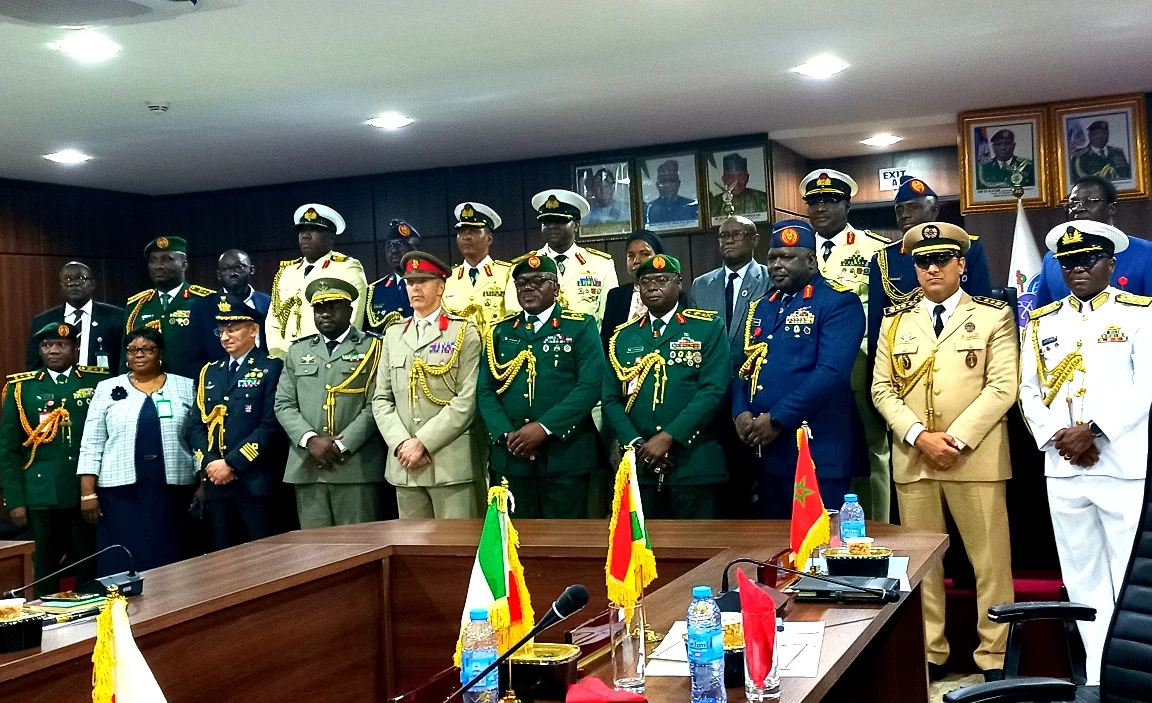
For decades, national security has largely been viewed through the lens of military hardware, troop deployments and combat operations. Yet, in an increasingly interconnected world where terrorism, cybercrime, piracy, transnational organised crime and illegal arms trafficking transcend national borders, military strength alone is no longer sufficient. Increasingly, nations are discovering that one of the most potent weapons in safeguarding national security is not fired from the barrel of a gun but built through dialogue, cooperation and strategic partnerships.
This reality was underscored recently by Nigeria’s Chief of Defence Intelligence (CDI), Lt.-Gen. Emmanuel Undiandeye, who described defence diplomacy as a vital instrument for strengthening national security through international cooperation and strategic military partnerships.
Speaking after the accreditation of newly posted foreign Defence Advisers and Attachés in Abuja, the Defence Intelligence chief explained that Nigeria’s decision to deploy Defence Attachés to foreign countries is guided by the principles of defence diplomacy, just as friendly nations assign their military representatives to Nigeria. According to him, these officers serve not merely as representatives of their respective armed forces but as strategic bridges that deepen bilateral and multilateral defence cooperation, facilitate military training, support defence acquisitions and identify emerging technologies capable of enhancing national security.
His remarks highlight a growing reality in global security architecture: modern warfare is no longer fought exclusively on battlefields. Intelligence sharing, technological collaboration, military education and diplomatic engagement have become indispensable elements of national defence.
The role of Defence Attachés has evolved significantly over the years. Once regarded primarily as military observers attached to diplomatic missions, they have become critical players in intelligence gathering, defence cooperation and conflict prevention. Their responsibilities extend beyond ceremonial functions to include analysing regional security trends, facilitating joint military exercises, promoting defence trade and strengthening strategic relationships between allied countries.
For Nigeria, whose security challenges range from insurgency and banditry to maritime insecurity in the Gulf of Guinea and cross-border crimes across the Sahel, international military cooperation has become increasingly indispensable. Criminal networks no longer respect geographical boundaries. Terrorist organisations exploit porous borders, arms traffickers operate across multiple jurisdictions, while cybercriminals launch attacks from locations thousands of kilometres away. Responding effectively to these threats demands coordinated action among nations.
Defence diplomacy offers precisely that opportunity. Through structured engagement with friendly countries, Nigeria gains access to intelligence, specialised training, operational experience and advanced defence technologies that may otherwise be difficult or prohibitively expensive to acquire independently. Such cooperation also strengthens interoperability, enabling Nigerian security agencies to work seamlessly with their counterparts during multinational operations and peace support missions.
Nigeria’s military has long benefited from defence partnerships with several countries across Africa, Europe, Asia and North America. These collaborations have produced officer exchange programmes, specialised counterterrorism training, maritime security initiatives, intelligence-sharing arrangements and joint military exercises. Many senior Nigerian military officers have attended prestigious defence institutions abroad, while foreign military experts have equally contributed to capacity development within Nigeria’s armed forces.
The accreditation of five newly posted Defence Attachés from Ghana, Italy, Japan, Mali and the United Kingdom further reinforces Nigeria’s commitment to sustaining these strategic relationships. Each of these countries brings unique military experiences and areas of expertise that could prove valuable in addressing contemporary security challenges.
Beyond strengthening military capabilities, defence diplomacy also serves broader national interests. It builds confidence among nations, reduces the risk of misunderstandings and creates channels for resolving security concerns before they escalate into conflict. In an era characterised by geopolitical competition and rapidly evolving security threats, maintaining open military-to-military communication has become an essential pillar of international stability.
Perhaps more importantly, defence diplomacy contributes to peace without firing a single shot. By encouraging dialogue, promoting transparency and fostering mutual trust, it enables countries to pursue common security objectives while preserving regional and global stability. It is this preventive dimension that makes defence diplomacy one of the least visible yet most effective instruments of statecraft.
Nigeria’s active participation in United Nations and African Union peacekeeping missions has further elevated its standing within the international defence community. The country’s military diplomacy has earned respect across the continent, allowing it to play significant roles in regional conflict resolution, humanitarian interventions and security cooperation initiatives. These engagements, in turn, strengthen Nigeria’s diplomatic influence and reinforce its strategic position as a leading security actor in West Africa.
However, defence diplomacy should not be viewed as a substitute for strengthening domestic security institutions. International partnerships can complement national efforts, but sustainable security ultimately depends on well-equipped armed forces, effective intelligence services, sound political leadership and strong institutions at home. Diplomacy expands opportunities; it cannot replace internal preparedness.
As Nigeria continues to confront increasingly complex and interconnected security challenges, the country must continue investing not only in military platforms and operational capabilities but also in the relationships that make collective security possible. In today’s world, the strength of a nation’s defence is measured not only by the sophistication of its weapons but also by the quality of its alliances, the depth of its intelligence networks and the credibility of its international partnerships.
Lt.-Gen. Undiandeye’s remarks therefore serve as an important reminder that the future of national security extends beyond the battlefield. In an age where threats travel faster than borders can contain them, defence diplomacy has become one of Nigeria’s most valuable strategic assets—quietly strengthening security through cooperation, trust and shared responsibility.
