


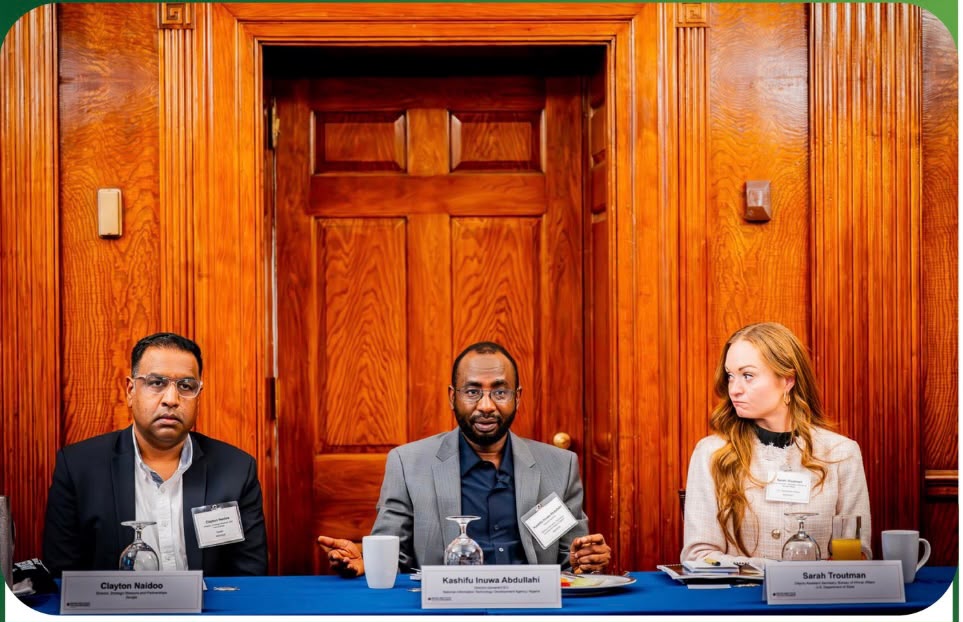
When world leaders gathered for the 81st session of the United Nations General Assembly (UNGA) held in New York City, Nigeria made it clear that training is only the first step—translating digital talent into tangible economic prosperity is the ultimate goal. Spearheading this vision, Kashifu Inuwa Abdullahi, Director-General of the National Information Technology Development Agency (NITDA), took to the global stage to demonstrate how the nation is bridging the gap between tech skills and real-world wealth creation.
From digital skills and artificial intelligence to digital identity and international partnerships, Inuwa used the global platform to highlight Nigeria’s ambition to build a digital economy that creates jobs, expands opportunities and improves livelihoods.
At a panel on Scaling Africa’s Digital Workforce, he stressed that digital training must translate into employment, entrepreneurship and higher productivity, arguing that success should be measured by how effectively skills improve people’s economic circumstances.
He highlighted Nigeria’s Digital Literacy for All (DL4ALL), 3 Million Technical Talent (3MTT) programme, Project BRIDGE and Talent Registry initiatives, emphasising the need to connect digital skills with real economic opportunities.
Inuwa also called for digital inclusion beyond formal employment, urging traders, artisans, farmers and small business owners to embrace technology and AI to increase productivity, reach customers and improve their livelihoods.
At a separate session on digital identity, he described identity infrastructure as the foundation of a trusted digital economy, explaining that interoperable systems could simplify access to financial services, healthcare, education, agriculture and government support.
The DG also participated in a high-level engagement convened by the Krach Institute for Tech Diplomacy at Purdue, where he highlighted Nigeria’s potential to attract technology investment, strengthen local capabilities and expand access to global markets.
He emphasised that international partnerships must deliver measurable outcomes through investment, knowledge transfer, infrastructure development and job creation.
At another global dialogue on innovation and sustainable development, Inuwa reiterated that technology must ultimately improve human lives, expand opportunities and promote inclusive economic growth.
The engagements at UNGA81 reflected the interconnected priorities of Nigeria’s digital transformation agenda: building a digitally skilled population, expanding access to trusted digital services, attracting technology investment and ensuring that innovation translates into tangible economic benefits.
The discussions also highlighted the importance of collaboration among government institutions, technology companies, development partners and local innovators in building the infrastructure and capabilities required for a competitive digital economy.
For NITDA, the challenge is to ensure that digital skills programmes lead to productive employment and entrepreneurship, digital identity supports secure access to services, and international partnerships generate investment and opportunities for Nigerians.
As the country continues to pursue its digital transformation ambitions, Inuwa’s message at the global gathering was that technology must ultimately be judged by its impact on citizens.
From digital skills and identity infrastructure to AI and international partnerships, Nigeria’s digital future, as articulated at UNGA81, rests on the ability to convert technological capabilities into economic opportunities, inclusive growth and improved livelihoods for its people.
