


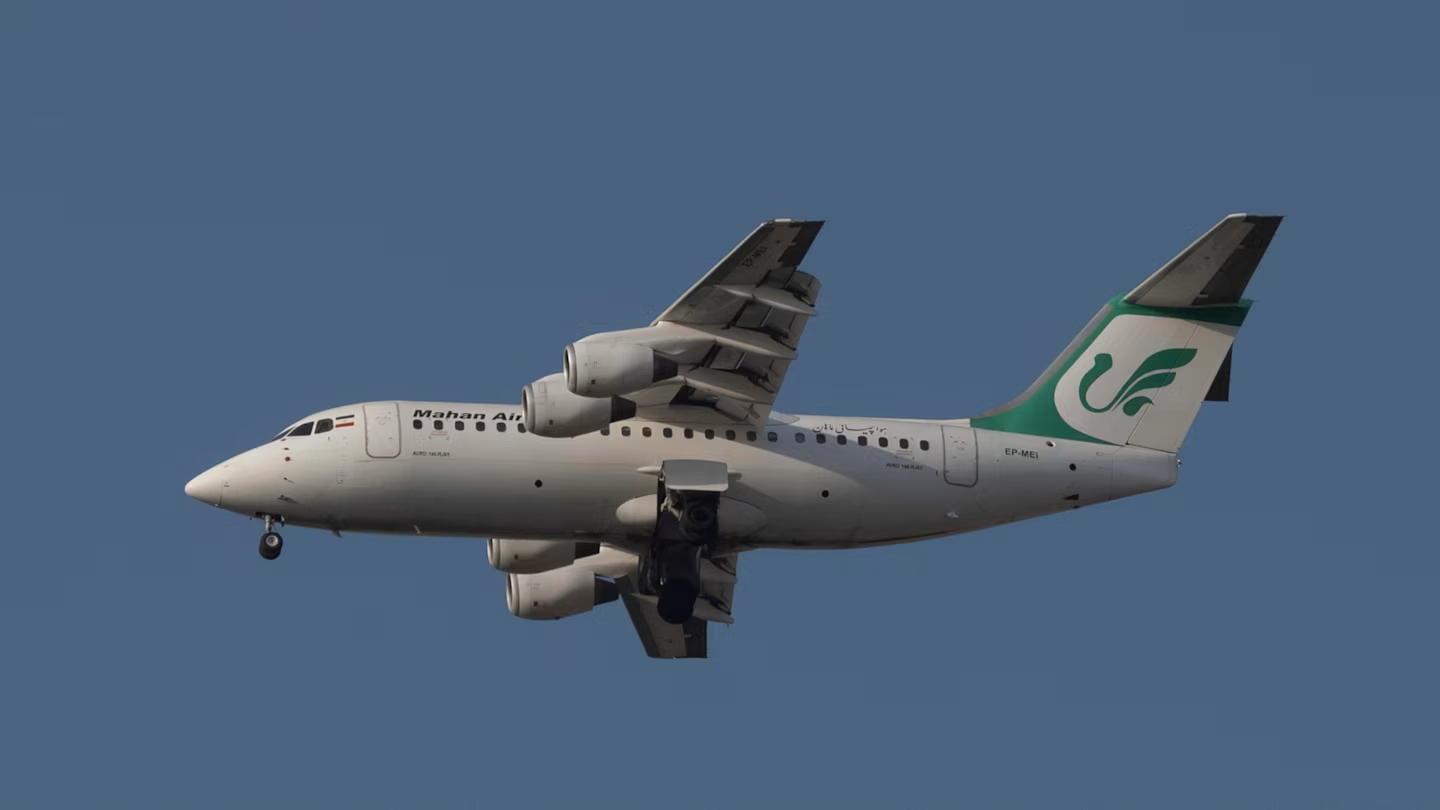
Iran is facing a fresh test of its ability to remain connected to the outside world as Washington moves to tighten sanctions on the country’s aviation industry, threatening to cut off Iranian airlines from the international services they need to keep flying.
Despite the escalating pressure, Tehran insists that its international aviation network remains operational.
Majid Akhavan, spokesman for Iran’s Civil Aviation Organisation, said Tuesday that none of the international flights operated by Iranian airlines had so far been cancelled.
“So far, none of the international flights operated by Iranian airlines have been cancelled, and flights are operating according to schedule,” Akhavan told the ISNA news agency.
He said passengers would be notified in advance if there were changes to flight schedules.
The assurance reflects the growing importance of international aviation to Iran as the country confronts a sanctions regime designed not simply to restrict its airlines but potentially to make their operations increasingly difficult outside Iranian territory.
Washington raises the stakes
The latest pressure came from U.S. Treasury Secretary Scott Bessent, who announced plans to intensify restrictions on Iran’s aviation sector.
Bessent said Washington’s objective was to prevent Iranian airlines from operating internationally by targeting the services that make commercial aviation possible—from aviation fuel and landing services to ticket sales and financial transactions.
“How do we do that?” Bessent told CNBC. “That if they land, you cannot provide them with fuel. You cannot provide them with landing services, you cannot sell them tickets, or you will be knocked out of the dollar system.”
The warning goes beyond the airlines themselves.
Under the proposed approach, foreign governments, airports, service providers, banks and other companies that continue supporting sanctioned Iranian carriers could face consequences affecting their access to the U.S. dollar-based financial system.
That creates a difficult choice for countries and businesses that maintain commercial links with Iran: continue providing services to Iranian airlines and risk U.S. penalties, or restrict those services and potentially disrupt Iran’s international connectivity.
Tehran insists flights are continuing
Iran Air, the country’s state carrier, has sought to reassure passengers that its international operations remain intact.
The airline said it had received no instructions from civil aviation authorities in Turkey, Iraq or Azerbaijan requiring flights to be suspended.
For Tehran, the distinction is important. Iranian airlines may remain technically capable of operating flights, but international aviation depends on a chain of services provided by foreign airports, fuel suppliers, handling companies, ticketing systems, banks and other partners.
Any disruption to that chain could have consequences far beyond individual flights.
An airline may have aircraft, pilots and passengers ready to fly, but without fuel, airport handling, landing permissions, payment channels and other essential services, an international route can quickly become commercially or operationally unviable.
The sanctions squeeze
Washington imposed sweeping new sanctions on Iran’s aviation sector two weeks ago, targeting 27 airlines.
The measures also expose foreign companies and financial institutions to potential consequences if they continue doing business with sanctioned Iranian carriers.
That element gives the sanctions a wider reach.
Rather than relying exclusively on restrictions imposed directly on Iranian companies, Washington is seeking to influence the behaviour of businesses and institutions outside Iran. The potential loss of access to the U.S. financial system can be a powerful consideration for international companies with global operations.
For Iranian airlines, this creates an increasingly complicated operating environment.
International routes require cooperation across borders. Every flight involves airports, air-navigation services, ground handling, fuel supply, insurance, payments and passenger-ticketing arrangements. Sanctions that affect any part of that ecosystem can place pressure on the entire route.
A shrinking international aviation space
The pressure comes at a time when international aviation links with Iran have already been weakened.
International airlines have largely avoided flying to Iran since the Iran war began in late February, further reducing the country’s links with the global aviation network.
That leaves Iranian carriers with an increasingly important role in maintaining international passenger connectivity.
The challenge, however, is not simply whether Iranian aircraft can leave the country.
The larger question is whether they can continue receiving the services necessary to operate in foreign airports while their international partners remain exposed to U.S. sanctions.
Aviation as a geopolitical battleground
The dispute demonstrates how modern sanctions can extend beyond conventional trade restrictions.
Airlines are highly dependent on international networks. Unlike many businesses that can operate largely within a single jurisdiction, commercial aviation requires constant interaction with foreign governments, airports, banks, fuel companies, technology providers and aviation-service firms.
Consequently, restrictions on aviation can become a means of applying economic and diplomatic pressure far beyond an airline’s home country.
For Iran, maintaining international flights therefore represents more than keeping aircraft in the air. It is also about preserving a degree of international connectivity at a time when the country’s economic and diplomatic relationships are under pressure.
For Washington, meanwhile, the aviation sector provides another channel through which sanctions can be applied to Iran and to companies that facilitate its international operations.
The uncertain skies ahead
For now, Iranian officials maintain that international flights are operating according to schedule and that passengers will be informed of any changes.
But the coming days could reveal how effective the new U.S. pressure will be.
The central issue is whether Iranian airlines can continue to secure the foreign services required to operate international routes while governments and commercial providers weigh the potential consequences of dealing with them.
Iran’s aviation sector has survived years of sanctions and restrictions. Yet the latest measures appear designed to place greater pressure on the international ecosystem surrounding Iranian airlines rather than simply on the carriers themselves.
The result could be a new struggle over Iran’s access to the skies: one in which the ability to fly internationally depends not only on aircraft and airports, but also on whether the global network of companies and financial institutions that supports aviation is willing—or able—to continue doing business with Tehran.
For Iranian passengers, the immediate question remains simple: will their flights depart as scheduled?
For Tehran and Washington, however, the stakes are considerably higher. The battle over Iranian aviation has become another front in the wider contest over Iran’s economic isolation and its ability to remain connected to the international system.
