


For decades, oil-producing communities in the Niger Delta have lived with the paradox of oil wealth: communities contribute to the nation’s petroleum economy, yet many residents continue to grapple with the environmental and social consequences of oil exploration.
In Bayelsa State, persons with disabilities (PWDs) say they face an additional layer of exclusion.
They are now demanding that they be included in the benefits accruing to oil-host communities under the Petroleum Industry Act (PIA), arguing that the effects of oil exploration and pollution do not distinguish between persons with disabilities and other members of the communities.
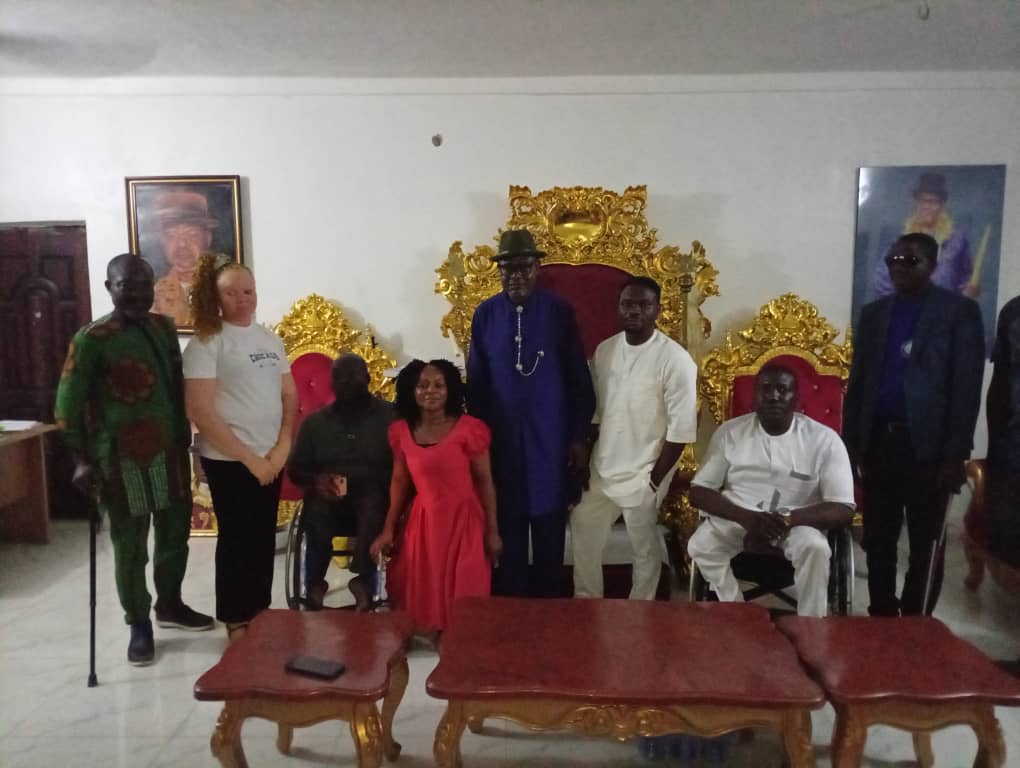
The demand came during a courtesy visit by a group of PWDs to King Wapaebiama Amakiri, the traditional ruler of Obhal-Emeyal Clan in Ogbia Local Government Area of Bayelsa State.
For the group’s Coordinator, Philip Godfrey, the issue is not simply about access to funds. It is about recognition, inclusion and the right of persons with disabilities to participate in development opportunities created by the exploitation of resources from their communities.
Godfrey said PWDs had been left out of the benefit structure of the Host Community Development Trust Fund established under the PIA.
According to him, there had previously been no legal obligation requiring their inclusion in the benefit structure, leaving many persons with disabilities disconnected from opportunities arising from petroleum activities in their communities.
He said the exclusion had persisted despite the PIA being in existence for about five years.
“PWDs are not feeling among, if we are feeling the pain, we should also feel the benefits of oil exploration because some of us also come from oil producing communities,” Godfrey said.
His argument centres on what he described as an obvious contradiction: if persons with disabilities are members of oil-producing communities and are exposed to the same environmental consequences of petroleum activities, they should not be excluded when the benefits of those activities are distributed.
When Pollution Has No Disability Barrier
For communities in oil-producing areas, environmental pollution is not merely an economic issue. It can affect livelihoods, water sources, agriculture and the general quality of life.
Godfrey argued that pollution does not discriminate and that its consequences can be particularly difficult for persons with disabilities.
“Pollution did not discriminate against anyone,” he said, stressing that PWDs had suffered the effects of environmental degradation alongside other members of their communities.
For him, the question is therefore whether development benefits should follow the same principle of universality.
The PWDs’ advocacy is being supported by the Centre for Citizens with Disabilities (CCD) and Ford Foundation, which Godfrey credited with making the movement possible.
He described the advocacy as an opportunity for persons with disabilities to move from the margins of community development discussions and directly demand recognition in structures created by law.
Beyond Charity
The response from the traditional institution also reflected a broader shift in how disability is perceived.
King Amakiri said society had increasingly recognised that disability did not amount to incapacitation.
According to him, persons with disabilities are capable of making meaningful contributions to society when given the necessary opportunities.
He said the limitations associated with disability should no longer be turned into additional disadvantages against PWDs.
Gone, he noted, were the days when persons with disabilities were largely perceived as people who belonged on the streets seeking alms.
Instead, he argued, they should be regarded as citizens with the capacity to contribute to the development of their communities.
That position strikes at the heart of the PWDs’ demand. Their campaign is not framed around charity but around participation in a development system affecting the communities to which they belong.
Traditional Rulers Asked to Take Up the Issue
On the specific demand concerning the Host Community Development Trust Fund, Amakiri promised to take the matter to other traditional rulers responsible for oil-producing communities within the clan.
He said the traditional rulers would deliberate on the issue at their meeting, particularly because the consequences of oil pollution affect everyone within the affected communities.
The commitment provides the PWDs with an avenue to take their concerns beyond advocacy meetings and into traditional community structures that have influence over local development issues.
The Bigger Question of Inclusion
The Bayelsa demand raises a broader question about who gets to participate in the economic benefits associated with natural resources.
For persons with disabilities, inclusion in oil-host community development is not simply about receiving a share of financial benefits. It also touches on representation, access to development projects and the ability to have a voice in decisions affecting their communities.
As Nigeria continues to implement the PIA and its host-community provisions, the experience of Bayelsa’s PWDs highlights the importance of asking whether vulnerable groups within host communities are adequately represented in development processes.
The PWDs say they have endured exclusion for too long.
Their message is straightforward: if they live in oil-producing communities, experience the consequences of oil exploration and belong to the same communities whose development is being supported through the petroleum industry framework, they should also have a place in determining and benefiting from that development.
For the traditional rulers in Obhal-Emeyal Clan, the next step is deliberation.
For the PWDs, however, the campaign represents something larger — a demand to move from being beneficiaries of goodwill to being recognised participants in the development of their own communities.
